
Coast Guard Commissions Cutter Olivia Hooker
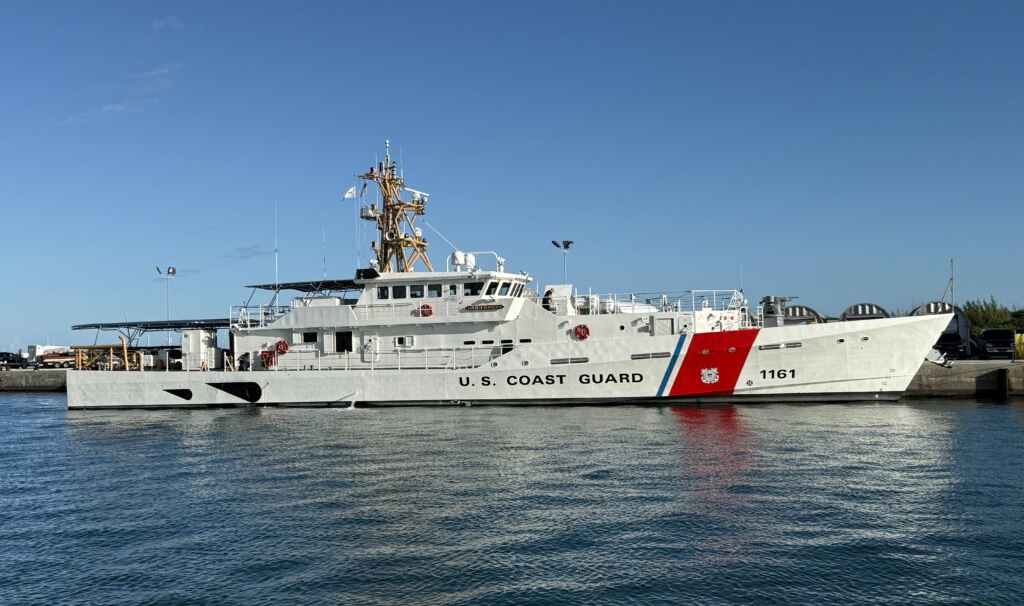
In Pascagoula, Miss., the “flagship city” on the Mississippi Gulf Coast, the U.S. Coast Guard marked a historic milestone last month with the commissioning of cutter Olivia Hooker, named for Dr. Olivia Hooker, the first African American woman to enlist in the Coast Guard’s SPARs (Women’s Reserve) during World War II.
The ceremony January 22 gathered Coast Guard leadership, the Hooker family, shipbuilders, community supporters and industry partners for what organizers described as a historic Coast Guard vessel positioning event in Pascagoula. Walt Perez, chair of the committee, welcomed attendees and recognized the broad coalition behind the day, including civic groups, the Coast Guard Foundation and corporate partners who supported the celebration alongside the crew that will now take the cutter to sea.
Speakers returned repeatedly to the idea that a cutter’s name is more than tradition. It is a responsibility passed to the crew to carry forward, mission by mission.
Bollinger Shipyards President and CEO Ben Bordelon offered a builder’s view of that responsibility, noting his grandfather started the business in 1946 and that Bollinger has built vessels for the Coast Guard for decades. Delivering a cutter, he said, is not simply completing a contract. Rather, it is an obligation to the men and women who will serve aboard it. The ship must be built to last and built to help keep crews safe as they execute the service’s demanding missions.
Bordelon credited a workforce drawn from Louisiana, Mississippi and across the country for the effort behind the program, describing commissioning day as the culmination of thousands of decisions, details and labor hours. He said the ship’s namesake was made visible throughout construction, with photos and reminders of Hooker posted in workspaces to connect shipbuilders to the legacy the cutter will carry.
Representing U.S. Rep. Mike Ezell, Deputy District Director Julie Miller called the commissioning a truly historic occasion and said there was no more fitting place for it than the Mississippi Gulf Coast, citing the region’s shipbuilding tradition and maritime service. She highlighted the cutter’s mission set in plain terms: protecting coastlines, interdicting illegal drugs, responding to disasters and standing watch so others may live in freedom and security. Miller also pointed to Ezell’s role as chairman of the Coast Guard and Maritime Transportation Subcommittee, underscoring congressional support for modern assets and resources.
The Coast Guard Foundation used the occasion to spotlight support for Coast Guard families beyond the pier. Bob Montgomery, vice president of business development at Hose McCann Communications and a foundation board member, outlined the foundation’s work, from scholarships and spouse grants to credentialing support and aid during storms, injury and loss. The foundation presented a $5,000 check to the crew.
Rear Adm. Zeita Merchant, assistant commandant for workforce management, delivered the ceremony’s most personal reflection, speaking as someone who knew Hooker as a mentor. Merchant described Hooker, not only as a barrier breaker, but also as a lifelong advocate for public service and civic responsibility. One lesson, she said, endured through years of conversation: resilience is not about circumstance, but commitment to purpose and to seeing difficult work through to the end.
As CG Cutter Olivia Hooker is placed into service, Pascagoula’s waterfront gained more than a new hull in the fleet. It gained a living tribute—one that will carry Hooker’s name into the Coast Guard’s day-to-day work, where legacy is upheld in watchstanding, seamanship and service.