

Starting The Conversation For Mental Health Awareness Month
A deckhand called out “Hey, Chaps! Can I talk to you for a second?” as I was passing through the galley.
“Absolutely!” I responded as we stepped out to the decklocker. “What’s going on?”
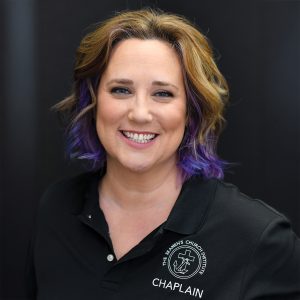
Supervisory Chaplain, Ministry on the River
Seamen’s Church Institute
The mariner began to share how tough things had been at home. “It’s a relief to be out here on the boat,” he said. “It’s so much easier. I don’t know; it seems like I can’t do anything right. She’s always upset with me about something. The kids are always getting into something. I am here, on the job, and I don’t know what to do.”
We stood there for a while, giving him the space to share what had been weighing on him. He opened up as I listened and asked a few questions along the way. By the time we wrapped up, there was a noticeable sense of relief. He seemed a bit lighter, a bit more at ease. At the same time, it was clear he was carrying a lot, both at work and at home. We agreed to stay in touch and check in again when he had more time to talk.
In my experience, it is these simple moments — those “Hey, Chaps, can I talk to you?” moments — that mark the beginning of support. It is sometimes the most challenging step, especially for mariners.
Within the maritime industry, the Seamen’s Church Institute collaborates with companies to support mariners and seafarers in prioritizing their mental health. In this industry, mariners may often minimize what they’re going through. They might compare themselves to others who seem to have it worse or tell themselves, “It’s not a crisis. I just need to toughen up.” Sometimes, embarrassment or the stigma of perceived lack of “toughness” can get in the way of asking for help. Other times, they are inspired to seek help but are at a loss as to whom to ask.
Even when support exists, accessing it can be challenging. Many companies offer Employee Assistance Programs (EAPs) with free or reduced-cost counseling. There are still real hurdles, though. Therapists may not have openings for months, or they may be licensed in only one state, which can make access difficult for mariners working across state lines. On top of that, finding time can be a challenge in itself. Between the demands of work and home life, making time for counseling and sticking with it can feel overwhelming. When we do start looking for solutions, it’s easy to fall into a single-solution mindset. While therapy is incredibly valuable — especially when emotional struggles, anxiety, trauma or depression begin to interfere with daily life, relationships or work — it isn’t the only support available.
It’s also important to remember that there are meaningful ways to support your mental health alongside professional care. Mental well-being can be shaped by adopting and prioritizing things like: caring for your physical health through better sleep, improved nutrition and regular exercise; staying connected to people who make you feel supported and understood; setting healthy boundaries around phone use and social media; and nurturing your inner or spiritual life through practices like mindfulness, meditation or prayer. While these approaches are not a substitute for professional help, they can gently support you in managing distress and building resilience over time. Move at your own pace. Start with small steps, and choose what feels manageable. This can make those changes easier to sustain over time.
However, as chaplains, we understand that when you’re in the middle of distress, even small steps can feel out of reach, if they come to mind at all. Please remember, you don’t have to go through it alone. Perhaps take a cue from that deckhand. Sometimes all it takes is reaching out and asking, “Can we talk?” That simple phrase is like the bat signal for SCI chaplains. We will drop everything to listen. That’s what we do.
Since 1949, May has been recognized as Mental Health Awareness Month in the United States. It’s an opportunity to reduce stigma and encourage people to seek support when they are struggling. National organizations like Mental Health America (MHA) and the National Alliance on Mental Illness (NAMI) lead this effort. Within the maritime industry, organizations like the Seamen’s Church Institute partner with inland maritime companies to reinforce the importance of mental health for mariners and seafarers. No matter what mariners are facing — challenges at home, navigating an Employee Assistance Program or simply needing someone to talk to — they don’t have to handle it alone. They don’t need all the answers. They need the willingness to reach out. SCI’s chaplains are available 24/7/365 to provide confidential support. Call 800-708-1998 or email mor@seamenschurch.org. We’re here for you.