

Her Majesty Turns 99
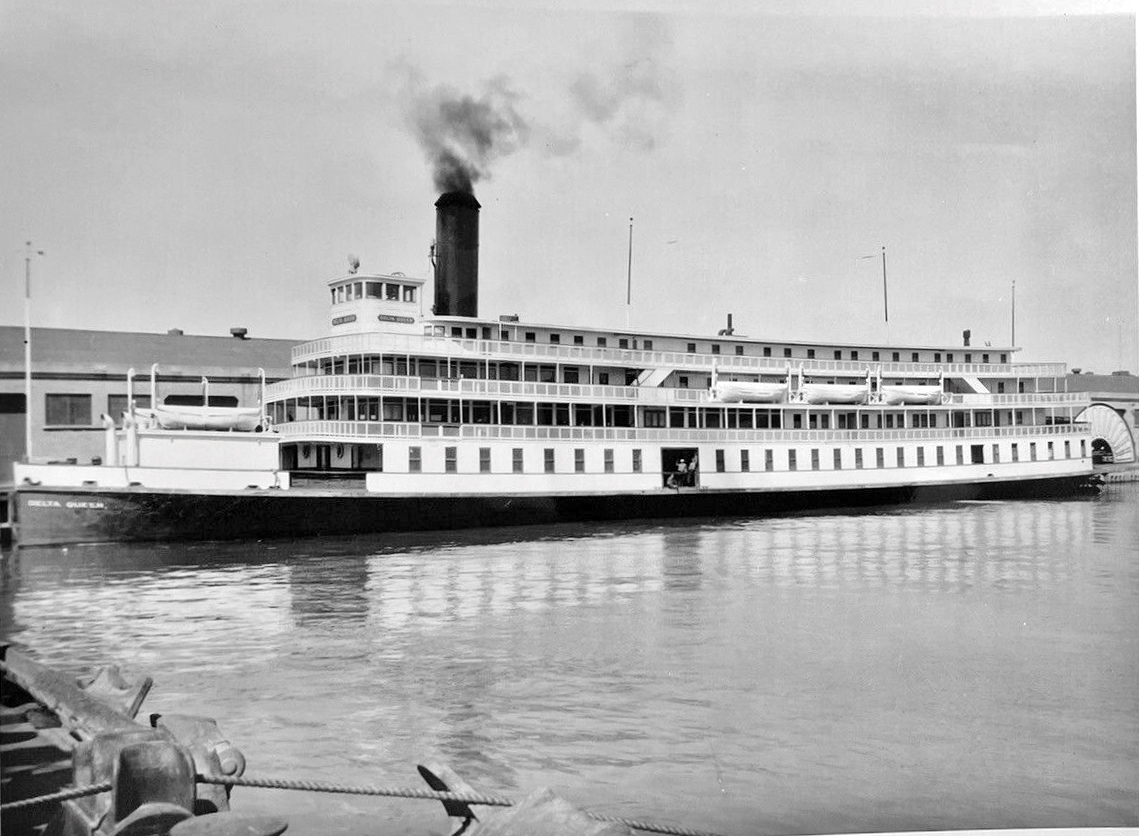
The legendary steamer Delta Queen quietly turned 99 years old recently while languishing near Houma, La., where it has been sitting inactive since 2015. Over the years, many books and articles have been written about the boat, and it is undoubtedly the most famous steamboat in the United States. While it has steadily drifted out of the public eye, Capt. Don Sanders, who spent many years working aboard the vessel, recently made some social media postings and wrote in his weekly news column in an online Cincinnati area newspaper about the Delta Queen as he recognized the 99th anniversary of it entering service.
The Delta Queen and sister vessel Delta King were described by Capt. Fred Way in the 1948 edition of the Inland River Record, taking up a page and a half, stating, “Steam tourist vessel, steel hull, sternwheel b. Stockton, Calif., 1926, 250 x 58 x 11.5. Cross compound condensing engines, 26’s, 52 1/2s – 10-foot stroke. Two water tube boilers burn fuel oil. This vessel and a duplicate sister ship named DELTA KING were fabricated at Glasgow, Scotland, insofar as all steelwork is concerned, were temporarily assembled on the River Calif., where final construction was completed. Building operations extended from 1924 through 1926 … .”
The machinery had been built at “Denny’s shop in Dumbarton, Scotland, to plans furnished by Charles H. Evans Company, San Francisco.” The upper works “built by American shipbuilders, four decks high, largely of oak, teak, mahogany and Oregon cedar.” They cost some $875,000 each and were owned by the California Transportation Company. Both vessels were the “night boats” between San Francisco and Sacramento on the Sacramento River. There were staterooms for 200 people, and they often carried deck passengers and up to 2,000 tons of freight.
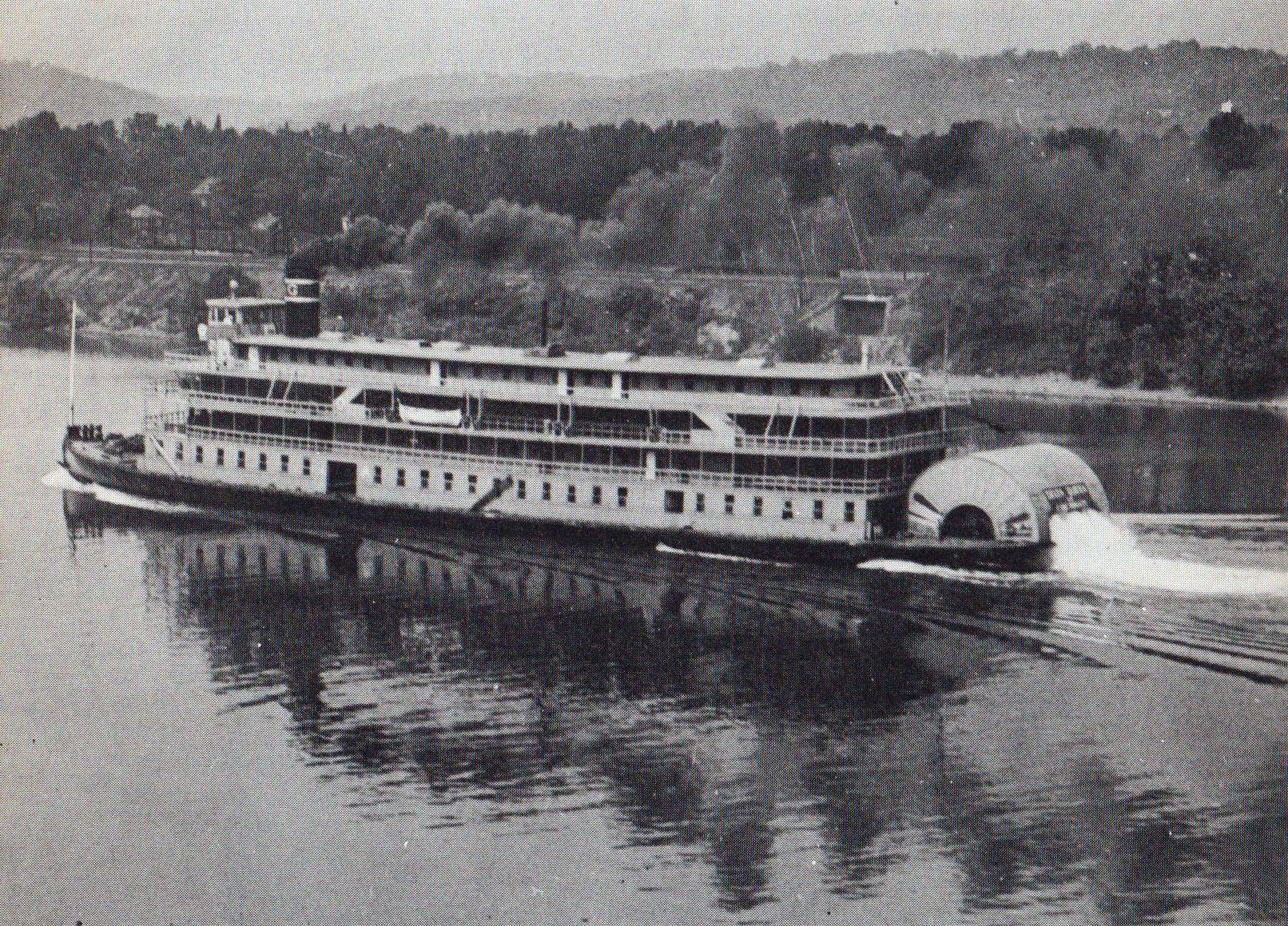
The boats made their maiden trips in June 1927 and operated successfully until the depression years of the 1930s, when California Transportation was sold to River Lines, Inc., and the two Delta boats were soon laid up. They were eventually sold to the Isbrandsten Steamship Line, which had the Delta King boxed up for transfer to the Mississippi River. World War II intervened, and both boats were taken over by the Navy and used in the San Francisco Bay area to ferry personnel to and from ocean vessels.
After the war, they were turned over to the U.S. Maritime Commission and laid up. On December 17, 1946, the Delta Queen was sold by bid to Greene Line Steamers, Inc., Cincinnati. Capt. Tom R. Greene, president of the Greene Line, tapped Capt. Fred Way to head up the project of moving the big boat from California to New Orleans. Way detailed this unusual task in a book published in 1951 titled “The Saga of the Delta Queen.”
In the book, Way details how the boat was crated up somewhat for protection from rough seas, the pitmans were disconnected from the cranks, and the paddlewheel was dismantled, leaving the 30-ton shaft in place. The vessel, now termed a “seagoing barge” by the Coast Guard, departed on April 19, 1947, in tow of the tug Osage. After a journey of about 5,400 miles on the Pacific Ocean, through the Panama Canal and the Gulf and into the Mississippi River, it arrived at the Avondale Marine Ways, New Orleans on May 19.
At Avondale, the boat was put back in operating condition over a period of some two months. It departed under the command of Capt. Way and rolled up the Mississippi and Ohio rivers under its own power, stopping briefly at its new home port of Cincinnati. On August 10, 1947, it arrived at the Dravo marine ways at Neville Island, Pa. for the major refurbishment that would transform it into the majestic steamboat that many came to know.
The Delta Queen would spend six months (and many dollars!) at Dravo before emerging as the premier overnight tourist boat on the Mississippi River system. Her journey through time will continue in the next column.
Featured photo caption: The Delta Queen new in 1927. (Photo from the author’s collection)