
Safety Leadership In Practice: Ronald Corigliano And The Shift To Safety Management Systems
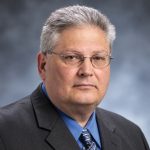
Editor’s Note: Ronald Corigliano’s career mirrors the evolution of safety management in the towing industry. He entered the maritime workforce in 1986 with Campbell Transportation Company, starting in the maintenance department with diesel experience and a willingness to learn. Over the next several decades, he progressed through engineering, safety, environmental compliance and senior shoreside leadership roles, building a career grounded in operational reality. In December 2025, Corigliano stepped down from the AWO Responsible Carrier Standards Board. His work in the RCP Standards Board and other working groups contributed greatly to safety improvements for AWO members and the industry at large. This article shares his story and the tremendous positive impact his work has had on mariner safety.
Big Bayou Canot: A Turning Point
In September 1993, a pushboat with 6 barges struck The Big Bayou Canot railroad bridge in Alabama, causing an Amtrak passenger train to derail moments after the strike and leading to 42 passenger fatalities, five rail-crew fatalities and 103 passenger injuries. This was a defining moment in Ronald Corigliano’s career and for the towing industry at large.
The National Transportation Safety Board investigation of the incident went beyond assigning individual error. Instead, it identified systemic weaknesses in towing vessel operations, navigation practices, training and oversight. Importantly, the NTSB’s recommendations named industry organizations and regulators alike, calling on The American Waterways Operators (AWO), the U.S. Coast Guard and others to work together to improve safety management across the industry.
This marked a fundamental shift in how towing operations were managed. Informal practices and experience-based decision-making were no longer sufficient. The industry recognized that lasting safety improvement required formal, documented management systems that identified and mitigated risks using technology, tools, training and skills assessments.
The Responsible Carrier Program
In response, AWO members developed the Responsible Carrier Program in 1994, creating an industry-specific safety program for the tug and barge industry. The program centered on three principal parts: management and administration, equipment and inspection, and human factors.
Corigliano was involved with the RCP from its inception, helping translate the program’s lofty expectations into daily operational practice at Campbell. “The RCP wasn’t about checking boxes,” he said. “From the start, it was about taking ownership of safety as an industry and holding ourselves to a higher standard.”
This matched the core principle of the RCP – the simple idea that safety is not a destination, but rather a continuous process of evaluation and improvement.
Continuous Improvement In The Wake Of Tragedy
As the Responsible Carrier Program matured, collaboration between AWO and the U.S. Coast Guard deepened through efforts such as the Coast Guard–AWO Safety Partnership. Corigliano contributed through AWO working groups and the Chemical Transportation Advisory Committee (CTAC), which became especially active in the years following the 9/11 attacks.
Much like the industry’s response after Big Bayou Canot, Corigliano and other industry experts used CTAC to help inform Coast Guard policy on vessel and facility security, emergency preparedness and the transportation of high-consequence cargoes such as ammonium nitrate and chlorine. For Corigliano, the work reflected the same principle that guided the Responsible Carrier Program: effective safety policy is strongest when shaped by operational experience.
From Voluntary Program To Federal Standard
More than two decades after Big Bayou Canot, these industry-led efforts culminated in Subchapter M, which established a uniform federal safety framework for towing vessels while explicitly recognizing Towing Safety Management Systems, including the RCP, as a compliance pathway.
For Corigliano, Subchapter M represented the natural evolution of work that began in the mid-1990s. What started as a voluntary, industry-driven response to tragedy matured into a national standard built on partnership, accountability and shared responsibility.
Safety Matters
Corgliano retired from AWO’s Responsible Carrier Program Standards Board in December 2025, but his influence will live on through the systems and processes he helped create. His work in AWO and industry groups led to improvements in safety and security for the industry and the country.
Looking back, Corigliano sees measurable progress as safety, environmental and property incidents have declined as training, maintenance and oversight have become more structured. At the same time, he recognizes that safety systems must continue to evolve, whether through Subchapter M refinement or emerging challenges such as discharge regulation under the Vessel Incidental Discharge Act (VIDA).
His advice to those entering the industry reflects his historic career. “This industry offers a great opportunity for anyone willing to put in the work,” he said. “You can come in with no experience and, through on-the-job training and commitment, grow from entry-level to leadership in just a few years, but long-term success depends on safety and a commitment to constant improvement. Pay attention, slow down, and take ownership of the systems designed to protect people, the environment and the industry itself.”
Biography
Corigliano joined Campbell Transportation Company in June 1988. He spent 11 years in the maintenance department for Campbell and Campbell’s subsidiary, Kanawha River Towing, Inc., as an assistant port engineer. In the latter, he was responsible for overseeing preventative maintenance programs for 22 vessels, for implementing and maintaining the Coast Guard’s Cooperative Uninspected Towing Vessel Inspection Program and for performing compliance inspections. He also worked in barge dispatch for six months to assist with a temporary vacancy, handling morning traffic and orders in addition to his engineering and compliance duties. In January 1998, Corigliano was promoted to Blue Danube Incorporated’s environmental compliance manager for the company’s marine divisions (CTC and C&C) for both vessel and shoreside operations.
Corigliano has held several titles and had responsibility for a broad range of systems and processes throughout his career. Related to the Responsible Carrier Program, the corporation’s responsible carrier program manager position was added in July 1991 to develop, implement and maintain safety management and to document control systems. In July 2009, he was given the responsibility of managing the corporation’s land properties as land management manager. Corigliano currently holds the title of director of regulatory compliance for Campbell Transportation Company.
Corigliano has professional certifications in numerous Coast Guard approved environmental, safety, health and security courses, including three home self-study courses in the regulatory compliance field during his employment. He has served as a member on numerous industry and governmental committees, including: the Coast Guard’s Chemical Towing Advisory Committee (CTAC); the Coast Guard’s CTAC Haz Cargoes Security Sub-committee; the Coast Guard’s Towing Safety Advisory Committee (TSAC) Towing Vessel Inspection Working Group; AWO Workgroup Committees; Shipbuilders Council of America (SCA)’s Compliance Committee; and as a board member for the Huntington District Waterways Association.
He can be reached by email at corigliano.r22@outlook.com.