
Atlantic Intracoastal Waterway Roundup: Stevens Towing Builds Flexibility Into Its Operations
Stevens Towing might be 113 years old, but it continues to adapt, upgrading its technology, efficiency and flexibility to meet the next generation of customer demands.
The fourth-generation family business, with facilities in Edenton, N.C. and Yonges Island, S.C., (just south of Charleston) is doing more work these days shipping modular components for building large ships, along with parts needed for aircraft and submarine construction and equipment needed to build data centers and accompanying facilities.
“There is a lot more modular construction of shipbuilding components, and the nature of it is they have to move by barge,” said Benjamin “Bos” Smith, the company’s vice president.
Sections of bulkheads and fabrication fixtures for shipyards are among some of the cargoes moving.
“We’re doing a fair amount of that, and that’s good business,” he said.
The Atlantic Intracoastal Waterway remains a key advantage for this kind of shipping, he said, allowing Stevens Towing to run its boats and barges even when high waves and heavy weather make traveling on the open ocean impossible.
“It’s a huge strategic asset,” he said.
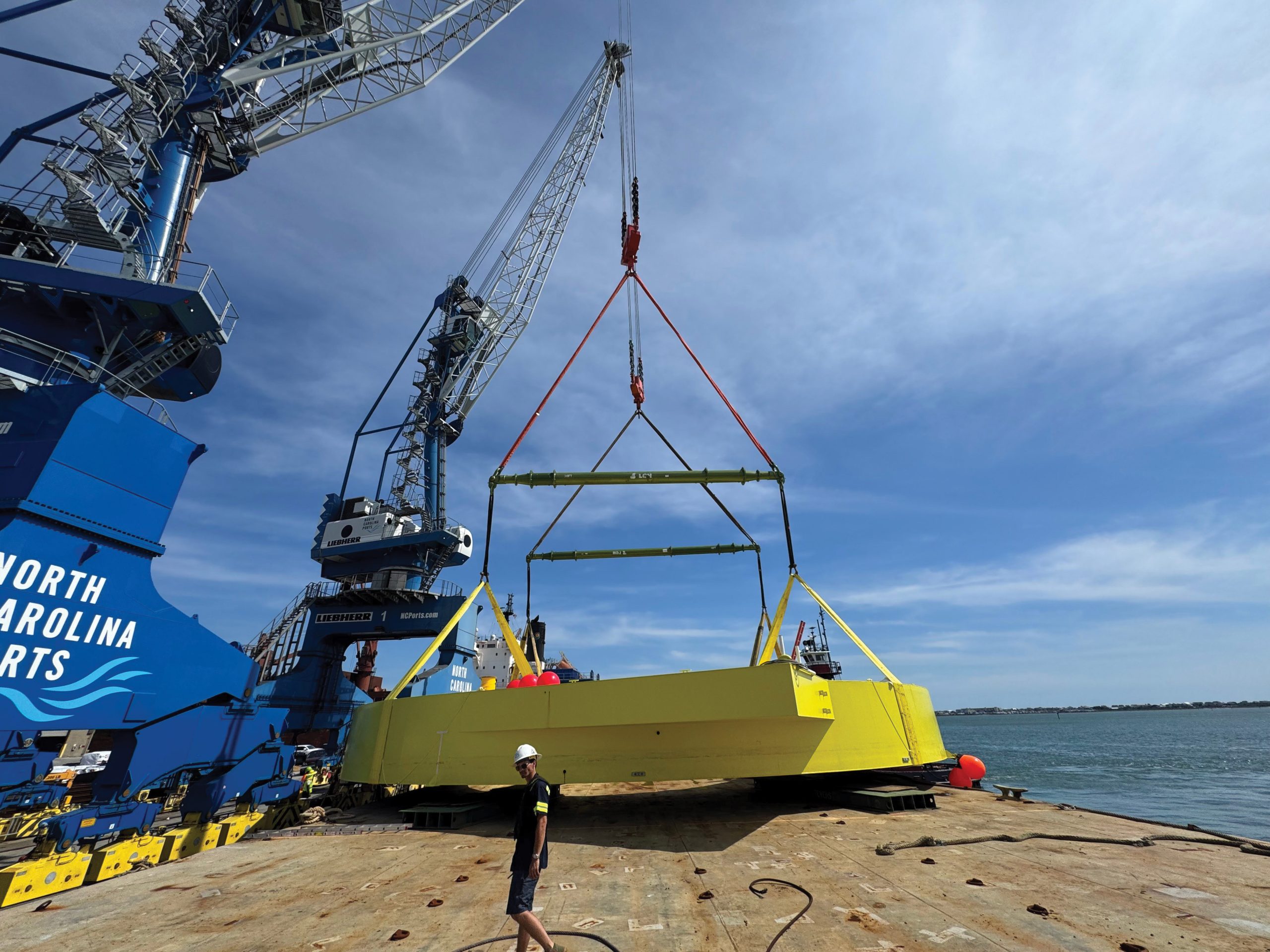
Many times the company is moving modular components built elsewhere along the Eastern seaboard and delivering them to large shipyards, some of which are located in the Gulf.
Several of the data centers under construction in the United States are being built on rivers, lakes and other waterways, which means moving large components by barge makes sense, Smith said. Additionally, power generation plants often accompany those data centers, which means moving large turbines.
“What we’re seeing is that since they’re doing all this domestic construction, one of the best and most reliable ways to move these units — where 380 to 420 tons is common — is by barge,” Smith said.
Stevens Towing is considered a mid-sized company of about 225 employees. The company operates seven different pushboats, three of which are offshore. It employs about 60 on boats and 180 in its shipyard, which has a drydock capacity of 2,000 tons. The company specializes in moving project cargoes around the United States along with repair, maintenance, refitting and modification of commercial vessels.
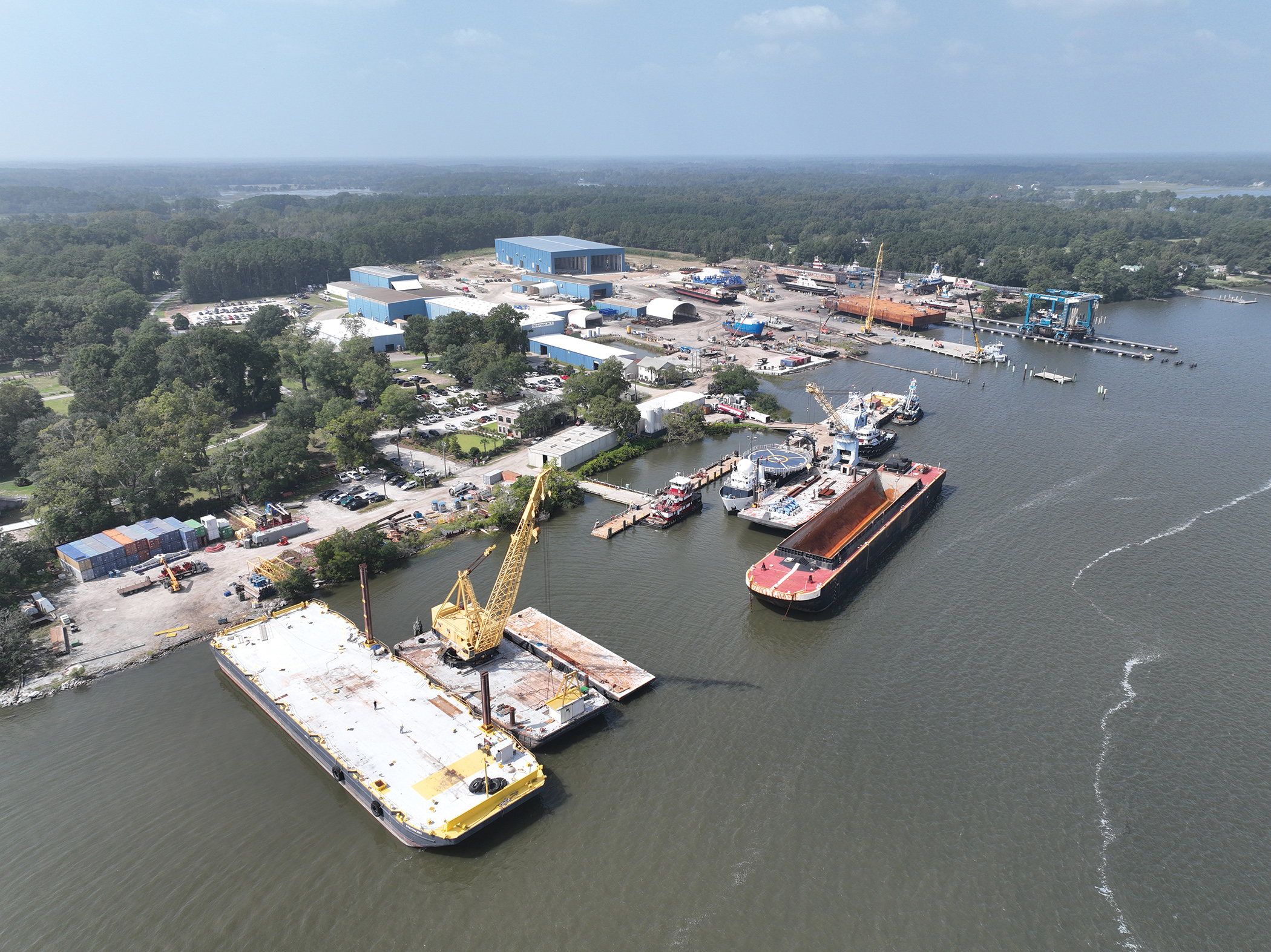
Its shipyard, at Mile 495 on the Atlantic Intracoastal, just south of Charleston, S.C., bought an 820-ton marine travelift about three years ago that has been a gamechanger, Smith said, saying it has allowed the company to more efficiently use its existing space. Before getting it, he said, Stevens Towing did about 30 drydocks a year. Since getting it, it’s been more like 80 to 100 annually.
The company has its own engineering and shipbuilding groups in house and heavy-lift cranes in Charleston for loading cargoes. Its capabilities include Subchapter M repairs, structural engineering and tie-down plans, he said, making it a full-service solution for shippers. Additionally, the shipyard is increasing its capacities for electrical and pipefitting roles with targeted hiring for those trades, also increasing the breadth of work it can accomplish at once.
On the towing side, Smith said the company is involved in more intermodal shifts than ever before as the railroad infrastructure along the Eastern seaboard is aging and offers smaller clearances, so it’s not able to move some larger pieces needed for manufacturing. Instead, he said, it is becoming more common for Stevens Towing to move specialized cargoes by barge through the Atlantic Intracoastal Waterway and, at times, into the Gulf or via the river system. In one example, shipments were picked up in Charleston, taken by barge to Houston, Texas, and then loaded onto rail, bound for Utah, he said.
“We jump around the infrastructure bottlenecks with a barge,” he said.
It also means the way the company trains its mariners has had to change.
“We’re cross-training them so they can get experience in all the waters of the United States,” Smith said.
The company now wants operators who can handle coastal towing, ocean-going vessels and the Western rivers, he said. In addition to Houston, some recent cargo destinations have included Memphis, Tenn., West Virginia, and even Nebraska.
As the nature of project cargoes and the routes used to transport them continue to evolve, Smith said Stevens Towing will have to remain nimble.
He said, “We have to be super flexible in the way we look at everything and let the cargo take us where it will.”
Featured photo caption: Stevens Towing operates its shipyard in Yonges Island, S.C., at Mile 495 of the Atlantic Intracoastal Waterway. It includes an 820-ton marine travelift. (Photos courtesy of Stevens Towing)