
The Lady Ree Had A Tragic End
Capt. Jeff Yates, long with The Waterways Journal and current consulting editor of the Inland River Record, recently queried if there were going to be any Greenville, Miss.-built boats to appear in the Old Boat column. The short answer was, “Of course!” The majority of the vessels featured since I began writing this column were built in the years prior to Greenville becoming known as a mecca for the construction, repair and operation of towing vessels, but there were certainly many fine boats built there over the years.
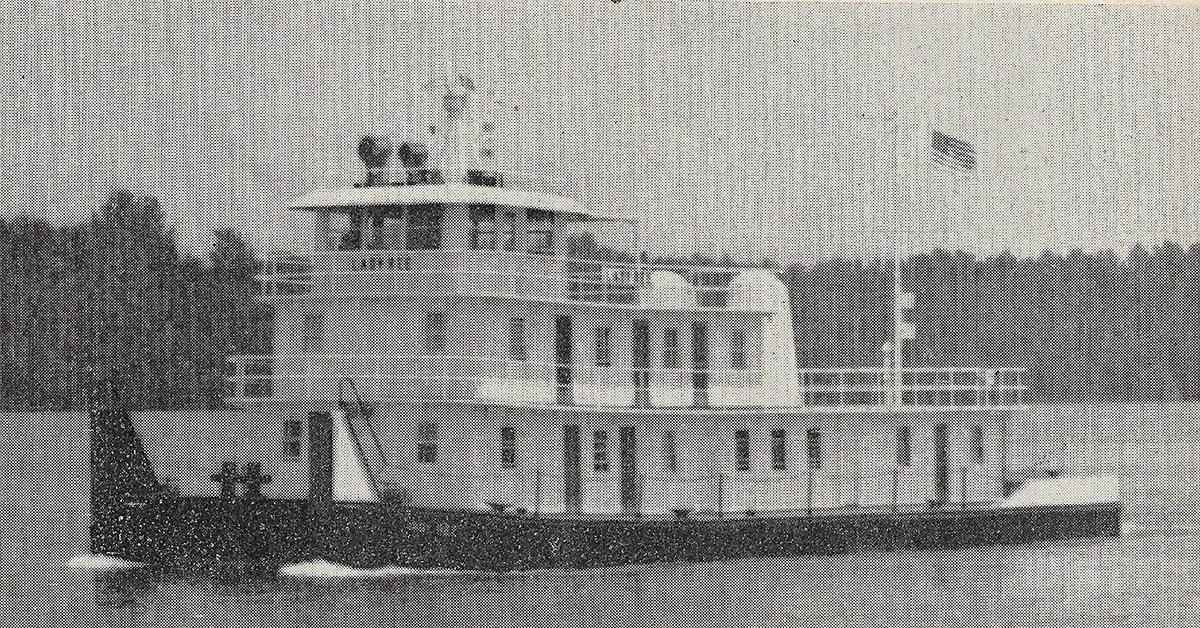
Small towboats were being built at Greenville by the early 1940s. The July 28, 1951, issue of The Waterways Journal contained a small piece about Greenville headlined “One Of Most Active Ports On Mississippi.” Pictured was the brand new Lady Ree, described as having been recently completed at Greenville for the Queen City Towing Company. This story, written by John A. Fox, stated, “The debut of this fine new craft enhances the magnitude and importance of the city of Greenville as one of the Mississippi River’s key ports.”
The Lady Ree would join the other boats operating out of Greenville at that time, which were listed as the “Weatherwood, Betty Brent, Ruth Brent, Totty McCool, Templeton, Ora D., John D., David Lee, Nita Dean, Bobbin and the steamer Sanford E. Hutson.” Of these 11 boats, nine had been built at Greenville. The article concluded by saying that six major oil companies had tank farms at the city that had received more than 100 million gallons of product while other industries had imported 1.2 million tons of cargo, indicating that Greenville “richly deserved “ the title of “most up and coming port on the Mississippi.”
Previously, the July 14, 1951, issue of the WJ had noted in a single paragraph news piece that the new Lady Ree was in service. The story said that the boat had departed Greenville on July 9 for a “maiden trip” to Beaumont. Texas. The Lady Ree had a 100-foot by 26-foot hull that had been fabricated by Avondale Marine Ways, Inc., New Orleans. It was towed to Greenville for completion by Marine Welding & Repair Works. It was powered by a pair of GM 12-567 A engines developing a total of 1,800 hp. at 744 rpm., coupled to Falk 2.52:1 gears. The Lady Ree was fitted with an RCA radar and radio-telephone equipment and assigned the radio call letters WD 4277.
The crew for this first trip was listed as Capt. Willam Stovall, master; Capt. James Bell, pilot; C.L. Switzer, chief engineer; R.R. “Bob” Pugh and George R. Freeman, assistant engineers; Howard Holloway, mate; O.C. Meadows, cook; and E.M. Brooks, O’Neil Christian, Ted Davis and George Gravois, deckhands. The boat made a stop at Vicksburg for radar repair before proceeding south.
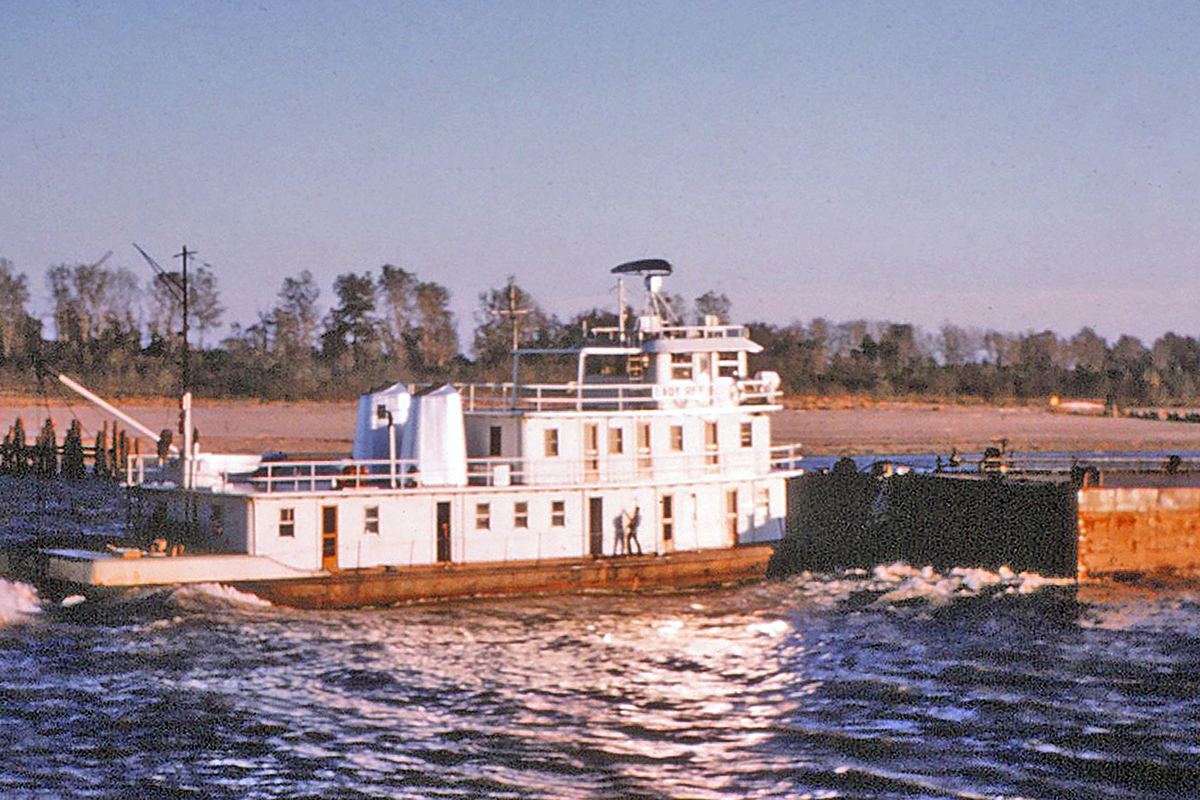
While originally owned by Queen City Towing Company, Greenville, the name of the firm soon changed to Greenville Transportation Company, Inc., and the boat was operated by Greenville Towing Company, Inc. The Lady Ree would be seen all over the inland river system and Gulf Intracoastal Waterway for the rest of its existence and was easily recognized by rivermen.
In 1959, it was sold to another Greenville firm, Logan & Lancaster. In 1965, it was transferred to Logan Charter Service, Greenville, and in 1968 it was sold to Universal Shipping Company, Washington, D.C., and operated by Flowers Transportation Company, Greenville. The Inland River Record never recorded Flowers as owning the boat; however, an ad appeared in the March 17, 1973, issue of the WJ with Flowers listing it for sale, along with the City of Greenwood and Glenda S. The other two boats would be sold to different owners later in 1973, but, less than one month after the ad appeared, the Lady Ree would meet a tragic end.
According to a story in the April 7, 1973, issue of the WJ, the Lady Ree was transiting the channel span of the Vicksburg bridges when it struck the left pier and rapidly sank. Four of the crew were rescued by the grocery boat Refill and a fishing boat. One body was recovered, and five of the crew were missing at the time of the article. The pilot on watch was one of those saved and reportedly stated that one of the five grain loads in tow struck the pier first, and then the boat hit it broadside. Eyewitnesses said that the boat went under in about 10-15 seconds. One barge sank, and the others were caught by towboats in the area, including the Ben McCool, Frank Phipps and George H. Martin.
The Coast Guard Cutter Dogwood immediately started searching for the sunken Lady Ree but was unsuccessful due to the high water and swift current in the area at the time. The river depth where the boat went down was estimated to be more than 90 feet deep. Due to the extreme depth and current issues, no attempt was made to raise the ill-fated Lady Ree.
Featured image caption: The new Lady Ree as pictured in the July 28, 1951, issue of The Waterways Journal. (From the author’s collection)