
IMX Session Focuses On Industry Data And Funding
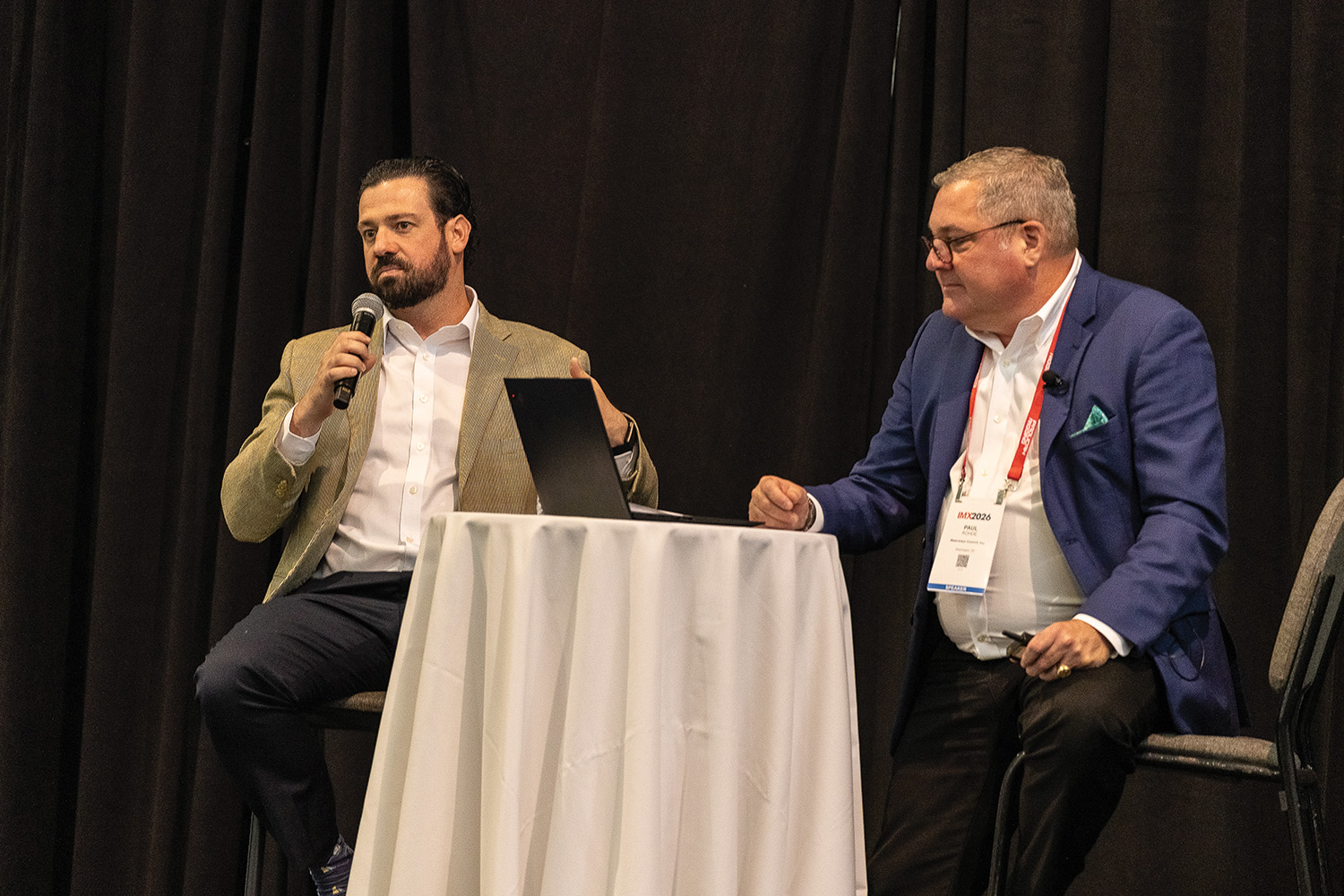
Tracy Zea, president and CEO of Waterways Council, Inc. (WCI), and Paul Rohde, vice president of the Midwest region of WCI, hosted the construction and infrastructure education session May 28 at the Inland Marine Expo in Nashville, Tenn. The presentation, titled “Studies, Studies Everywhere — What Have We Learned?”, examined multiple reports published by the maritime industry to examine employment, commodity movement and progress made in advancing infrastructure and construction projects.
Rohde began the presentation by discussing how much funding inland river projects received from 2016 to 2026 compared to the president’s budget. In that 10 years, WCI delivered more than $6 billion in additional funding for major construction and rehabilitation projects on the inland waterways, he said.
“There’s an old saying that the president proposes and Congress disposes, and that’s really true when it comes to the energy and water appropriations that we’ve seen over the last decade,” Rohde said.
While funding has improved, Zea said a focus on project execution is necessary. Since 1997, only three major lock modernization projects have been completed.
“In the past, it used to be the Corps of Engineers said if you give us funding, we can build it,” Zea said. “Unfortunately, we’ve given them funding over the last 12 years, and they cannot build it. So, it’s purely an execution issue.”
Rohde went on to introduce the first studies of the session, which included a 2025 study by the National Waterways Foundation that analyzed and compared employment statistics of a variety of operators in the trucking, rail and waterways industries. It evaluated the industries based on compensation, work-life balance, safety and job security.
The second study was conducted in 2026 by the USDA, titled “Economic Importance of Inland Waterways to U.S. Agriculture.” It is an extension of the original, which was conducted in 2019. The updated study expanded its scope to the Pacific Northwest, updated its data and methodology and focused on the impact of capacity expansion. It examined waterways disruption as well.
Rohde then introduced a study conducted in December 2025 by Polaris Analytics and Consulting. It was executed alongside the Louisiana Department of Transportation and Development and Big River Coalition and analyzed the effects of river disruptions on trade on the Mississippi River Ship Channel (MRSC). Results found that an unplanned 12-hour closure could cost the industry $3.8 million in losses, as well as $186,000 in lost labor income. A two-week unplanned closure could result in $194 million in lost output, and a per-foot draft restriction at 43 feet lasting more than two weeks could mean a loss of $5.5 million.
“It really puts arrows in the quiver for making the argument of dredging and investments into the lower Mississippi, and specifically the MRSC,” Rohde said.
In 2025, the inland waterways system received a C minus grade from the American Society of Civil Engineers (ASCE). Zea pointed out that while the grade is exciting, it is funding based.
“We really aren’t at a C minus right now,” Zea said. “That’s purely based on the increased funding. It’s not based on the new projects and the reliability of the system, so that grade should actually go down.”
The “Building Infrastructure, Not Paperwork” initiative released by the Corps earlier this year aims to ameliorate project backlog, as well as prevent future delays. The Corps outlined five principles for the new initiative, including maximizing infrastructure delivery and prioritization.
“There are currently 44 Corps districts that don’t often communicate or work collaboratively with each other,” Rohde said. “There is supposedly an attempt to fix that.”
This year, the Corps separated salaries from other line items in the FY 2027 budget, showing a division of employee pay from infrastructure and construction allocations.
“We see this as a really good idea at WCI, and we agree with Assistant Secretary (Adam) Telle on this,” Zea said. “We see it as a great talking point. We’ve had major questions about certain districts hyping up their salaries to keep jobs going, in order to keep employees funded. So, this draws transparency to that. There’s a need to complete projects, and this could potentially get more money to infrastructure. That, we see, is a major win. If Congress can align with the Corps’ priorities, we have to get to actually completing projects.”
Zea and Rohde went on to introduce the white paper WCI released in February, which requests the creation of an integrated Inland Navigation Construction Organization (INCO) to address the disorganization surrounding the Corps and infrastructure and construction projects. The initiative calls for the appointment of a single program manager to head Corps projects, rather than the current approach of districts addressing projects individually. Zea is optimistic that the development of INCO could prevent future delays and cited the Kentucky Lock and Olmsted Lock projects as examples that need not be repeated.
“The problem is you don’t have a belly button,” Zea said. “There’s no one that you can point to or go to. There’s not a quarterback that’s making sure that the design process is going along. There’s not someone checking in and making sure milestones are being hit.”
Featured photo caption: WCI president and CEO Tracy Zea and vice president Midwest region Paul Rohde led the construction and infrastructure session during the 2026 Inland Marine Expo in Nashville, Tenn. The session focused on the findings from various studies conducted on the inland waterways system as well as solutions to project delays. (Photo courtesy of ECN Photography)