
Federal Grant Funds Lock Sensor Research
Travis Fillmore compares the data from sensors and strain gauges on lock gates as similar to the results of blood pressure readings and other medical tests doctors may order at a patient’s physical.
The information can be used, in both cases, to try to detect a problem that is otherwise difficult to see, in this case underwater instead of within the body.
That’s why a new grant-funded research study looking at data from lock sensors is so important, he said.
“They get information that you really can’t get unless you dewater the lock and look at it while it’s dewatered, which is difficult to do,” he said. “They can give you information over time periods where otherwise you would be kind of blind.”
Fillmore, a research civil engineer at the Coastal Hydraulics Laboratory, a division of the Corps of Engineers’ Engineer Research and Development Center (ERDC), is part of a team of three people conducting a one-year study that involves using lock sensor data along with a computerized simulation and artificial intelligence to help inform future lock maintenance.
The project was selected for funding through the Department of War SMART Scholarship-for-Service Program’s SEED Innovation Awards. The study began October 1 and is planned to last a year, although future research could build upon its conclusions.
Led by Dr. Trent Schreiber, a research civil engineer at ERDC’s Construction Engineering Research Laboratory, the research is developing a more affordable way to monitor the condition of the nation’s locks and dams.
The researchers use what is callled population-based structural health monitoring. Essentially, they take information from lock miter gates — the massive steel gates that allow vessels to pass through navigation locks — that are covered with many sensors and create a realistic computer model using computer-assisted drafting. They then hope to be able to use that model, combined with artificial intelligence, to detect patterns and behaviors, determining stresses and strains on similar gates elsewhere that don’t have as many sensors on them.
That eventually could help engineers identify potential gate damage earlier, between infrequent dewaterings, and to schedule maintenance before a major failure takes place. It also could reduce the requirement to install so many sensors at the sites, which can be both expensive and difficult, especially when those sensors must be placed beneath the water.
The work includes monitoring quoin gaps between lock miter gates and lock chamber walls, where improper alignment has, in the past, placed load stress on the gate instead of against the entire chamber. That has previously caused cracking to gate pintles, essentially ithe gate’s lower “hinges,” or their surrounding components.
That kind of cracking has caused major failures in the past few years at multiple locks on the system that have been found only after they have taken place. That has been primarily either when crews have heard popping or cracking noises, noticed a structural failure in the way the lock operates or found cracking after dewatering a chamber for other work.
Similar problems were discovered at Demopolis Lock and Dam at Mile 213.2 of the Tombigbee River in January 2024, Wilson Locks and Dam at Mile 259.4 of the Tennessee River in September 2024 and at Lockport Lock and Dam at Illinois Waterway Mile 291.1 in January 2025. All of those led to the locks being dewatered and closed for a period, halting or severely delaying navigation traffic for weeks or months.
For research purposes, engineers are starting by constructing a computerized model using sensors from The Dalles Locks and Dam on the Columbia-Snake River System in the Pacific Northwest because the miter gates there are already equipped with many sensors as well as because the “arched” style of miter gate is repeated elsewhere in the system, making comparisons easier.
Eventually, Fillmore said, future research could build on the work, applying it to other parts of the inland waterways, such as at Greenup Lock and Dam on the Ohio River.
Finding where strains and stresses can cause cracking before it takes place can prevent unscheduled outages and costly repairs, prevent damage from spreading to other components and address safety proactively, Fillmore said.
For the structural engineers monitoring those locks at the district level, “They may even be able to justify more funding dollars to repair a component of concern,” Fillmore said.
Unlike earlier studies that relied on nearly identical structures and sensor arrangements, the ERDC approach is designed to account for differences found in real infrastucture. If successful, the research could make structural health monitoring more practical for wider uses across navigation infrastructure in the future.
The work also has implications for national defense as inland waterways move materials important to manufacturing and military readiness. Faster identification of infrastructure damage could help engineers prioritize repairs, reduce supply chain disruptions and restore infrastructure more quickly after it is damaged.
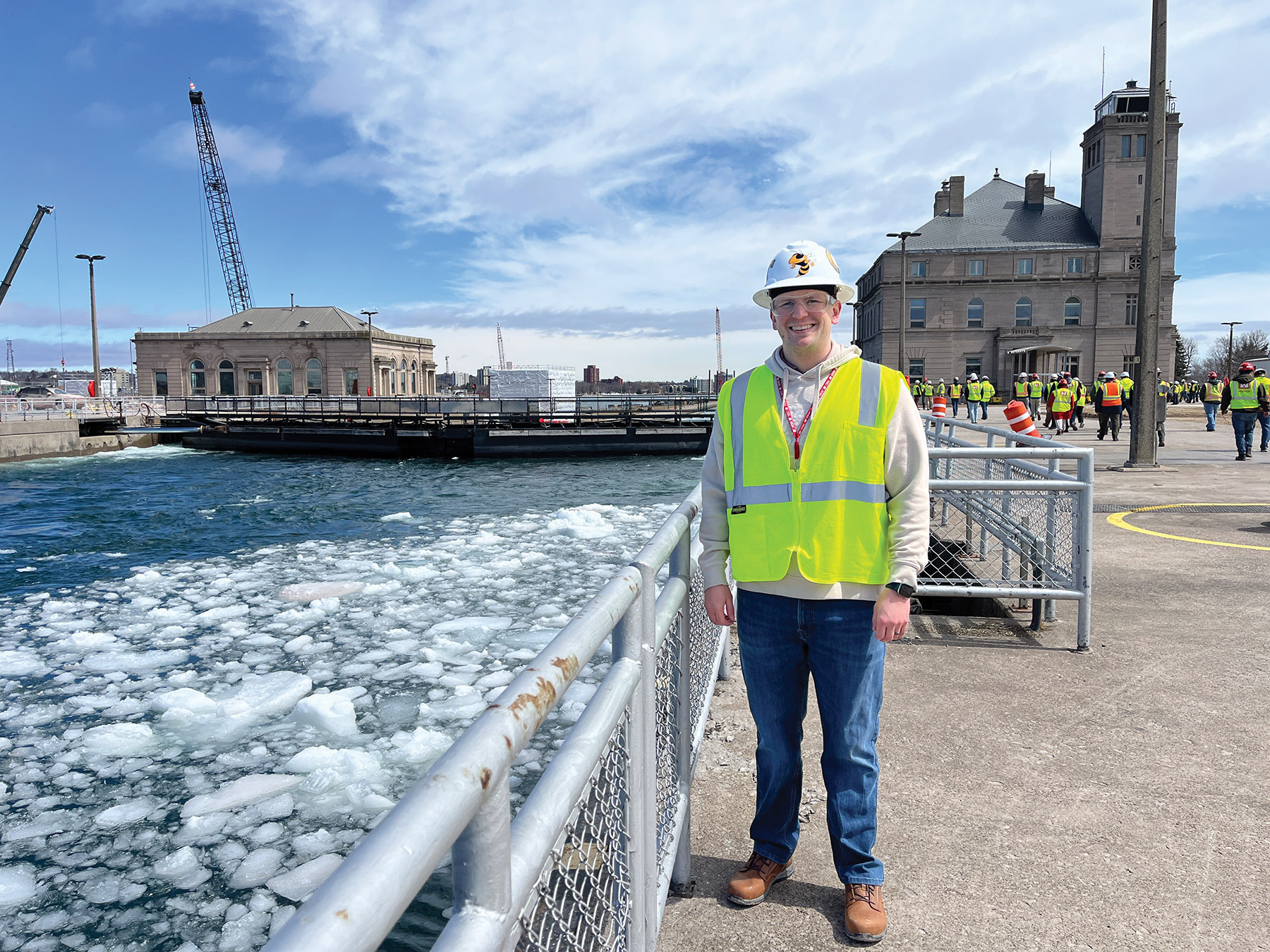
Featured photo caption: Dr. Trent Schreiber, research civil engineer at ERDC’s Construction Engineering Research Lab, is advancing research on a more affordable way to monitor the structural health of navigation lock gates. He and his team are conducting a grant-funded one-year study. (Photo courtesy of the U.S. Army Corps of Engineers)