
We Work The Waterways Uses Hands-On Activities To Teach Safety, Stewardship
Safety and environmental stewardship are key parts of We Work The Waterways’ efforts to introduce students to careers on and around the nation’s waterways.
The organization hosts Maritime Interaction Days, bringing together maritime companies, nonprofits, government agencies and other stakeholders to give students hands-on exposure to the industry and its career opportunities.
Safety is incorporated throughout the events, beginning with a safety briefing before students move into Explorer Dock learning stations.
“We always start our Maritime Interaction Days with safety briefings for the students,” said Errin Howard of We Work The Waterways.
The safety stations give students an opportunity to practice procedures and learn how communication, teamwork and proper equipment contribute to safe maritime operations.
One station focuses on line handling, teaching students about the types and purposes of lines used in maritime operations and proper techniques for handling them. Students also learn about hazards such as snap-back zones, the importance of personal protective equipment and the need for communication and coordination during mooring and unmooring operations.
Another station deals with the issue of man-overboard operations. The learners are assigned various positions, such as the spotter who spots and announces the incident, the wheelman who makes use of the radio to communicate and respond and the deck crew members.
The exercise emphasizes the urgency of a man-overboard situation while demonstrating how communication and teamwork are essential during an emergency.
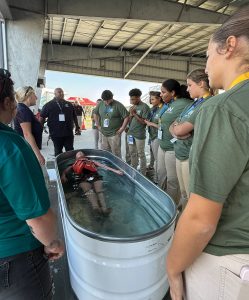
A water rescue station gives students another opportunity to practice emergency procedures. Participants work together to remove a lifelike rescue dummy from a training tub, allowing them to experience the physical demands of a water rescue and learn proper recovery techniques.
Radio communication is another focus. Students role-play real-world scenarios to demonstrate the importance of clear, two-way communication on the water.
In the activity, a volunteer acting as the wheelman gives instructions over the radio with guidance from a maritime subject matter expert. Other students take on deck crew roles, including an experienced deckhand wearing a personal flotation device and carrying a radio and an inexperienced deckhand wearing a PFD without a radio.
The exercise emphasizes asking questions, maintaining communication and using the buddy system.
Environmental education is incorporated into Maritime Interaction Days through partnerships with environmental organizations around the country.
“We have to share our waterways,” Howard said. “We all have to share them and preserve them for future generations.”
One of those partners is the Foundation for Ohio River Education, which serves communities throughout the Ohio River Basin. The organization has participated in events from Pittsburgh down the Ohio River and brings hands-on environmental activities to students.
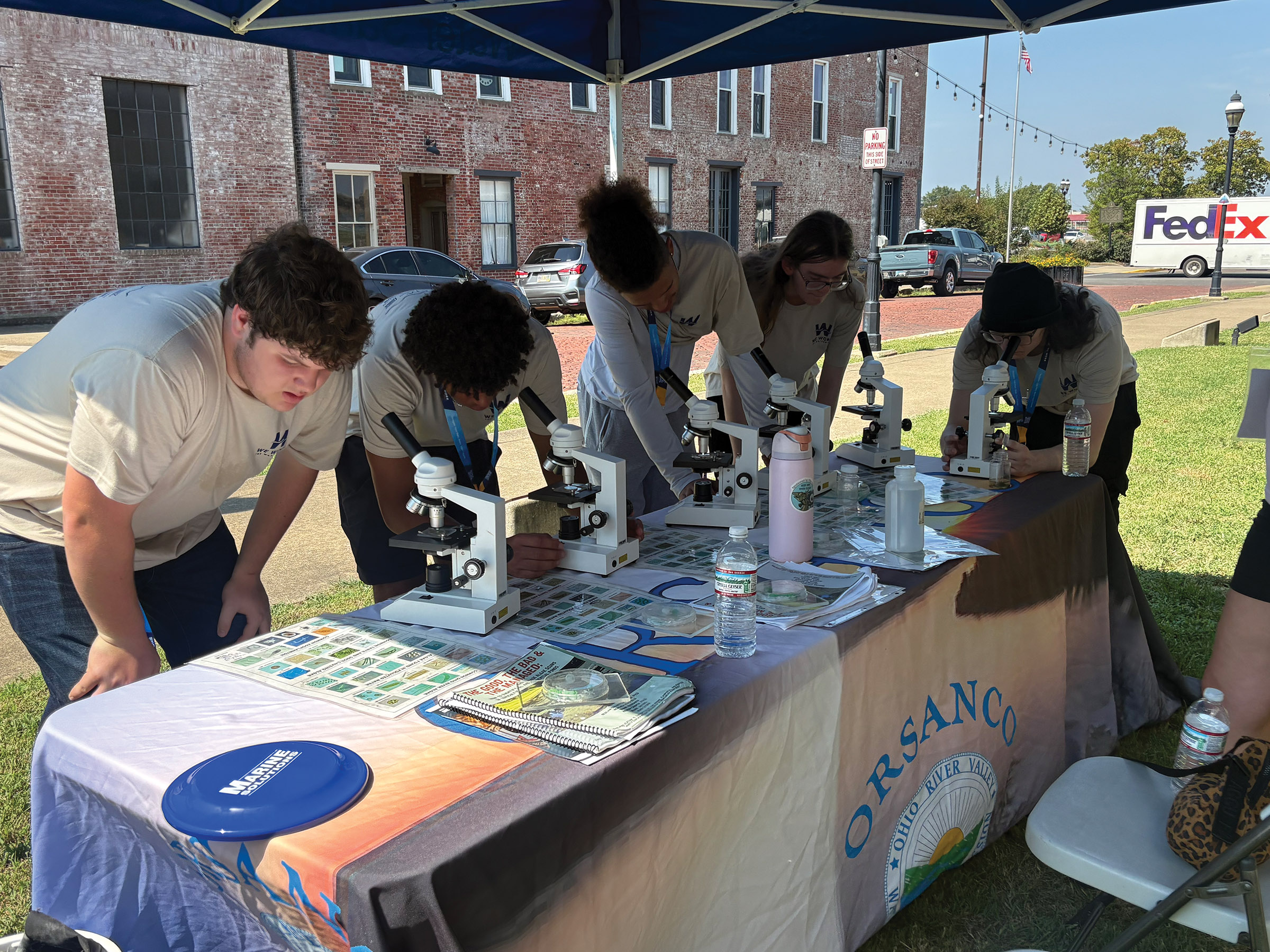
At the events, students can use microscopes to examine river water samples and see microscopic organisms found in it.
The activities give students an opportunity to see the waterways from another perspective while learning about the ecosystems connected to the maritime industry.
Howard said We Work The Waterways works with stakeholders across the industry to provide students with a broad look at the working waterways.
“We work with the maritime industry and all the stakeholders, from the for-profit companies to the nonprofits,” Howard said. “We even invite the Corps and Coast Guard and all those who have anything to do with our working rivers to come together, to put on a day full of engagement for young people to understand our industry.”
The organization holds Maritime Interaction Days at locations throughout the country, with individual activities varying based on the companies and organizations participating at each event.
A Maritime Interaction Day is scheduled for October 21 at the National Great Rivers Museum in Alton, Ill.
While the events introduce students to maritime careers, they also provide an early look at the responsibilities that come with working on the waterways — from recognizing hazards and responding to emergencies to communicating effectively and understanding the importance of protecting the environment.
Through hands-on demonstrations and interaction with maritime professionals, We Work The Waterways is showing students that safety and environmental stewardship are integral parts of working on the nation’s waterways.
Featured photo caption: Students examine water samples under microscopes during a We Work The Waterways Maritime Interaction Day, learning about the microscopic life found in the waterways. (Photos courtesy of We Work the Waterways)