
CDMCS Annual Meeting Highlights Safety, Health
The Council for Dredging and Marine Construction Safety (CDMCS) held its annual Leadership in Safety Annual Meeting December 16 at the Westin Georgetown in Washington, D.C.
The event drew 38 in-person and 46 virtual attendees representing the organization’s membership of dredging and marine construction companies.
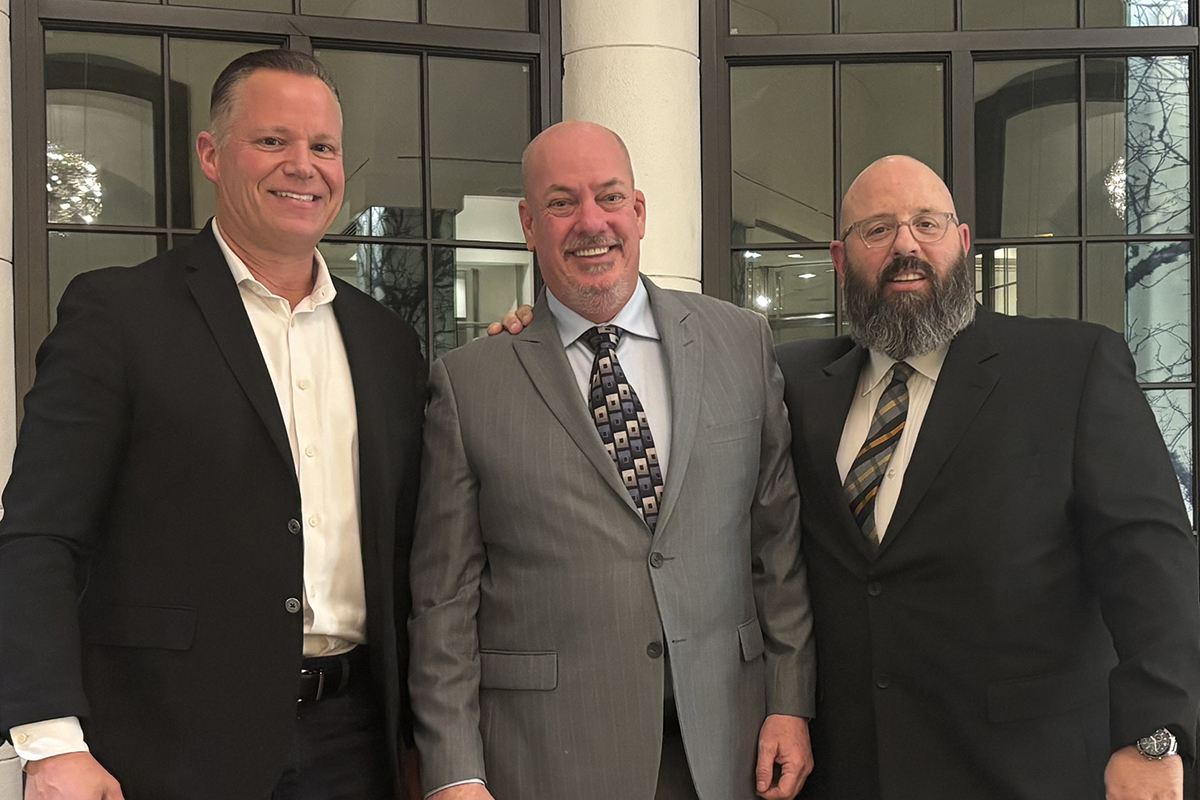
Two Leadership in Safety Individual Awards were presented to Cashman Dredging employees Stephen Aykroyd and Robert Labbe for their roles in advancing Cashman’s Site Safety and Health Officer (SSHO) program. The program’s purpose is to build a sustainable safety culture in the company’s marine operations.
Aykroyd was recognized as a mentor and trainer, providing guidance, technical expertise and structured coaching to beginning safety professionals. Labbe was one of the first safety trainees to go through the program’s full development pathway. With Aykroyd’s mentorship, Labbe developed field leadership, operational discipline and the ability to apply these to ongoing projects.
The annual meeting’s technical program began with a virtual presentation by Troy Larson, safety and occupational health manager at the Corps of Engineers’ headquarters. Larson reviewed dredging and marine construction incidents, root causes and lessons learned on Corps projects.
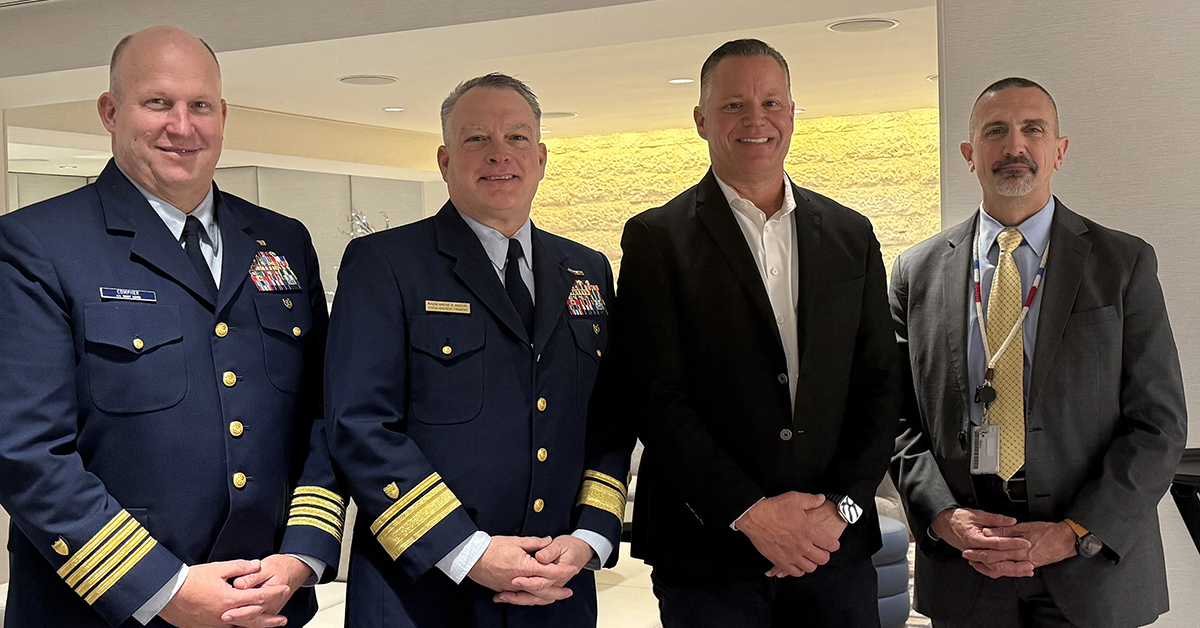
U.S. Coast Guard officers Rear Adm. Wayne Arguin Jr., assistant commandant for prevention policy, and Rear Adm. Rob Compher, director of inspections and compliance, conducted a roundtable discussion on emerging maritime risks, regulatory expectations and national safety priorities influencing the dredging and marine construction industry.
Under an Industry, Technology & Safety Innovation heading, four papers informed members of equipment and techniques that improve safety of individuals and jobsites.
Kevin Rindal of Vimocity, a workforce readiness platform that advises on safe ways of performing jobsite tasks, briefed attendees on the aches and pains that can result from working on a dredge. He demonstrated stretches and exercises workers can do to ease pain prior to the workday.
Jeffrey H. Wood, partner in Baker Botts LLP, a global law firm specializing in many aspects of business operation, discussed environmental law, pipeline safety, infrastructure permitting and federal regulatory insights. He discussed federal enforcement trends, infrastructure project challenges, pipeline/utility interference issues and legal considerations for high-risk marine operations.
Devon Carlock, president of CDMCS and vice president of safety and government affairs for Cottrell Contracting Company, and Ed Landgraf of Coastal Marine Operators (CAMO) and MarineSafe811, discussed the CDMCS and MarineSafe811 pipeline task force, covering utility strike prevention, evolving pipeline safety risks, improved contractor/operator communication, buffer zone guidance updates and near miss and incident analysis.
811 is the national “Call Before You Dig” number in the United States for free utility line location. MarineSafe811 provides utilities location support for marine-related activities in all states that contain waterways, lakes, rivers, bays, bayous and the Gulf, Atlantic and Pacific coasts.
Services include access training, 811 notification guidelines, best practices, awareness materials and support for marine-related activities. The program is managed by a team under the Damage Prevention Council of Texas (DPC of Texas), Texas811 and Coastal and Marine Operators.
Jason Deese, CEO of Flash Weather AI, presented next-generation weather intelligence for marine operations. He described a lightning hazard prediction AI (artificial intelligence) system for working on water that informs individuals of when a lightning strike is imminent and all should take shelter. The forecasting can be tailored for dredging, survey and marine construction activities.
Attendees included representatives from many of the 48 member companies (all voting members are dredging contractors) and major suppliers to the industry. Erica Janocha, dredging program manager for the Corps, and Tiffany Burroughs, chief of navigation at Corps headquarters, both attended. Besides Arguin and Compher, Jeremy R. Gauthier, director of the U.S. Coast Guard Investigative Service, also attended.
CDMCS President Devon Carlock stated that attendance was down this year due to the proximity to the holidays and that he plans to schedule the next meeting for an earlier date in 2026.
————
Featured photo caption: Pictured at the Council for Dredging and Marine Construction Safety’s annual Leadership in Safety Meeting are (from left) Rear Adm. Rob Compher, director of inspections and compliance for the Coast Guard; Rear Adm. Wayne Arguin Jr., assistant commandant for prevention policy; CDMCS President Devon Carlock; and Jeremy R. Gauthier, director of the U.S. Coast Guard Investigative Service. The Coast Guard officers presented a roundtable on maritime risks, regulatory expectations and national safety priorities. (Photo courtesy of CDMCS)