

Report Underscores Need, Pathway For Improved Mariner Well-being
By Evan Brown, SCI director of communications, Special to The Waterways Journal
The Seamen’s Church Institute (SCI) is often privileged to tell the stories of our chaplains and staff on the front line of supporting, training and advocating for mariners and seafarers. From time to time, though, we learn some statistics that really raise an eyebrow.
In 2025, SCI’s Ministry on the River chaplains reported that more than 75 percent of their responses to mariners were related to physical or mental wellness issues. Responding to the aftermath of accidents made up just 23 percent of our callouts, but physical problems, such as mariners suffering from heart attacks or experiencing emotional or mental issues like suicidal ideation, made up the rest. As Center for Mariner Advocacy Director Phil Schifflin, Esq., reported in the Fall 2025 issue of SCI’s magazine The Lookout, “While safety remains critical, wellness, both mental and physical, seems to represent the greatest threat mariners face today.”
This makes SCI’s recent release of the report titled “U.S. Inland Mariner Wellness Assessment: Perceived Effectiveness of Recommended and Implemented Interventions to Improve U.S. Inland Mariner Wellness,” commissioned by SCI and authored by Dr. Martin Slade of the Occupational Health Division of the Yale School of Medicine, especially timely and significant.
The report provides a comprehensive examination of the health and overall well-being of America’s inland mariners. At the outset, Slade observes that, despite the demanding and often high-risk nature of their work, inland mariners have historically been underrepresented in maritime occupational health research. SCI believes this assessment helps underscore the urgency of this issue, and it draws on more than two decades of academic literature supplemented by interviews with leaders from U.S. inland maritime transportation companies.
While not entirely surprising to many in our industry, the risks faced by inland mariners are still sobering. This vital workforce is challenged by significant physical, psychological and lifestyle-related issues driven by long work hours, fatigue, extended time away from home, physically demanding labor, social isolation and persistent stigma surrounding mental health. They face high rates of fatigue, obesity, cardiovascular risk factors, anxiety, depression, substance use and elevated suicide risk. Further compounding the issue, these quality-of-life factors also have indirect impacts on crew and vessel safety, workforce retention and operational performance.
The report also lays out broad, practical and evidence-based recommendations designed to improve mariner wellness across the industry. These include strategies related to nutrition and diet, fatigue management, mental health support, leadership and training, healthcare access, improved communication channels and organizational culture.
One of the most encouraging insights is that many improvements can be implemented quickly and at relatively low cost. For instance, training cooks and captains in healthy food preparation, ensuring consistent access to nutritious meals and adequate hydration, expanding mental health resources and strengthening leadership skills centered around well-being all have the potential to deliver immediate benefits. Other recommendations—such as fatigue risk-management systems and improved sleep environments—may require longer-term planning but offer substantial returns in safety and productivity.
Central to the report is a call to strengthen the “culture of care” within the industry. It acknowledges mariners as individuals embedded in families and communities and recognizes that these connections accompany them on the job. It also emphasizes the importance of destigmatizing the need to seek support for both physical and mental health. Companies that understand this and invest in a positive culture of care are more likely to experience higher morale, improved retention, fewer accidents and lower long-term costs related to turnover and training.
The report also underscores the importance of collaboration. Meaningful, lasting progress will require partnerships among maritime companies, government agencies, labor organizations, educators, researchers and organizations dedicated to mariner well-being.
“Our hope at SCI is that this report will reinvigorate attention within the industry surrounding the wellness of U.S. inland and near-coastal mariners,” Schifflin said. “We see opportunity in this report, but meaningful progress will rely on collaboration. Through collective effort, SCI feels we can develop practical, scalable solutions and weave health and well-being into the very fabric of maritime culture, both on the water and ashore.”
The U.S. Inland Mariner Wellness Assessment is available through the Seamen’s Church Institute and is designed as a resource for industry leaders, policymakers and stakeholders dedicated to improving the health and well-being of inland mariners nationwide.
“This report gives the industry a clear roadmap,” Slade said. “It shows where the challenges lie, what solutions are available and why acting on these insights matters—for mariners, for companies and for safety on the waterways.”
Schifflin will spearhead SCI’s efforts to share the report with the U.S. inland maritime community with a hope that its findings and insights will help drive meaningful action. He is also available to discuss the report and its implications and plans to present its findings throughout the year at inland and coastal maritime conferences. His contact information is available at seamenschurch.org/cma. SCI looks forward to these constructive conversations and, more importantly, to translating them into policy that prioritizes improved mariner wellness.
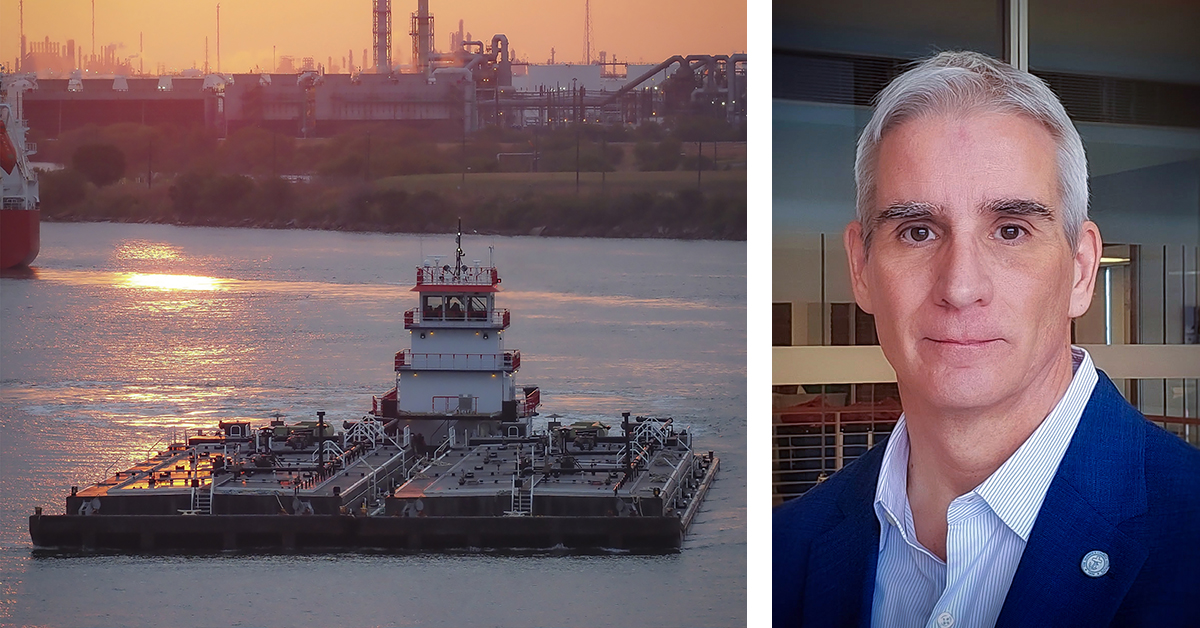
Featured image caption: A photo of a towing vessel and its tow, alongside a portrait of Evan Brown, director of communications for SCI.