


David Yarbrough Celebrates 20 Years At Tulsa Ports
It was 2006 when David Yarbrough first joined the Tulsa Ports (then called Tulsa Port of Catoosa) as an operations manager.
“I was an engineer, so a newbie to the inland waterways,” he told The Waterways Journal.
He was promoted to executive director in 2017 after serving as deputy director. This February marked his 20th work anniversary at Tulsa Ports, which the port staff celebrated with a dinner.
In 2019, Yarbrough and his team led a rebranding of the organization, which formerly did business as the “Tulsa Port of Catoosa.” Today, Tulsa Ports is forging ahead toward a new era of expanded transportation options, and workforce development.
“We’re still very much an inland port, but we are also an economic development organization,” Yarbrough said.
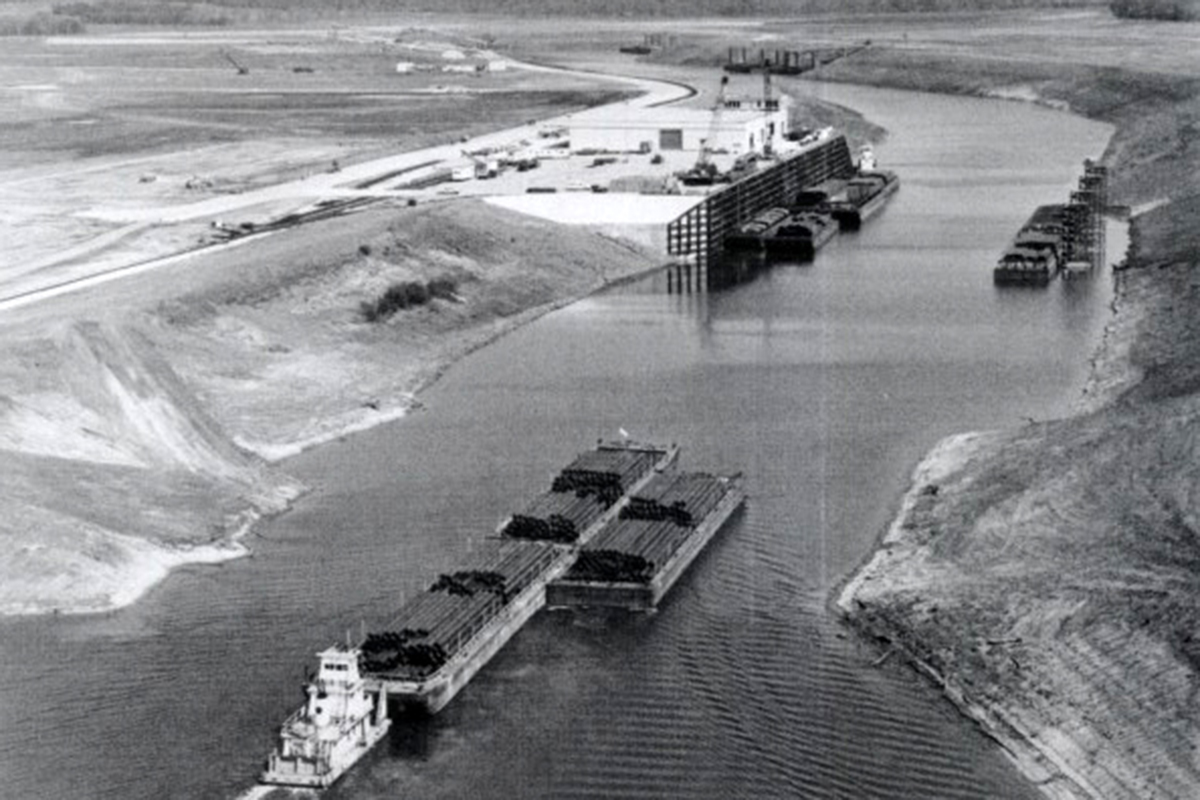
Now in its 55th year, Tulsa Ports includes the capabilities of the established, 2,000-acre Tulsa Port of Catoosa and the Tulsa Port of Inola, a 2,200-acre master-planned port/industrial park. The big ongoing news at the Tulsa Port of Inola was the announcement last year of the arrival of Emirates Global Aluminum (EGA), which chose the port as its home for its next plant — the first aluminum production facility built in the United States since 1980. It will nearly double the domestic production of aluminum and reduce the amount imported by the United States. The approximately $5 billion investment will employ 1,000 people after it’s built. The company hopes to be in operation by 2029 or 2030.
One of the preconditions for any site that EGA chose was water transport, and the Tulsa Ports met that requirement. The port built a $71 million waste-water facility “on faith” to attract businesses like EGA, Yarbrough said.
“EGA is the first to join Sofidel America at the Port of Inola, and I don’t think it will be the last,” he said. “It’s a real win, not just for this port, but for our state. We beat out more than 20 other states and provinces who competed to land the facility.”
In January of this year, EGA announced it is partnering with Century Aluminum Company in a joint development agreement. Under the agreement, EGA will own 60 percent of the joint venture, with Century owning the remaining 40 percent. The new plant is expected to produce 750,000 tons of aluminum per year — larger than previously envisioned and more than doubling current U.S. production. The Inola plant will create 1,000 permanent direct jobs at the facility and 4,000 jobs during construction.
When completed, the aluminum plant is expected to generate up to a million tons of tonnage a year in barge shipments. That tonnage will be welcome, as barge tonnage has been relatively flat lately. The port has taken a number of hits to barge shipments, Yarbrough said, but none of the factors have anything to do with tariffs.
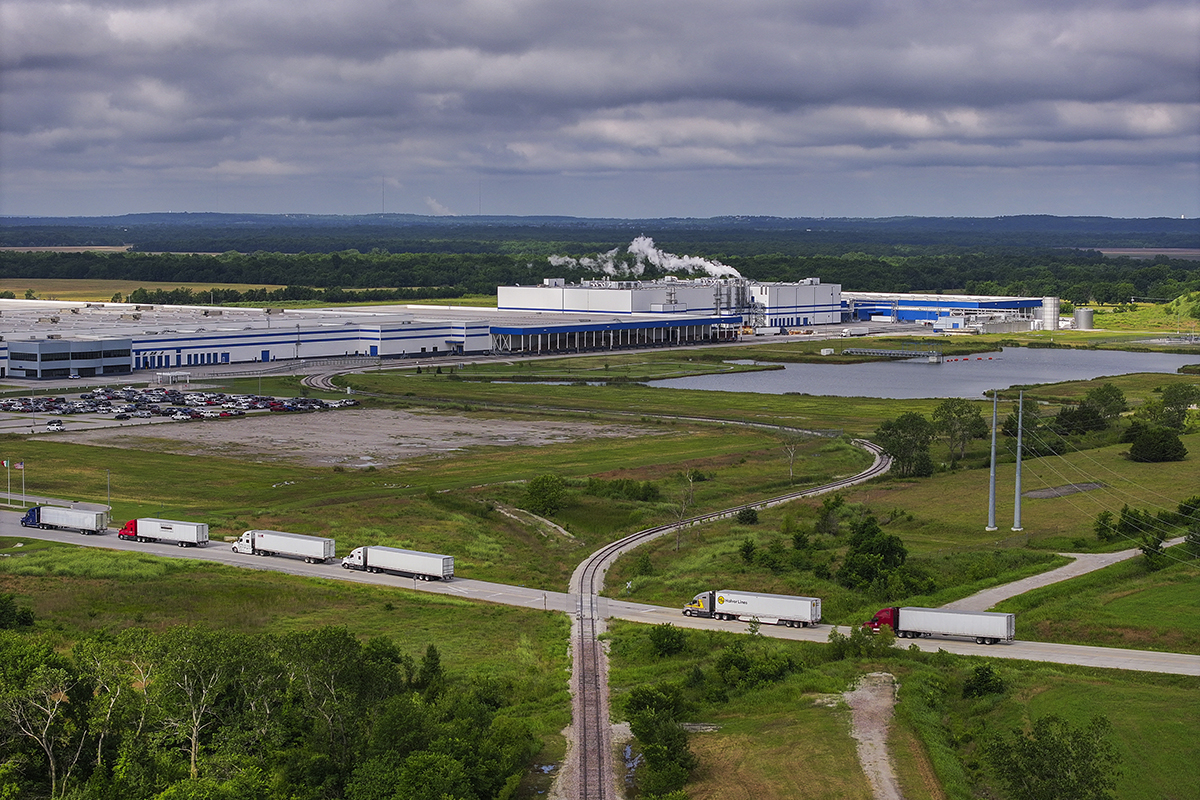
The area around the port had a great wheat harvest, he said, but wheat prices being what they are, a lot of that wheat is sitting in storage rather than moving on the rivers. In addition, CF Industries experienced a scheduled equipment revamp and shutdown of certain processes at its Verdigris facility near the Tulsa Port in 2025, which reduced liquid fertilizer production and affected overall port barge tonnage.
In September 2024, Bartlett completed and opened a new, state-of-the-art $375 million soybean processing plant in Cherryvale, Kansas, about 85 miles north of Tulsa. The facility processes up to 49 million bushels of soybeans annually, providing refined oil, meal and renewable fuel feedstocks while creating more than 60 permanent jobs. It’s a boon for the region, but it moves its soybeans by rail, not barge.
“That took a lot of tonnage off the rivers,” Yarbrough said.
He adds, “Up until about 10 years ago, we used to import a lot of nitrogen-based fertilizer on the rivers. But thanks to domestic natural gas production, we don’t need to do that much anymore.”
Not that Yarbrough opposes rail, quite the contrary. In September, Tulsa Ports is constructing major rail infrastructure expansions to accommodate unit trains. A new $50 million unit train facility is under construction, complementing the 4.4-mile Verdigris Southern Railroad, which connects the port to the Union Pacific main line.
“This won’t compete with waterways, but instead will complement them,” said Yarbrough. “This unit train facility will move containers that normally move by truck, handling less-than-truckload ag products like identity-preserved grains and sorghum, not much of which moves now.”
On the national level, Yarbrough is a strong promoter of the value of the navigable waterways of the United States, including the McClellan-Kerr Arkansas River System. He routinely travels to Washington D.C. for waterway advocacy along with other Oklahoma and Arkansas stakeholders. He is also a board member and past chair of the National Waterways Conference.
The tonnage brought in by the EGA plant will bring back barge traffic at Tulsa Ports. In the meantime, potential port tenants know that Tulsa is one of the most affordable and attractive places to live for young recruits.
“We regularly make Top Ten lists for quality of life,” said Yarbrough.
Yarbrough loves what he does and where he lives. He gives all the credit to his board and staff, saying, “I love how they have embraced new ways of doing things. I’ve seen the same kinds of things happening at the ports of Little Rock and Muskogee.”
Featured image caption: David Yarbrough, executive director of Tulsa Ports. (Photo by Shane Bevel)