
Captain’s Panel Share Experience At IMX
Earning a towboat captain’s license is a career landmark. It follows years of experience and study, resulting in a high-paying job with regular time off. Many towboat captains are comfortable spending their careers on the water until retirement, and their experience remains sorely needed by the industry.
Yet a captain’s berth can lead in other directions as well. Captaining a towboat requires not just proficiency in navigation, radar, boat handling and the myriad other technical skills that go into making a good inland captain. It also develops leadership skills that are valuable in any setting, on or off the water.
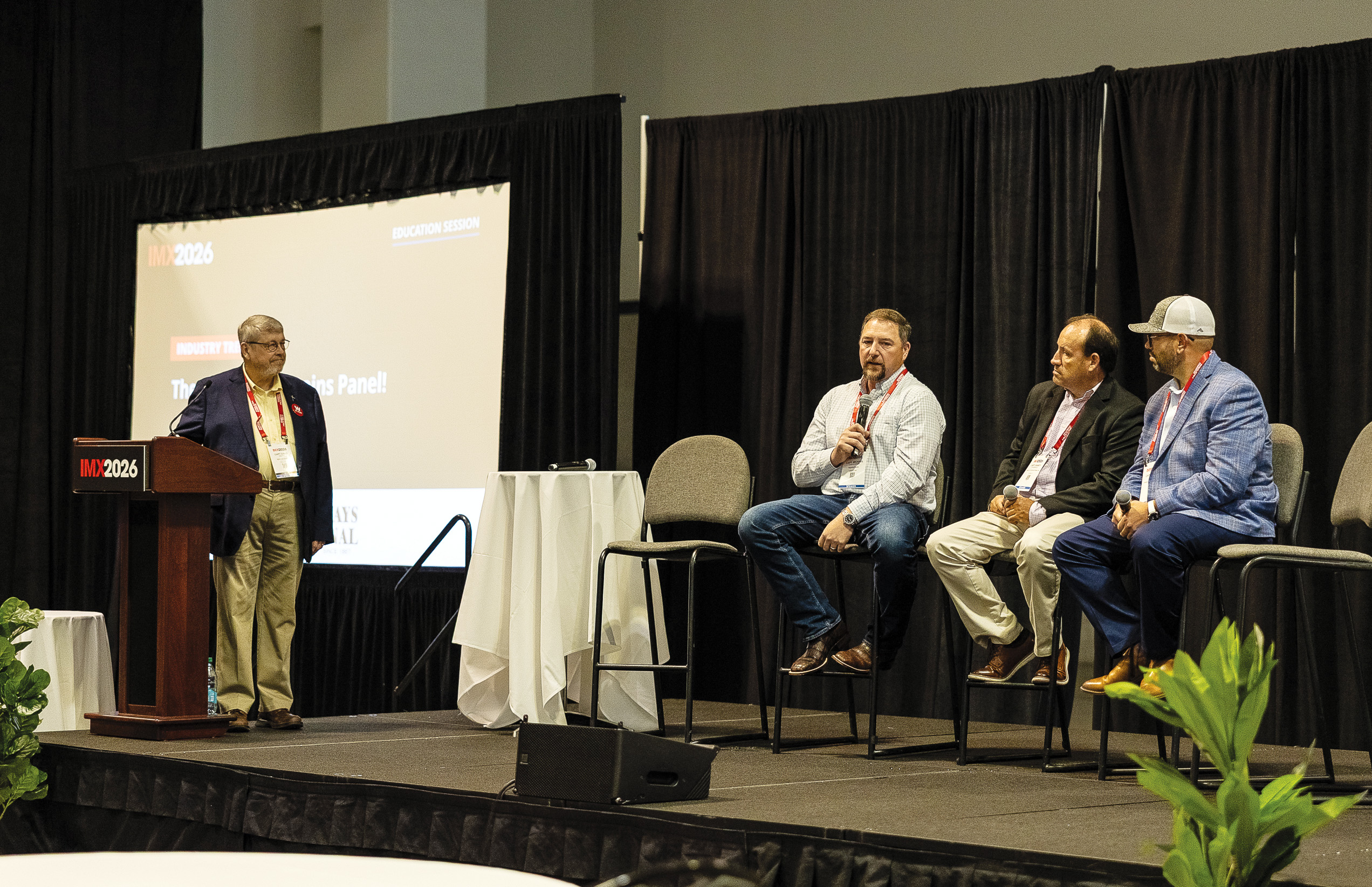
The diversity of career options for inland captains was on display during the Captain’s Panel at the recent Inland Marine Expo in Nashville, Tenn., one of the most popular sessions. It was moderated by The Waterways Journal’s own Capt. David Smith, whose license remains active. Smith is the author of the Old Boat Column. The panel of captains took a number of questions on career development, mentorship, leadership and advances in the industry.
Capt. Randy Chamness, vice president of vessel operations for American Commercial Barge Line (ACBL), started his career on the river in 1993 as a deckhand.
Capt. Shane Checkan, general manager at Industry Terminal & Salvage, is responsible for overseeing all aspects of the company’s operations. His responsibilities include sales management, logistics, terminal operations and managing a diverse workforce of more than 100 employees. Checkan was “born into” the life, being the fourth generation of towboaters in his family. He “went straight to the boats” right out of college.
Capt. Michael Carpenter, senior port captain at Magnolia Marine, has spent more than 25 years in the inland maritime industry as a deckhand, mate, pilot and master of inland towboats. He is a Coast Guard-designated examiner.
Developing Captains
Chamness spoke about ACBL’s steersman program, which develops future captains. “Watching people develop is something I’m proud of,” he said. “I recommended we keep the steersman program going even when things were slow.”
Checkan emphasized that, while “It’s expensive to have a steersman,” being a captain means being a leader as well as piloting. The goal should always be to grow “wheelhouse leaders,” he said.
Asked to define a port captain’s duties, Chamness said there is no conflict between representing the company and the mariner. “You have to do both, and you can!” he said. Checkan added, “These are executive positions, and we don’t take them lightly.”
Wheelhouse Safety
Leadership often means enforcing policies that favor safety. Checkan said his company has a “zero tolerance policy” for cell phone usage in the wheelhouse, but he admits that it’s hard to enforce.
Carpenter added, “It does no good to throw your phone in the river (to avoid being caught for violations). Your records are online!”
Regarding the perennial question about whether the proliferation of wheelhouse electronics helps or distracts, Carpenter said, “On balance, they increase efficiency. E-charting has helped tremendously, but the systems can break down.”
Checkan added, “They are a great aid, but they are an aid! Look out the window regularly.”
Chamness noted that members of the Lower Mississippi River Committee (LOMRC) pushed back against the Corps and advocated for physical aids to navigation. “It’s good to be able to see e-ATONs (electronic aids to navigation on charts), but not as a permanent replacement for physical ATONs,” he said.
Carpenter provoked laughter when asked, “Which stretch of the river causes the most concern?” “All of them!” was his reply. He said the river was at its most dangerous when in transition from low-water to high-water or vice versa.
More soberly, when asked what has been lost compared to 20 years ago, Carpenter answered, “Experience! There is no replacement or substitute for that.
Chamness added, “You need to have intimate knowledge of river systems. I’ve been a student of the rivers for 20 years.”
Featured photo caption: The Captain’s Panel at the 2026 Inland Marine Expo in Nashville, Tenn. featured, from left, moderator Capt. David Smith of The Waterways Journal, Capt. Michael Carpenter of Magnolia Marine, Capt. Randy Chamness of American Commercial Barge Line and Capt. Shane Checkan of Industry Terminal & Salvage discussing leadership, mentorship and safety in the inland marine industry. (Photo courtesy of ECN Photography)