

IMX Session Focuses On Disaster Preparation
As hurricane season progresses, it is vital that businesses implement and review emergency plans in case something goes wrong. Anthony Gex, deputy director for Inland Rivers, Ports and Terminals (IRPT), spoke of the importance of developing an emergency action plan for disaster preparedness at the Inland Marine Expo in Nashville, Tenn.
Gex began by introducing himself as a professional with more than 30 years of experience both on and off the river. His career has taken him to six different states where he managed 14 different ports and terminals on a variety of unique river systems. It has covered supply chain logistics and marine asset management both locally and internationally. Gex explained that, over the course of his career, he has learned the importance of preparing for natural disasters, both personally and professionally.
“Resilience covers both business and personal instances,” Gex said.
Gex cited disasters such as the 2019 Arkansas River Flood, which cost over $3 billion in damage; the 2020 Atlantic hurricane season, which cost $4.1 billion in supply chain disruptions across U.S. ports; the 2022 Mississippi low water crisis, which caused $565 million in agricultural export losses in Louisiana alone; and maritime cyber incidents that have risen 150% between 2020 and 2025. These examples, as well as a generational shift in river workers as experienced professionals retire and make way for new, talented yet inexperienced mariners, illustrate how important it is to be prepared. According to Gex, disaster preparation cannot just be taught in a classroom and, unfortunately, requires real-life experience to understand how to fully prepare.
“There is an experience gap that cannot be closed overnight,” Gex said. “There are no formal education courses on these things. In my 30-plus years’ experience, I’ve experienced 300-plus barge breakaways. I’ve experienced low water on multiple river systems and high water on multiple river systems that knocked out operations for a long period of time. I’ve had to deal with claims adjusters. I’ve had to deal with insurance. I’ve had to deal with customers and vendors as I recover and get service back up and operating. All these experiences teach something that someone just coming in will not fully understand.”
Gex acknowledged that each port and terminal is unique, and therefore will have a unique emergency response plan. However, all companies should have an emergency plan in place. Gex iterated an important first step: deciding who would be in charge of creating an emergency plan, and who would make sure it is carried out properly. Even landlords who lease their ports need to have their own emergency plans and consistently stay updated with tenants.
According to Gex, an emergency team can consist of anyone, including site personnel, divisional managers and third-party individuals, as long as they meet the unique needs of the business. No matter the team, communication is key for ensuring that a plan is carried out safely and efficiently. Gex recalled just how important having backup communications was during Hurricane Katrina.
“All the cell towers were down,” he said. “My cell phone was no good. What we wound up going to, to try and communicate, was satellite phones, but I can remember there was no way for me to get in touch with my personnel, no way for my senior managers in my company to get in touch with me. So, how are you going to communicate using things other than a cell phone or texting or email? How are you going to execute those processes? Your employee information needs to be up to date. If an employee is moving, if their phone number changes, make sure that’s being updated. You can’t get your business back up and running if your employees aren’t there.”
Gex also encouraged businesses to conduct regular emergency drills, which can go a long way in preparing green mariners if disaster strikes, and to record and file everything. He also stressed the importance of collaborating with emergency services, such as police and fire departments, so they are familiar with the job site as well.
“Learn what your weaknesses are, and correct those,” Gex said. “Also, include your local police, your firefighters and such. They should be familiar with your facility, know where to go, what products you’re handling. It helps them respond just as well as you. Be sure your employees are involved. They may provide some really good input.”
Communication before, during and after a natural disaster isn’t just important among employees; it should also be a priority between a business and its vendors. Gex suggested discussing disaster plans with vendors before a situation arises, and even drawing up contracts to determine how vendors can assist in getting the business operational again.
“Maybe they’re going to hold and stock some equipment,” Gex said. “Maybe they’re going to be ready when it’s time and the water’s receded to come in and help clean up the site prior to employees coming back and reducing that risk. But you need to have a plan ready for your needs and have those resources ahead of time. If you’re a vendor, this is a perfect time to provide a valuable service that goes a long way in building a relationship. I remember, as a terminal and port operator, a vendor was there at the time when I needed him the most, and I gave a little bit of loyalty to that vendor when it came down to other things and other decisions in the future.”
One of the most important lessons Gex has learned over his career, he said, is to have a good relationship with your business’ insurance company. He recommended consistently reviewing policies and pointed out that even large companies need to make sure that they are regularly updating their insurance companies on their assets. When a vessel is acquired, sold or scrapped, or if new equipment or assets are brought in, the insurance company needs to know. Gex also recommended keeping a running timeline when drills and preventative measures are enforced, as well as steps taken during a disaster. Documenting what was done and when proves to insurance companies that measures are being taken to prevent further damage and makes the process smoother when filing a claim.
“The insurance company will say, ‘Well, why should we pay for that?’ ” Gex said. “ ‘What did you do to mitigate the damage?’ Even with the cargo you may be handling, they’re going to want to know what you did to mitigate the damage. Regularly scheduled meetings for updates on action items and claims work are wonderful vehicles to help continue the ball moving after an event. When we talk about financial recovery and about business interruption, the more you document, the more information that they see that you have and you’ve planned for, it’s going to make it more efficient to get your claim taken care of.”
Through detailed procedures, prioritizing communication and diligent documentation, it is possible to limit some of the stress that comes when unexpected weather impacts your business. Above all, it is important that all employees do what they can to ensure the health and safety of their team. Examples of emergency drills, checklists and procedures can be found at the IRPT website at www.irpt.net/resilience/.
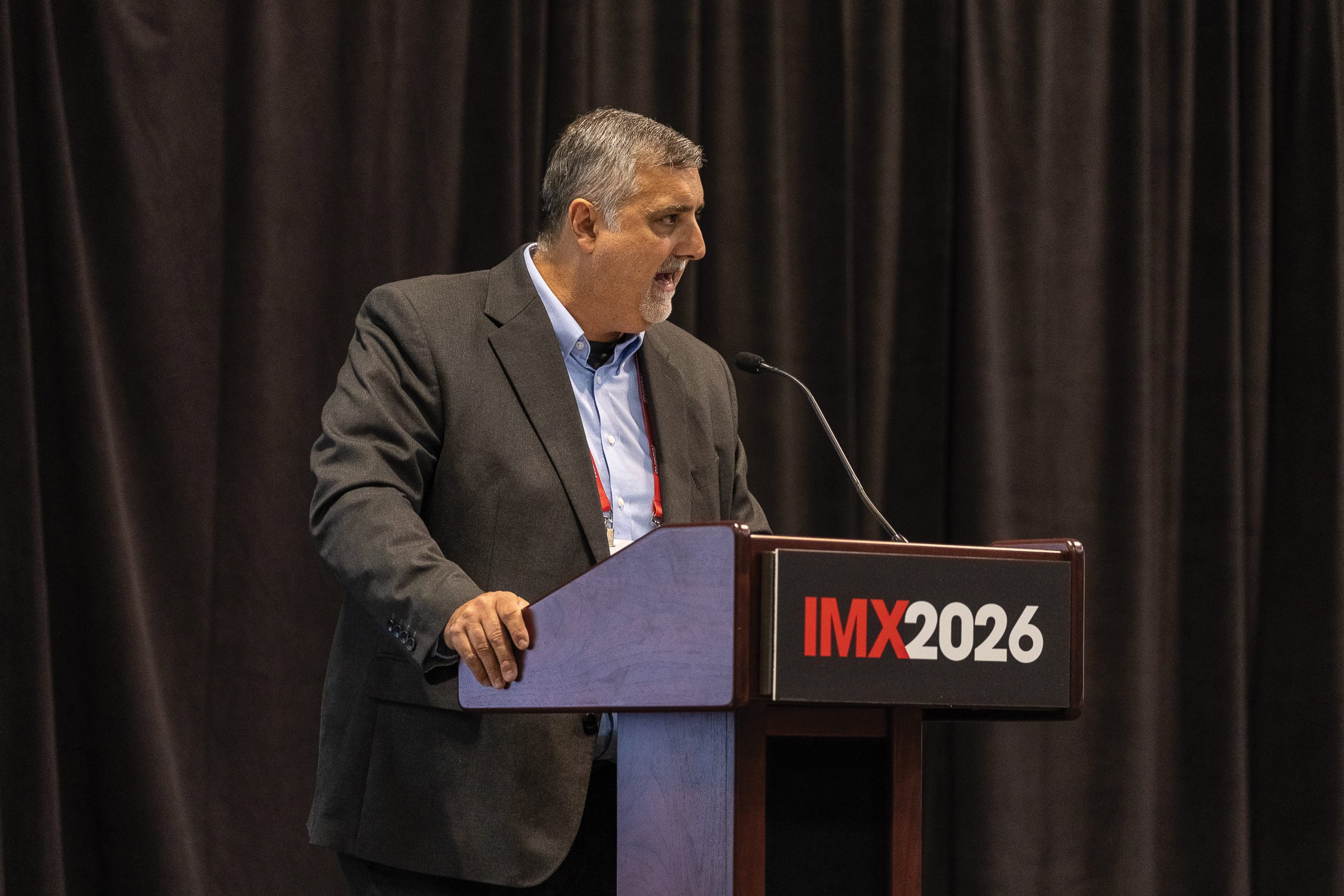
Featured photo caption: Anthony Gex, deputy director at Inland Rivers, Ports and Terminals, hosted the Ports & Terminals session at IMX. Titled “Port & Terminal Resilience: Disaster Planning & Operational Recovery,” Gex examined necessary steps businesses should take to ensure natural disasters are handled safely and correctly. (Photo courtesy of ECN Photography)