
Engineers Keep The Wheels Turning
They may not spend a watch in the wheelhouse or appear in line-handling reels on TikTok, but they’re nonetheless indispensable to the 24-hour movement of towboats on the nation’s waterways. This week, The Waterways Journal is focusing on engineers and their primary domain, the engineroom. We’ve talked to both vessel-based engineers and port- or fleet-focused engineers. Throughout, a commitment to safety, lifelong learning, innovation, maintenance and hard work rise to the top. So if you’re the type of mariner who enjoys wrenching on an engine, bleeding tanks, changing oil or overseeing a vessel overhaul, this issue’s for you.
Diego Granados, ARTCo
By David Murray
Diego Granados, chief engineer on the newly rechristened ARTCo line boat George A. Archer, swiveled easily back in his leather chair in his small air-conditioned control room. It was the christening day of the boat formerly known as the Andrew Cargill MacMillan. He welcomed passing families of ARTCo and ADM employees into the air conditioning, telling one young girl, “Want to see what a chief engineer’s job is like?” He picked up a coffee cup, pretended to take a sip and said to an imaginary colleague, “Hey, go clean something,” as she laughed.
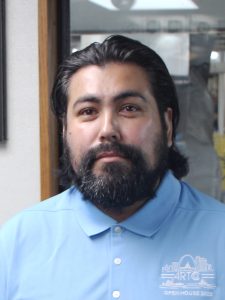
Granados has been an engineer with ARTCo for 14 years. He started as a deckhand and “fleet mate,” a position he’s not sure still exists. For a while, he maintained generators in a fleet of smaller boats.
“I was on the Roberta Tabor when the generator died. I had been servicing generators on fleet boats, but I soon realized this was a completely different animal. It wasn’t a good feeling,” he said. He got help and mentorship from chief engineer Chuck Eldridge. Port engineer Joshua Barrett was another important mentor who became a friend. “In fact, I was best man at Josh’s wedding.”
Even with the strong support, Granados claims he “wasted” his first two years as a junior engineer. “I really didn’t listen like I should have,” he said. But his mentors and the company must have seen something in him, because he rose steadily up through the ranks and is now a chief engineer at age 40.
Granados does admit to giving back and taking an active interest in training younger up-and-coming engineers. He is quietly proud of the number of young engineers he has trained who are now getting promoted.
“I’m always asking them, ‘What does this dial show? Why is it there?’” In response to questions like, “How does this work?”, he will often tell them to attempt to figure it out themselves — but he takes extra time after his shift to help them learn.
Granados is not a fan of phone apps and shortcuts, although he admits they are everywhere now.
“I avoid AI like the plague,” he said. He learned by doing, even though he said he did not grow up with any special aptitude for fixing mechanical things.
“Before the river, I never even changed a spark plug!” he said.
Chief engineer is the best job on the boat, Granados said, although he adds that the cook is the most important crewmember.
The 28-day rotation allows him to work half the year. “Really, a chief engineer has the most freedom of anyone on the boat,” he said. “I have a list of things I have to do and check, but I pretty much decide my own work schedule. The rotation may seem restrictive to some, but it’s the most freedom I’ve ever had.” Until recently, when he married, Granados spent much of his off time traveling the world.
Ethan Palma, Associated Terminals
By Amelia Kingman
Ethan Palma didn’t know his interest in engineering would lead him to the maritime industry. It was through an internship program in 2019 with Associated Terminals that Palma took his first step into the world of stevedoring. After graduating from Rice University in Houston, Texas, with a Bachelor of Science degree in mechanical engineering, Palma rejoined Associated as a full-time engineer.
Palma described the fast-paced nature of his field, having responsibilities with design, maintenance planning and technical work. One of the first projects he worked on was integrating CAT Command mobile equipment into the harsh marine environment present in stevedoring. Operators can control a fleet of Caterpillar equipment from a climate-controlled office, ensuring their safety.
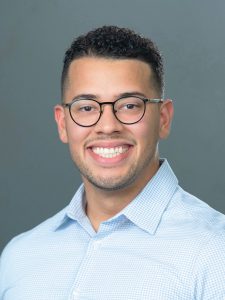
Palma and Curtis Blank, Associated Terminals’ director of maintenance and engineering, have also been leveraging technologies like 3D CAD to aid in design execution.
“(Associated Terminals) never really documented things that way,” Palma said. “But when you do have that type of information, you’re allowed to really scrutinize all the design changes you’re proposing. There’s a lot more strategy and precision to the things we’re able to do.”
Palma credits Blank as a leader in the industry who has inspired him to be the professional he is today.
“I could not have picked a more outstanding mentor to have spent the last five plus years in the industry with,” Palma said. “If I’m able to provide even a fraction of that knowledge to an intern or technical peer, I think I’d call that a success.”
Palma said that the recent addition of two cranes to the Associated Terminals fleet has been the highlight of his career. Christened in February, the D. Lopez and Bill S. are the first barge-mounted Liebherr CBG 500 E cranes operating on the Mississippi River. Palma described navigating through new sets of challenges with the integration of the two fully electric cranes. The result was a dynamically scaling diesel-electric power system capable of running emissions-free during standby periods.
“It was a major departure for us, bringing all that main power down into the barge,” Palma said. “For me, having not known the first thing when it came to barge building and being in a shipyard, it gave me a very healthy respect for the amount of complexity, time and diverse amount of skill sets that go into making all this possible.”
According to Palma, the unpredictability of the industry is exciting. Every day is different, bringing with it new problems that need innovative solutions.
“I think what motivates me is wrapping my arms around something that I may not yet understand completely,” he said.
Palma encourages young people entering the maritime industry to take advantage of the information that is available to them. In a day and age when knowledge is at one’s fingertips, a college education is valuable but not the only avenue to learn, he stressed.
“The maritime space is ripe with challenges, and I cannot understate the importance of bringing in fresh minds to help propel us into the future,” Palma said.
Frank Taylor, Hines Furlong Line
By Shelley Byrne
Frank Taylor has been a vessel engineer so long, he doesn’t always need diagnostics to know whether an engine is working well.
When he walks through Hines Furlong Line’s mv. James G. Hines, he listens to the sounds the boat is making, lays his hands where he can feel the vibrations and always keeps a sharp look out.
“If you can prevent something, that’s always number one,” he tells the young engineers he mentors. He teaches them to make “good, thorough” rounds and to pay attention, to learn to spot potential problems before they happen.
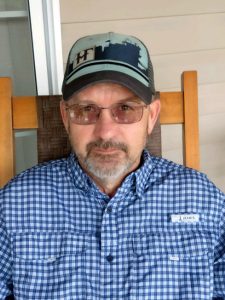
Taylor, 62, of Indian Mound, Tenn., has spent 35 years in the industry, with most of that time as an engineer.
He began working in 1989 as a deckhand for MidSouth Towing, then moved up through the ranks into positions as an oiler, an assistant engineer and then a chief engineer. He left the industry for a short time, then hired back in with Hunter Marine Transport, which was bought out by Kent Furlong in early 2018. He has been with Hines Furlong Line ever since.
“I’ve ridden more boats, probably, than what I can name,” he said.
They have ranged from small harbor vessels up to 9,000 hp., and all over the system, including in the canals in Texas. All of them have been conventional diesel boats, with some open wheel and some with kort nozzles.
Mechanical aptitude runs in Taylor’s family. His grandfathers were carpenters and did much of their own mechanic work.
“A lot of my friends or acquaintances were riding boats, and I had a brother who was in the industry,” he said. “That kind of pushed me in that direction.”
The engineer route made sense as he not only enjoyed working with his hands but also had a natural curiosity about how things worked. He found that as he was around people with more experience, “I kind of wanted to get in their back pocket, and what I didn’t know, I wanted to know.”
He has worked to pass along that knowledge, even training the relief engineer who takes his place on the opposite 28-day hitch.
“We’re in communication quite a bit,” he said.
An important lesson he tries to pass on is, “Don’t be afraid to ask questions.”
He also advises those he trains to focus on the work when at work, being present mentally as well as physically, and to watch what others are doing, noticing when they are particularly good at a skill.
“You can learn something from everybody,” he said.
The job of being a vessel engineer has changed a lot over the years, with many systems now computerized. While learning all that technology sometimes can be a challenge, Taylor said it also has its advantages.
“Nowadays, with Google, it will make a genius out of anybody,” he said, chuckling.
That’s also true for the projects Taylor takes on when he’s off the boat. When reached for this interview, Taylor was in the middle of remodeling a three-bedroom house that has been in his wife’s family for years.
Working on the river has allowed Taylor to earn a good living and support his family, he said. He also enjoys the time off it gives him six months out of the year to spend with his wife, Teresa Gaye Taylor, son, daughter and seven grandchildren. The family is close, with his son living less than a mile down the road and his daughter within six miles.
When he does take time for himself, he enjoys hunting, fishing and going with Teresa in their camper to their favorite campsites in Land Between The Lakes National Recreation Area, which spans parts of northwest Tennessee and western Kentucky.
“We call it glamping,” he said, noting that the camper gives them the comforts of home while also enjoying “the solitude and the peace and quiet.”
For those thinking about the industry, Taylor said it can be a good fit for someone with a strong work ethic.
“There are positions out there,” he said. “If a young man wants to go out there and work, he can find all the work he wants. It doesn’t fit everyone, but I’ve always said if you come out there with the industry, and you wear out your first pair of boots, you’re probably going to be a towboater forever.”
Andrew Autore, Blessey Marine Services
By Zac Metcalf
Andrew Autore knew early where his career would take him. By his freshman year of high school, he had already settled on marine engineering and began treating each class and opportunity as a step toward that goal.
“I pretty much knew freshman year of high school I was going to be a marine engineer,” Autore said. “I already had my mind set on exactly what I was going to do.”
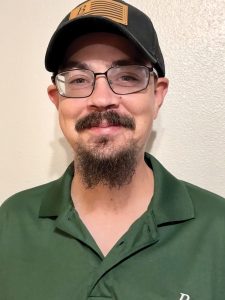
That focus led him to four years of engineering-related coursework, including robotics and machinery design. Drawn to both the coast and engineering, he ultimately enrolled at the California Maritime Academy, where he earned a bachelor’s degree in mechanical engineering in 2013.
After graduation, Autore spent five years working on vessels in San Francisco, Calif. At Alcatraz Cruises, he maintained the ferries serving Alcatraz Island and the company’s support vessels. His responsibilities also extended to the island.
Although Alcatraz sits close to San Francisco, Autore said its infrastructure must function much like that of a remote facility. Water, fuel and other supplies arrive by boat, while the island’s heavily used sewage system, solar installation, battery bank and diesel generators all require attention.
“It’s a self-sufficient island,” he said. “Everything has to be transported via boat: water, sewage, fuel, everything.”
Autore also occasionally assisted with repairs aboard dinner cruise vessels owned by parent company Hornblower. The work showed him how engineering priorities differ across operating environments.
Autore next joined Harley Marine, now Centerline Logistics, as a West Coast shoreside mechanic working on tractor tugs and articulated tug-barges (ATBs). After he and his wife decided to leave California, he transferred to the Houston division. He remained with the company for nearly five years before joining Blessey Marine Services.
Today, Autore works primarily from Blessey’s Channelview, Texas, location. As a port engineer, he supervises repair jobs, performs electrical work as one of two electricians and serves as project manager for many vessel new builds and refurbishments.
“Every time I turn around, we get one boat serviced, and there’s another boat we have to turn and burn to get repaired,” Autore said. “If you can’t handle chaos, find a new job. This maritime industry loves and thrives on chaos.”
That pace is also part of the industry’s appeal. Even when a job looks familiar, Autore said, a different vessel, system or failure can turn it into a new problem.
“You can do the job 10 times, and every time’s going to be something different,” he said. “There’s going to be some new challenge.”
Balancing hands-on work with the administrative side of a port engineer’s job requires discipline. Autore tries to handle paperwork early in the morning, before calls, vessel visits and active projects begin competing for his attention. Once he starts walking boats, he said, the day quickly becomes nonstop.
Autore particularly values Blessey’s proactive approach to maintenance. When a failure point appears on one vessel or system, the company can examine whether a fleetwide change would prevent the same problem elsewhere. With more than 80 towboats operating across multiple regions, that effort depends on communication among port engineers, crews, managers and vendors.
“It’s not one person,” Autore said. “It’s a team effort to keep everything running.”
Technology has made that exchange of information faster and more precise. Older alarm panels might provide only a warning light, leaving the engineer to locate and diagnose the problem. Newer systems can supply enough data to begin troubleshooting immediately, sometimes allowing Autore to help a crew by phone.
That capability comes with a tradeoff. More sensors, wiring and components provide better information, but they also introduce more possible failure points.
“It’s that double-edged sword,” he said. “I want more information, I want more data, but now I’m adding extra stuff in.”
Autore’s experience with ferries, dinner cruise boats, offshore tractor tugs, ATBs and inland towboats helps him evaluate those tradeoffs. Each sector has its own operating mentality, he said, but offshore solutions can sometimes be adapted for inland vessels.
When training engineers, Autore emphasizes resourcefulness over memorizing every system. No engineer can know everything aboard every boat, but a good one must investigate and improvise safely when the correct part is unavailable.
“You need to be MacGyver-like,” he said. “You must think outside the box. Things break, and you’re not always going to have the right parts, but the boat still has to be operational.”
The immediate goal may be a temporary solution that keeps the vessel moving until permanent repairs can be made. Manuals provide a foundation, Autore said, but vessel arrangements often demand a different angle.
Away from work, Autore and his wife are raising two young children. The family enjoys traveling, visiting zoos, state parks and museums, with a particular interest in military and maritime history. That interest is longstanding. Before turning 18, Autore logged more than 1,000 volunteer hours at an air museum, and he has also helped restore military aircraft and historic naval vessels.
Tim Lehky, Excell Marine
By Shelley Byrne
Growing up near Cleveland, Ohio, on Lake Erie, Tim Lehky envisioned a different kind of career on the water.
“I saw the lakers, and I just thought that would be an awesome way to make a living,” he said.
Lehky was part of the graduating class of 1986 from Great Lakes Maritime Academy in Traverse City, Mich., but it was during a time of recession, and work on the Great Lakes was hard to find.
Lehky took his required Coast Guard exam on a Friday, and noticed a flyer from Orgulf Transportation, then a division of Midland Enterprises, looking for workers on the inland river system. After getting some resume assistance from his mother over that weekend, he got a call that he was wanted in Cincinnati for an interview the following Monday.
“I thought, ‘Maybe I can get into this quickly, progress through and see where it leads,’ ” he said he remembers thinking.
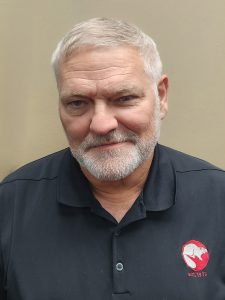
Forty years later, Lehky, now 63, is senior port engineer for Excell Marine, and he’s able to look back on a successful career in the river industry.
Lehky began his river career as a vessel engineer for Orgulf Transportation. After 13 years, he moved from Huron, Ohio, to Paducah, Ky., to go “shoreside” as a port engineer for Orgulf. When Orgulf was sold to Ingram Barge Company, he became a port engineer for Ingram Barge from 1999 to 2003. Then, in 2003, he made the move to Excell Marine as port engineer. Lehky went to work for Marquette as a port engineer in 2007 and remained in that position until 2017 before becoming director of preventative maintenance from 2017 to December 2021.
Lehky left the industry for a year, but he returned when Excell Marine asked him to consider coming back to work, this time as a senior port engineer for the company. As senior port engineer, he now heads the engineering department and helps to prepare the company’s boats for the future by scheduling overhauls, drydocking and inspections, including Coast Guard-required internal structural examinations.
Lehky now makes his home in Daphne, Ala. He oversees the maintenance and repair of a fleet of roughly 20 vessels, ranging from harbor tugs of about 1,000 hp. up to the 7,200 hp. Paul Klausen.
When working with new engineers, he stresses safety first, reminding them to always being conscientious of their surroundings.
“Whatever you do, do it safely,” he said.
He also likes to make sure they have a deep understanding of basic skills they will use over and over again, no matter what problems may arise, and a sense of professionalism and taking accountability for their work.
Lehky has been married since 1987 to his wife, Jana, and they have three adult children: Nicholas, Marcus and Abigail, and a granddaughter, Lainey Grace. In his spare time, he loves going to the beach and enjoys saltwater fishing in the Gulf and an occasional charter fishing trip with his family.
“I’ve had a good career,” he said. “I’ve worked with some really great people, and I’m just trying to make it better for the next generation.”
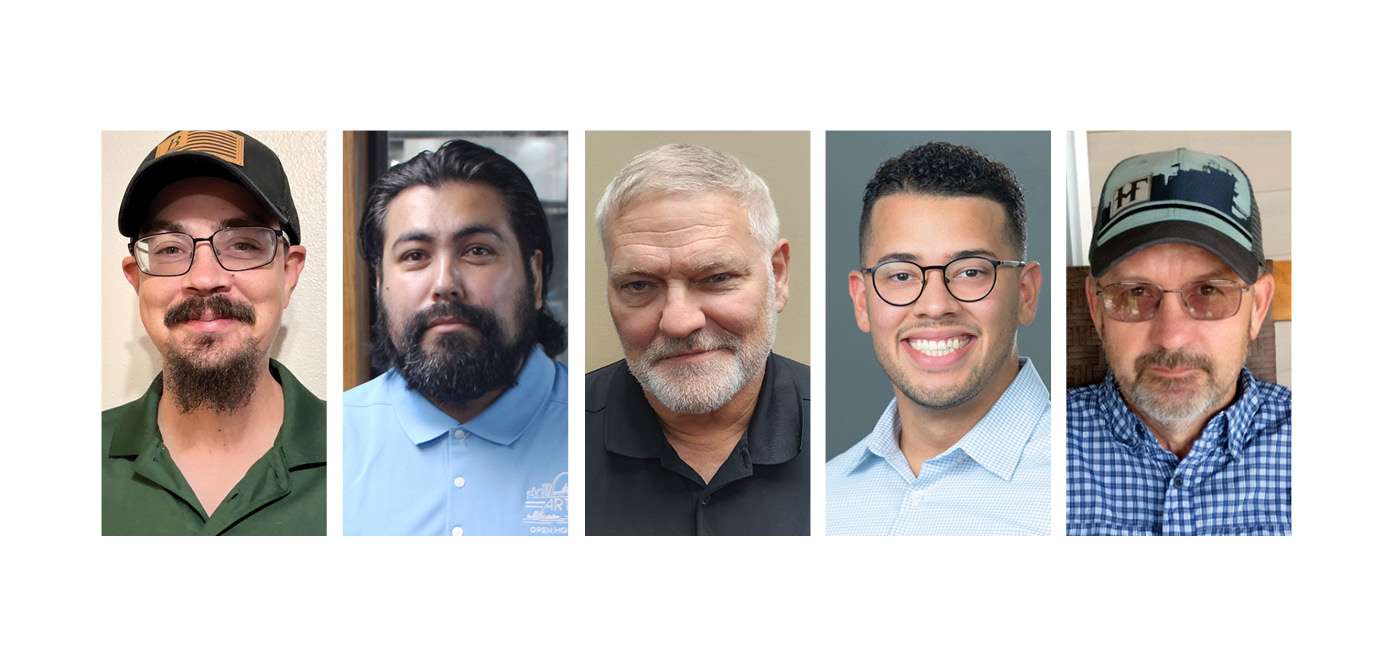
Featured Photo Caption: Andrew Autore, Blessey Marine Services; Diego Granados, ARTCo; Tim Lehky, Excell Marine; Ethan Palma, Associated Terminals; Frank Taylor, Hines Furlong Line