

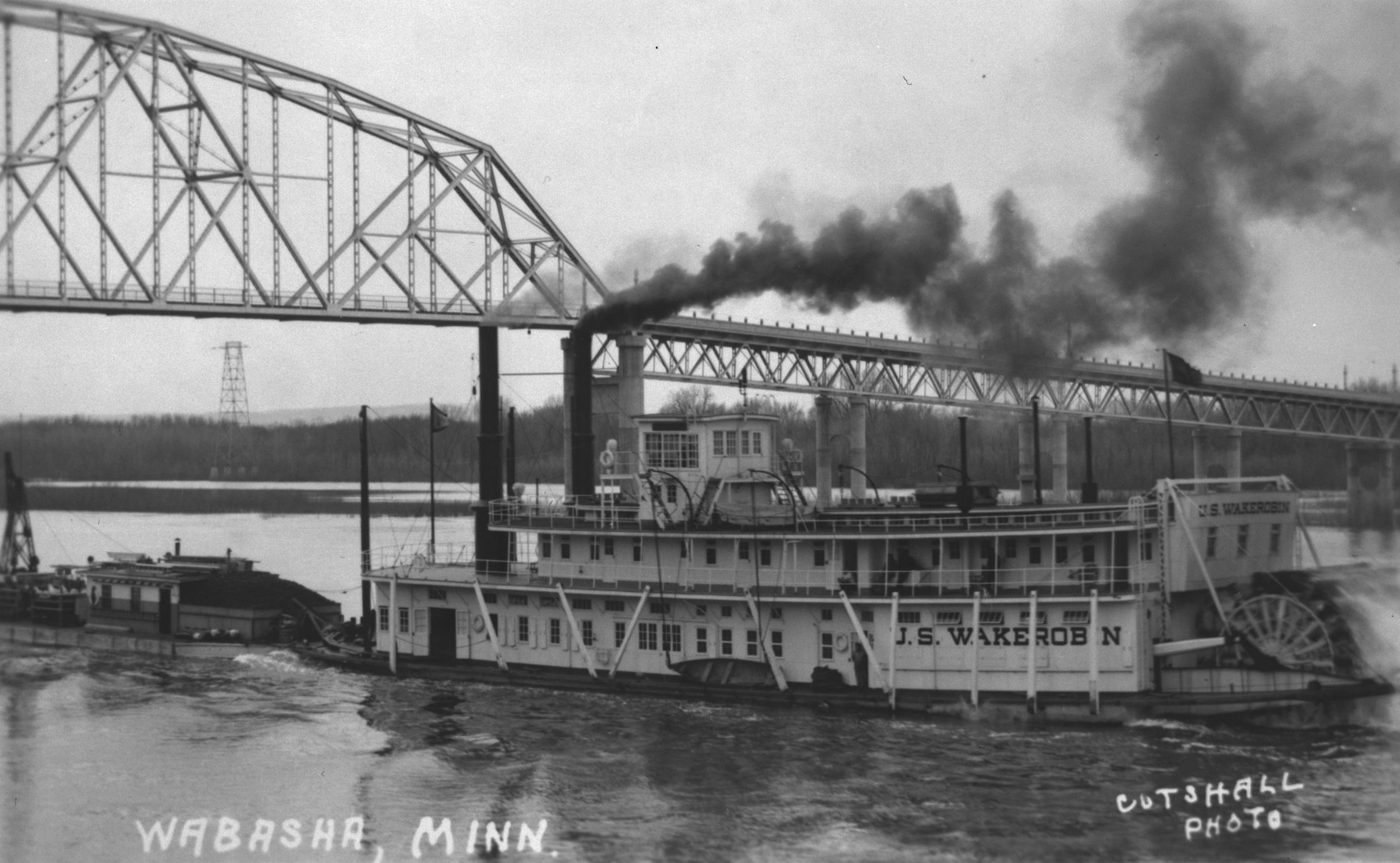
The Lighthouse Service Tender Wakerobin Served Many Uses
October brings thoughts of fall, including brightly colored leaves, pumpkins, fodder shocks and other signs of comfort. Of course, there are other fall thoughts that are somewhat scary, such as the trappings of Halloween, including witches, scarecrows, ghosts, sometimes collectively gathered in the venue of a haunted house – or perhaps a haunted boat!
The Old Boat column in the November 7, 2022, issue of The Waterways Journal featured the US Dredge William S. Mitchell, a massive steam sidewheel dredge built for Missouri River service in 1934 by the Marietta Manufacturing Company, Point Pleasant, W.Va. That 92-year-old vessel is today alive and well. It serves as the “USS Nightmare” for BB Riverboats at Newport, Ky., opposite Cincinnati on the Ohio River. It is a perennial favorite attraction for the local fright seekers.
The dredge Mitchell is the second “haunted” vessel that BB Riverboats has successfully operated. Interestingly, the first was also a former government vessel that spent three decades in dedicated service. Once retired, it still served a useful purpose.
The US Lighthouse Service (USLS) had roots going back to 1789 and the formation of the US Lighthouse Establishment under the Department of the Treasury. In 1852, this became the Lighthouse Board, and, in 1910, it was the United States Lighthouse Service, now under the Department of Commerce. In addition to overseeing coastal lighthouse structures, it also tended navigational aids on the inland rivers and, as a result, had many steamboats for this purpose over the years.
The Dravo Corporation shipyard at Neville Island, Pa, began building towing vessels in 1919, turning out a prop-driven steamer as well as two sternwheel steam towboats that year. In 1923, the facility turned out a huge railroad car ferry for the New Orleans, Texas and Mexico Railroad. It operated at Baton Rouge, La., and was named George H. Walker (after prominent businessman and banker George Herbert Walker, grandfather of President George H.W. Bush).
After the completion of this large craft, Dravo built only some small diesel sternwheelers for a few years. Then, in 1926-27, the company would build a large steam sternwheeler for the US Lighthouse Service. Following the long tradition of naming vessels after flowers and plants, the USLS christened the new boat Wakerobin. The definition of this word reads, “Any of several perennial flowering plants, of the genus Trillium.”
The Wakerobin had a steel hull measuring 182 by 43 feet and had high pressure engines with cylinders that were 18 inches in diameter and had a 7.5-foot stroke. The boat had a traditional towboat look with a full upper cabin surmounted by a raised pilothouse on the roof. Two stacks were located forward of the cabin. There were accommodations for 33 people.
The Wakerobin was originally assigned to the 13th Lighthouse District out of Rock Island, Ill. In June 1935, it appeared on the Missouri River for the first time, when it made a survey run from the mouth to Hermann, Mo., at mile 97 in advance of the Franklin D. Roosevelt making the first established run between St. Louis and Kansas City for the Federal Barge Line.
In 1939, the USLS was merged into the US Coast Gurad. During World War II, the Wakerobin, now designated WAGL-251, was assigned to the Ninth District, first at Keokuk, Iowa, and then at Vicksburg, Miss. In 1945, it underwent a refit and received two Babcock & Wilcox three-pass water tube boilers and oil burners. After this, it was transferred to Memphis. On December 18, 1948, the boat was withdrawn from service due to “exorbitant operating costs” and laid up at Paris, Tenn.
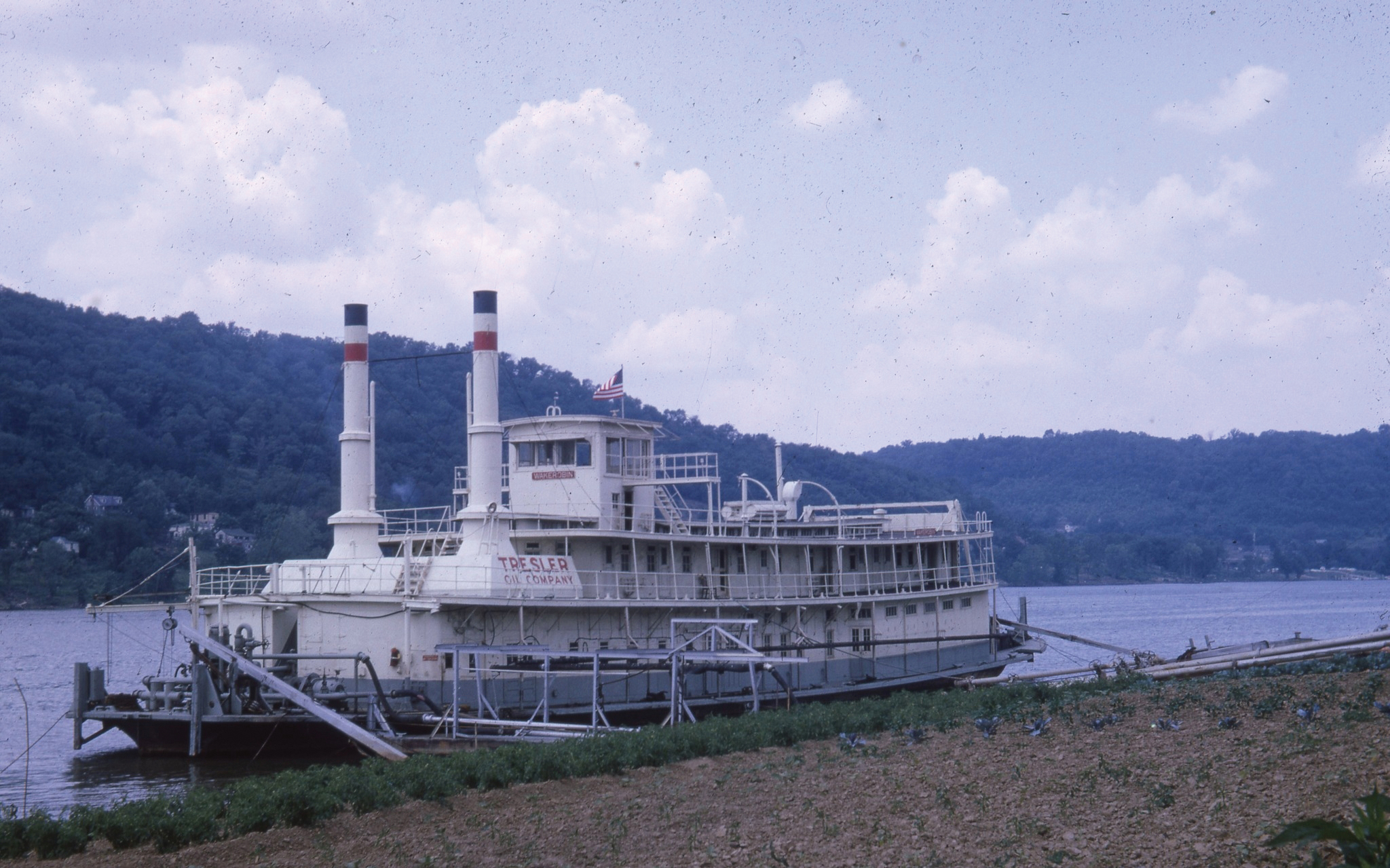
In April 1949, it was placed on loan or charter to the US Army Corps of Engineers. It was formally transferred to the Corps in 1955 and, soon after, was sold at a public sale to Tresler Oil of Cincinnati. Tresler utilized the craft as a landing boat for many years and, in the mid-1970s, sold it to Capt. Dennis Trone. who also utilized it as a landing boat until it was sold to BB Riverboats in 1985.
BB turned it into the wildly popular haunted boat venue known as “USS NIGHTMARE.” In 1995, BB purchased the much larger former US dredge William S. Mitchell and “haunted” it into a new USS NIGHTMARE. The Wakerobin was used at other cities as a haunted venue for a time and then sank at storage moorings near Cincinnati. It was raised and ultimately scrapped.
The impressive wooden pilot wheel that graced the pilothouse the years it ran is now on display at BB Riverboats’ landing at Newport, Ky. Thanks to the efforts of the late Capt. Bill Judd, the engines from the boat are at the Chilo Lock 34 Park and River Museum at Chilo, Ohio.