
Beneath the Surface: Commercial Divers And The Work Of Protecting Freshwater Mussels
For most people, a river can appear relatively simple from the surface. Water moves downstream, boats pass through, and the river continues on its course.
Below the surface, however, is a different world — one that commercial divers enter as part of construction projects, inspections, environmental surveys and other work that cannot be accomplished from above.
At Mainstream Commercial Diving, that underwater work includes freshwater mussel surveys, an environmental specialty that has become an important part of the company’s operations.
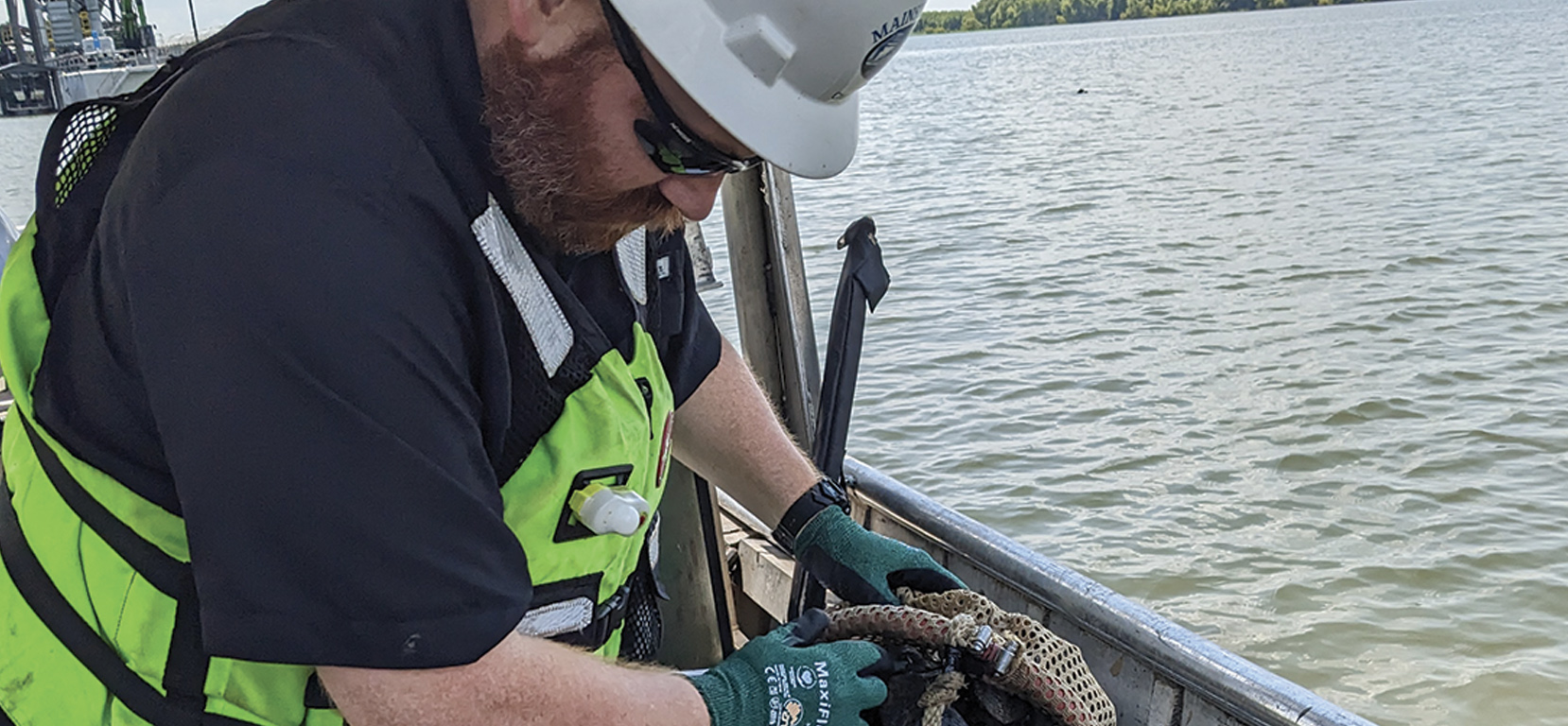
Many freshwater mussel species have declined because of habitat loss, changes in water quality and other river impacts, with some now federally protected. Surveys help identify mussel populations before construction and other projects take place in their habitat.
Charlie Morgan joined Mainstream in January 2013 as the company’s malacologist, brought in specifically to support its mussel-survey work. At the time, Morgan said, Mainstream had gone a couple of years without a malacologist.
His work has since developed beyond mussel surveys alone. Along with supporting the company’s environmental work and preparing technical documents, Morgan has become involved in other underwater technologies and projects, including robotic inspections using remotely operated vehicles and sonar work.
That evolution illustrates the range of expertise involved in commercial diving. A diver may be entering the water to perform a traditional inspection or repair one day and supporting an environmental project another.
A Seasonal Specialty
Freshwater mussel surveys are not conducted year-round.
Morgan said the primary survey season generally runs from about April or May through the end of October. As projects come up during that period, he works with Mainstream’s crews on the technical and biological aspects of the work.
The presence of a malacologist within a commercial diving company gives Mainstream the ability to combine biological expertise with divers who are accustomed to working underwater in demanding environments.
That combination also allows Morgan’s role to intersect with other areas of the company.
After joining Mainstream for mussel work, Morgan began assisting with technical documents and eventually became involved with the company’s remotely operated vehicles and sonar operations.
The result is a position that bridges environmental science and commercial diving technology.
Mussel work requires an understanding of the organisms being surveyed, while commercial diving brings the specialized training and equipment necessary to put people safely into the underwater environment.
Below The Surface
Environmental work can require a different perspective from traditional commercial diving.
A river project may have a construction or navigation purpose, but activities taking place underwater can also affect the biological communities living there. Freshwater mussels are part of those underwater ecosystems, and identifying their presence can be an important consideration when work is planned.
For Mainstream, that means the company’s environmental work is integrated with its larger underwater capabilities.
Morgan’s work with ROVs and sonar is another example of how technology has become part of the company’s approach to underwater inspection and surveying. Rather than relying solely on what a diver can see or reach, Mainstream can use remotely operated equipment and sonar as additional tools.
That combination of people, equipment and specialized knowledge allows the company to approach underwater projects from multiple directions.
Expertise And Training Beneath The Water
Regardless of the type of project, one element remains constant: commercial diving requires specialized training, preparation and awareness.
Jonathan Hancock, Mainstream’s operations manager, emphasized the importance of that preparation during a discussion about the company’s work.
“Every time we get in the water, we rely on our training, experience, and the team around us,” Hancock said.
Mainstream requires annual training for its divers and maintains their physical certifications, Hancock said. The company also provides training in first aid, CPR, DAN oxygen and automated external defibrillator use.
The training is not simply a requirement on a checklist. For Hancock, it is part of making sure divers are prepared for conditions they may encounter underwater, where problems that might be manageable on land can become much more serious.
Mainstream is a member of the Association of Diving Contractors International, and its divers are required to be ADCI certified.
Preparation therefore begins before a diver ever gets into the water.
Divers and support personnel must have a broad understanding of underwater operations while also maintaining the specialized skills needed for particular projects.
For Morgan, the same principle applies to the environmental side of the company.
His position began with a focus on freshwater mussel surveys, but his responsibilities expanded as he became more familiar with Mainstream’s other capabilities.
That has allowed him to work across disciplines rather than treating environmental surveying as something separate from commercial diving.
The Value Of Specialized Expertise
One of the central themes of the conversation with Morgan and Hancock was the importance of having people with the right expertise supporting underwater work.
Morgan brings malacological knowledge to projects involving freshwater mussels. The diving crews bring commercial diving experience. Other personnel contribute expertise in areas such as ROVs and sonar.
Hancock said Mainstream also benefits from the broader expertise and resources available across the Moran organization.
Morgan agreed, describing the support as widespread and professional.
“The expertise and the support that Mainstream and the broader expertise and resources available across the Moran organization have, is second to none,” Morgan said.
That support, he said, is something the company takes pride in.
The combination is important because underwater work rarely involves just one discipline.
A project can require someone who understands the biological environment, someone who knows how to safely conduct commercial diving operations and people who understand the equipment being used to inspect or document conditions beneath the surface.
The Human Side Of Diving
For all of the specialized equipment, training and technical knowledge involved in commercial diving, Hancock said the most important part of the job remains the people doing it.
The diving community is small, he said, which makes safety personal.
“Safety is personal in this industry. You’re always looking out for the people you’re working alongside,” Hancock said. That attitude shapes the way Mainstream approaches its crews.
Morgan echoed Hancock’s emphasis on safety and support, saying the company works hard to provide its divers and employees with the resources they need.
The goal is not simply to complete a project. It is to make sure the people who entered the water are able to walk away from the job safely.
“We want everybody to go home at the end of the day, in the same manner that they came in,” Morgan said.
That philosophy applies whether a diver is supporting a freshwater mussel survey, conducting an inspection with an ROV or sonar, or performing another type of commercial diving work.
Featured photo caption: A Mainstream Commercial Diving diver prepares to enter the water during a freshwater mussel survey. (Photo courtesy of Mainstream Commercial Diving)