
Riverbulk Transportation Reflects On 26 Years
Most businesses, regardless of industry, are incepted for a common reason: to respond to a need within a community, big or small. This familiar origin story rings true for Riverbulk Transportation. The Edenton, N.C.-based company began in 1999 under the name Edenton River Barge Company and was founded largely to support the area steel mill, Nucor Steel Hertford County, which began operations in 2000.
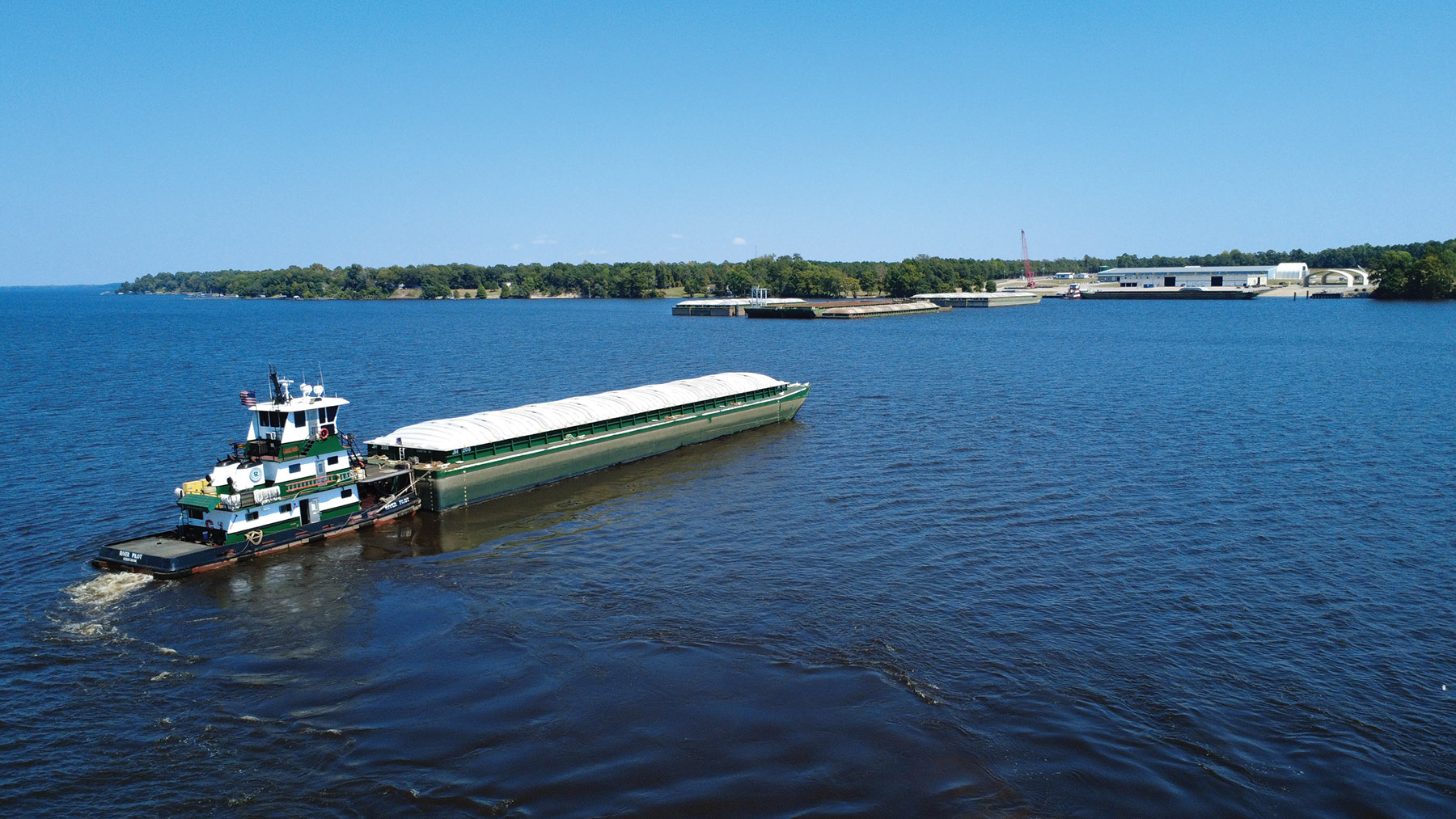
The plant melts and processes steel into new plating to be used for vessel construction, storage tanks, defense and armor plate and other heavy industrial uses. Riverbulk delivers scrap metal to the mill and also transports the finished steel products to customers along the Atlantic Intracoastal Waterway (AIWW).
“As they built the new steel mill in our region, we saw a need for tug and barge transportation operations on the rivers and AIWW,” said Simon Rich III, president and general manager of Riverbulk Transportation and Terminal.
Edenton River Barge Company soon grew to provide services to other companies alongside its work at the mill, including MeadWestvaco and MiTek Industries, and the Nucor location also flourished. In the early 2000s, Edenton River Barge Company realized it was too small to accommodate the booming business of the steel mill. After six years of business under the Edenton name, the company formed a formal partnership with Stevens Towing Company Inc. and became Riverbulk Transportation. The partnership expanded each company’s reach, grew its barge operations and broadened the services each company offered to customers.
Since its partnership with Stevens Towing in 2005, Riverbulk has built up its operations in the North Carolina area, serving up and down the AIWW and the Chesapeake Bay region. Its primary focus remains to provide service to Nucor Steel, which still operates in the area, moving scrap metal, steel and other raw materials.
“Some form of this company has been servicing that mill since 2000,” Rich said. “We’ve been working for that mill for 26 years.”
In time, the mill expanded to melt processed iron ore alongside its operations with scrap steel, and Riverbulk responded to this change as well. The material is mostly sourced from Trinidad and is shipped into the state through the Port of Morehead City. Nothing touches the ground; once it arrives in Morehead, it’s trans-loaded into Riverbulk vessels to move the product straight to Nucor Steel.
The company’s barge operations also transport other goods; finished steel coils, specialty dry bulk cargoes and other supplies move on Riverbulk vessels.
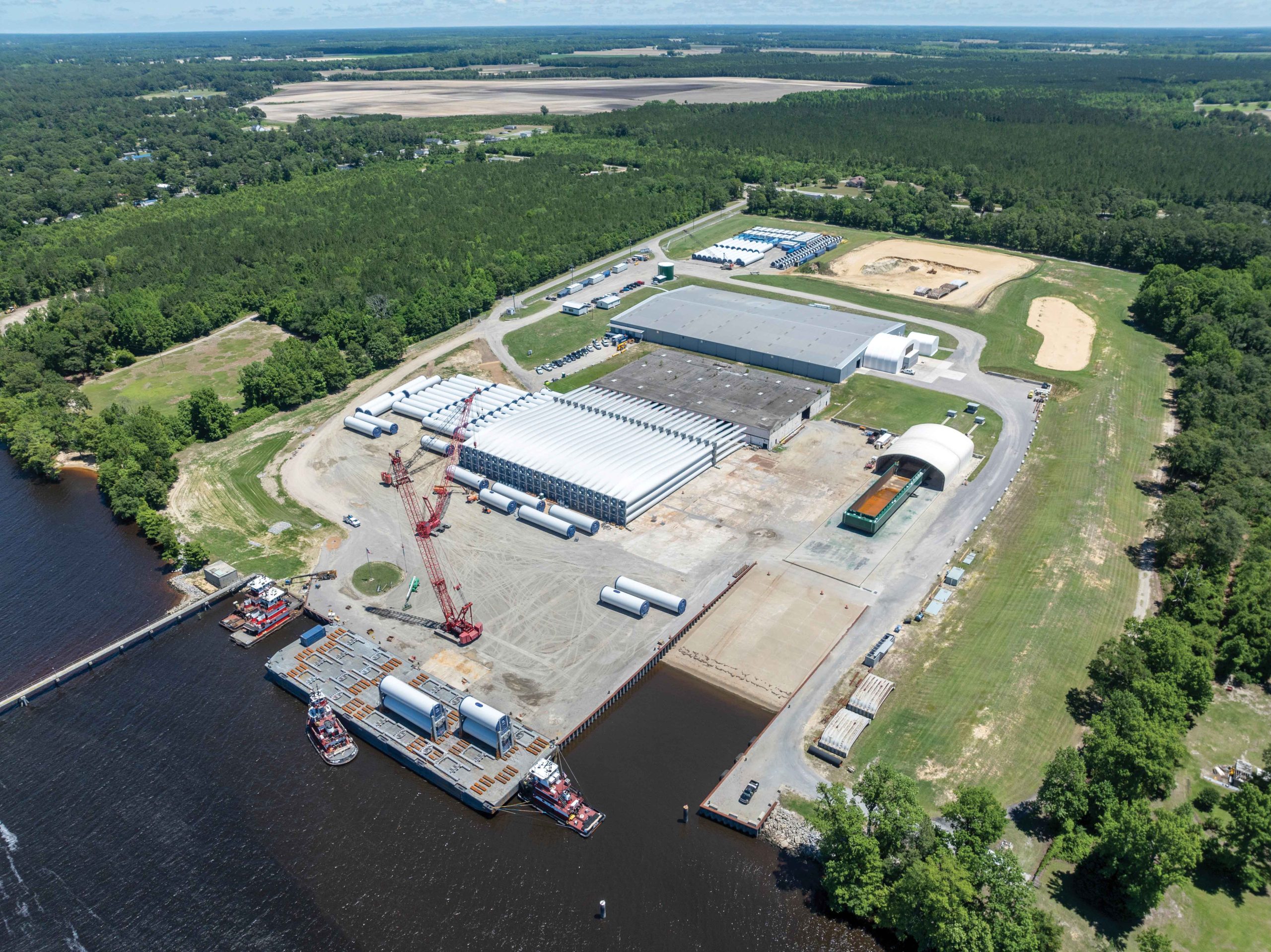
In 2014, Riverbulk discovered a hidden gem. Sitting on the banks of the Chowan River, just off of the AIWW, sat an abandoned dye plant. For the past 12 years, Riverbulk has been converting the site into a 50-acre heavy industrial terminal to handle breakbulk and project cargo, as well as some bulk cargo. While the main infrastructure has been complete for several years, Riverbulk consistently performs upgrades. In the future, the company hopes to add a large fabrication building next to the main site for large steel fixtures.
“It’s always under construction,” Rich said. “We’re always building something new.”
The terminal is equipped with a variety of forklifts and cranes, as well as a specialty ramp and winch system to pull 800-ton barges out of the water for repairs. The terminal is supplied with its own barge fleet, around 24 strong, which was fully upgraded within the last 10 years. The terminal also supports Riverbulk Transportation’s fleeting needs as a place to moor many of its barges.
“We have not become a commercial shipyard yet, but it’s a possibility in the future,” Rich said.
One of the most exciting projects Riverbulk was a part of, according to Rich, was transporting parts for an onshore wind farm for Apex Clean Energy, manufactured by Vestas. He said that Riverbulk Terminal is involved in the transport of at least one large project a year, including moving large components for Department of Defense projects.
Riverbulk is currently working with Marine Equipment Services (MES) and Combifloat to construct and transport a jack up rig. Sandblasting, painting, welding and repairs to company barges also take place at Riverbulk Terminal. The site is large enough to lease to other tenants as well, including fabrication companies working with the Department of Defense, such as the Whiskey Project, which develops small tactical craft for the Navy and the Marine Corps.
Growth has been steady and continuous since the company’s founding. Riverbulk intends to continue developing its fabrication capabilities as well as expand on its services for the DOD.
“We’ve had steady growth since day one,” Rich said. “We’re diversifying into the terminal, fabrication and repair sectors as well. We’re working to do more heavy industrial oversized fabrication on site, as well as oversized project cargo through the terminal.”
Featured photo caption: In 2014, Riverbulk Transportation began converting an abandoned dye plant into a fully functioning terminal. Today, Riverbulk Terminal supports fabrication work as well as Riverbulk Transportation barges. (Photos courtesy of Riverbulk Transportation)