
SCI Introduces New Simulator Models
New towboat simulator models designed to be more realistic than ever are coming to the Seamen’s Church Institute’s (SCI) Center for Maritime Education (CME).
In fall 2025, the CME signed an agreement with CT Marine of Port Elizabeth, Maine, to generate new simulator models based on the naval architecture firm’s designs, with permission granted from the boat owners. The first, based on the 10,000 hp. Marquette Transportation boat the mv. John Paul Eckstein, should be available in the simulators once testing is complete in about two to three months, said Stephen Polk, CME director.
Once testing is complete, SCI will work with CT Marine and other towboat companies on the development of the remaining small horsepower simulator models.
“The idea is we want them to be built after actual boats, designed by a naval architect and a marine engineer,” Polk said.
With towboat simulations now being used for some Coast Guard towing endorsements on merchant mariner credentials, along with pre-hire and promotional decisions and validations for new bridge and lock designs, having highly realistic simulators is more important than ever, Polk said.
“It’s going to be as real as you can get, and that’s what companies should expect when they’re coming to the CME,” he said.
The opportunity to use custom models came after the CME decided to upgrade the Kongsberg simulators to K-SIM, a new operating system with more robust capabilities. Additionally, it was a direct result of feasibility study work performed in Corpus Christi, Texas. The CME had conducted several studies for Enbridge and Gibson Energy, where Robert Allan Ltd. tug models were used. These custom models were instrumental for port infrastructure projects and more recently used to help with easing nighttime restrictions on VLCC (very large crude carrier) ship transits.
The custom tugs were so realistic that the CME wanted to bring the same technology to its towboat training. The Marine Simulation and Resource Centre (MSRC) in Quebec, Canada, was able to take specs and drawings from CT Marine to digitally create the Marquette towboat.
The goal is for the technology to eventually replace all the older simulation models where design and performance data was becoming increasingly inadequate.
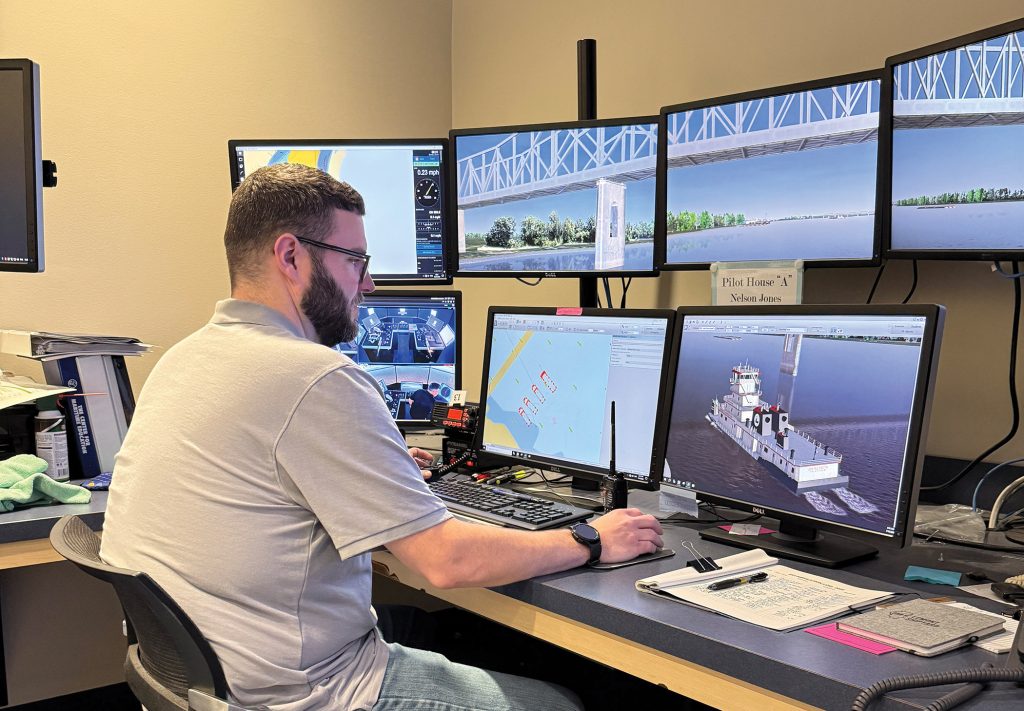
“We’re moving in a different direction,” Polk said. “We want everything on the system to be this level of detail and fidelity.”
Because the CME is building these designs, it will have the ability to have various “skins” so that the simulated boats look different. They can even have specific stack logos and nameboards.
The CME will also be able to design custom simulated tows in whatever configuration a boat operator might like, load each tank on a tank barge to a certain capacity or place different cargoes on simulated deck barges.
If companies want to test how a towboat would handle using alternative fuels, such as methanol, ammonia or LNG or as a fully electric boat, the simulations can do that. If companies want their mariners to get experience with what it feels like pushing a container barge, that’s an option, too.
“Everything we’re going to do from here on out is going to be customized for our clients, and the CME will control it,” Polk said. “We’ll make sure that it’s maintained and up to date, and it will be high fidelity.”
Because these models have already been built by a shipyard, those running the simulations can compare the data to the actual boat’s performance to ensure the highest level of accuracy possible, Polk said. Test validations include running simulations with and without barges, loaded, empty or mixed tows and both upbound and downbound scenarios on the river.
These advanced simulator models will be available at the CME facilities in both Houston, Texas, and Paducah, Ky., when completed.
“I want the inland community to know there’s nothing we can’t do on the simulator,” Polk said. “Provided we have the data, we can do it.”
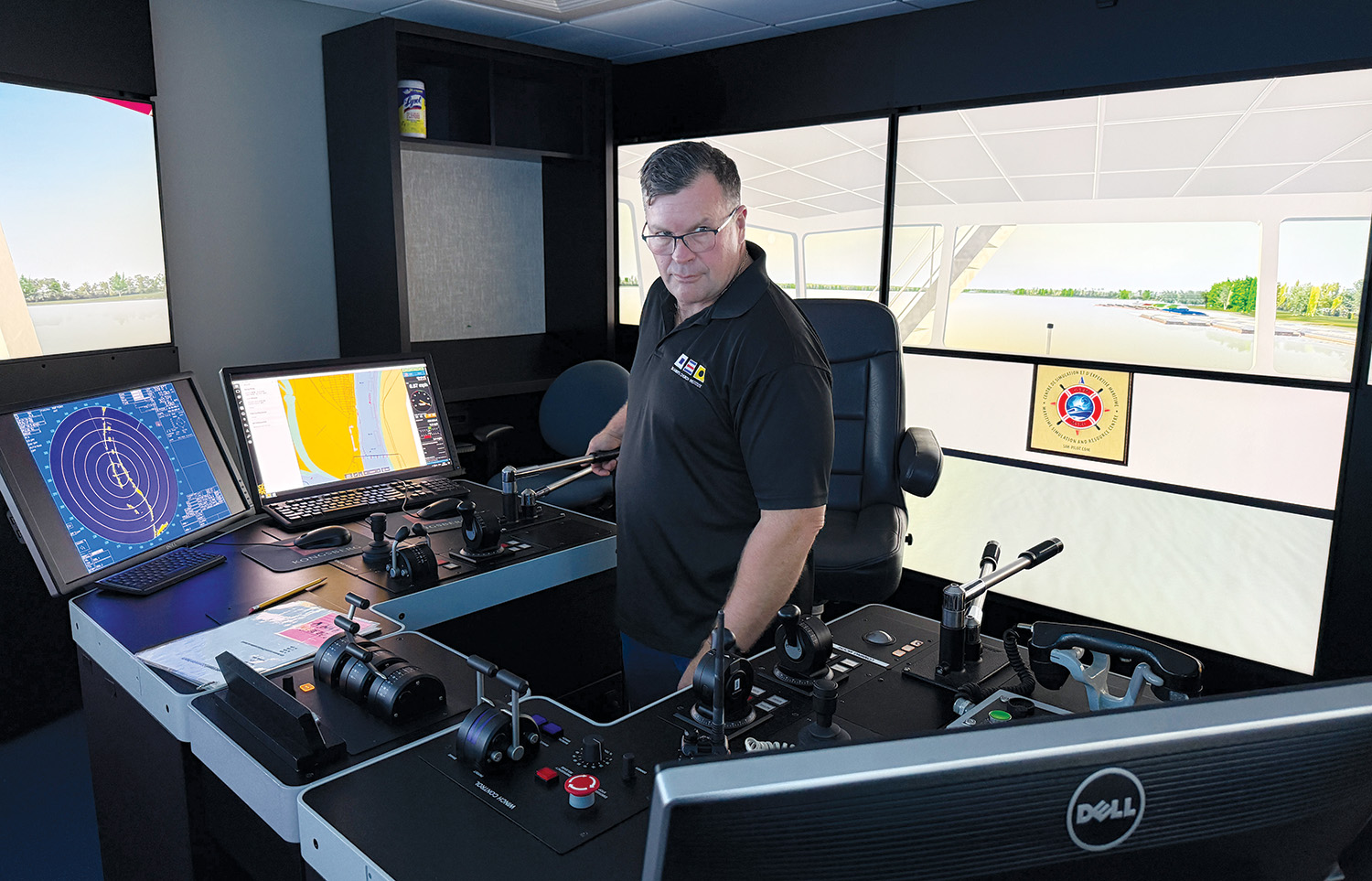
Featured photo caption: Capt. Stephen Douglas pilots a new model for a simulated towboat through one of the simulators at the Seamen’s Church Institute’s Center for Maritime Education. The first model is expected to be ready for training in 60 to 90 days. (Photos courtesy of Seamen’s Church Institute)