
Ports Advance Expansion, Upgrades
Ports and terminals along the inland waterways and Gulf Coast have taken advantage of grants and other funding opportunities to push forward with projects designed to expand their footprints, improve efficiency and safety, maintain and upgrade infrastructure and equipment, create jobs and drive growth and economic development in their communities over the past year. These are some of the highlights.
Upper Mississippi / Illinois River
The year 2026 has been a busy one for the recently launched Northern Corn Belt Ports (or Northern Grain Belt Ports). The initiative added five key Mississippi River ports in Wisconsin (La Crosse, Prairie du Chien) and Minnesota (Red Wing, Wabasha, Winona) across 11 counties to bolster multimodal infrastructure investment.
Meanwhile, further south, the Corn Belt Ports Rural Maritime & Logistics Training & Education Consortium (spanning Iowa, Illinois, Missouri and Wisconsin) was officially designated as part of MarAd’s Centers of Excellence network. The Corn Belt Ports were also selected to host the National Waterway Conference’s 2026 annual meeting, highlighting the inland port system within the Upper Mississippi River’s lock and dam framework.
Partnerships continued around Pool 19 on the Mississippi River, such as the Cooper Island chain dredging and habitat restoration project in collaboration with the Iowa Ports Association.
Work continued on a $39 million terminal development in West Quincy, Mo., backed by a $27 million federal grant and public-private partnership. The Hannibal Regional Port Authority is building the bulk fertilizer terminal at the port site. The project includes a wholesale loadout tower and blending facility.
In July, America’s Central Port celebrated the arrival of its newest tenant, Hollywood River Studios, a multi-million-dollar film, television and digital media production campus. The project is planning for six scalable soundstages totaling up to 140,000 square feet. The entire project is expected to cost between $62 million and $95 million. It was drawn to the area in part by Illinois’ tax credits. The campus will include dressing rooms, podcast studios, a hotel and an e-sports arena. America’s Central Port is undergoing a $365 million expansion plan.
At the port of St. Louis, the Becky Thatcher arrived in August as the first tour boat added to the riverfront fleet in 40 years. The new boat was renovated by Steiner Construction of Bayou La Batre, Ala., from the Capt. JP (built in 1987) out of Fort Myers, Fla., which was purchased for $549,500. The new Becky Thatcher replaces the 1963 riverboat that previously carried the name, which was sold to Memphis Riverboats in 2024. The new boat is about 31 percent larger than its predecessor.
Missouri River
Port KC, the public port authority in Kansas City, Mo., has undergone $12 million in improvements over the last 18 months to its bulk terminal. The project is part of a multi-pronged effort to redevelop the Kansas City riverfront. Since 2015, it has acquired or redeveloped roughly 800 acres and invested $1.65 billion, including industrial, residential and recreational spaces connected by hiking and biking trails.
Ohio River
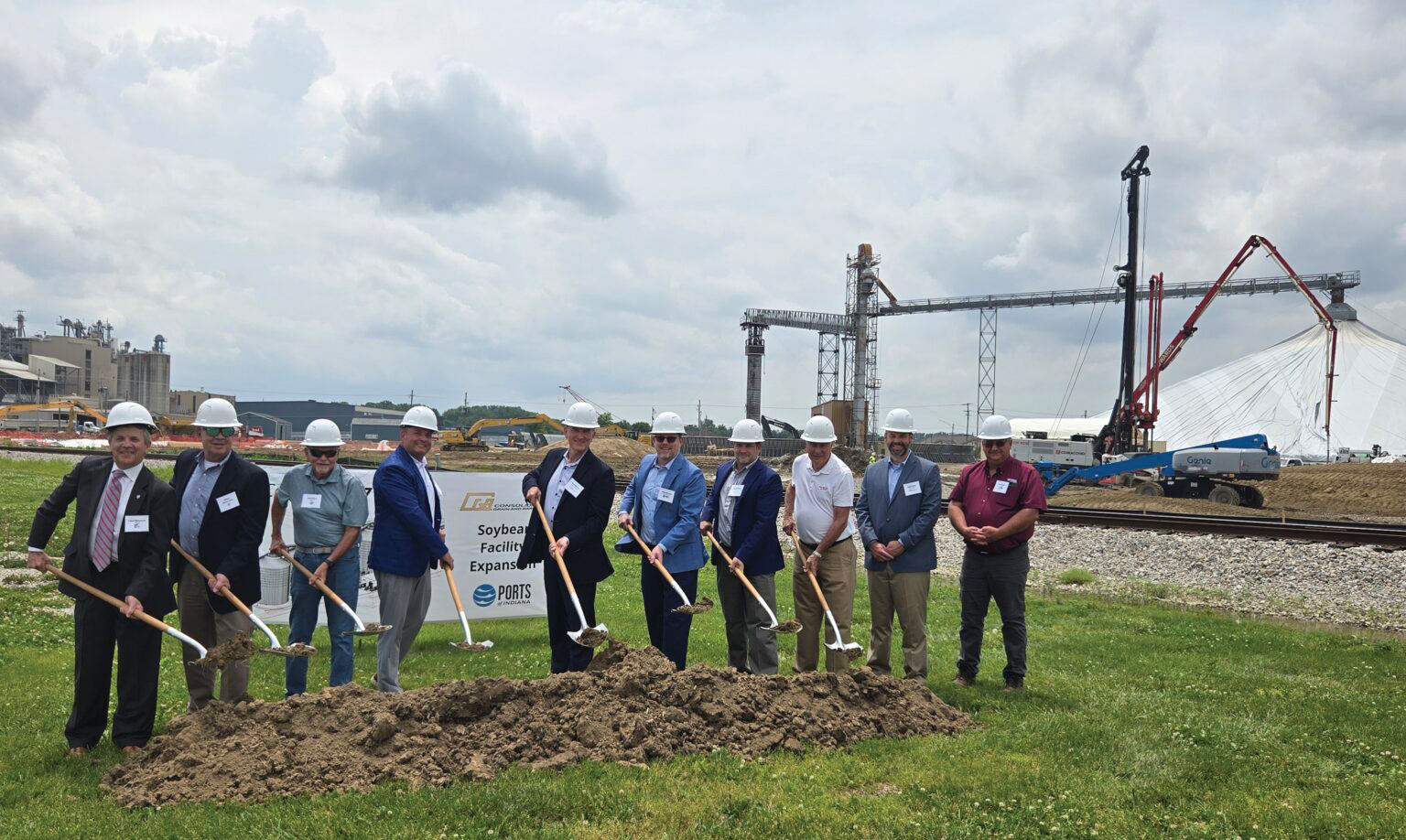
Officials broke ground May 19 on a $47 million grain terminal expansion at Ports of Indiana – Mount Vernon. It is designed to triple grain handling at Consolidated Grain and Barge Company’s soybean processing facility at the port. The expansion includes new grain storage and truck unloading facilities, as well as a conveyor system that transfers grain between multiple sites at the port. The project will increase the facility’s storage volume by 4.25 million bushels and boost truck-unloading capacity by 200 percent. Construction is expected to be completed in 2027.
Additionally, Ports of Indiana – Mount Vernon opened a new federally approved bonded storage facility after only six weeks of development, the port announced in April. This allowed the port to handle its first barge shipment of aluminum. The facility is designed to support industries handling high-value or high-tariff goods, including metals, automotive, energy, electronics, pharmaceuticals and food and beverage products.
Ports of Indiana also announced July 7 that it has been awarded a $25 million federal Better Utilizing Investments to Leverage Development (BUILD) grant that will redevelop an underutilized area along the Ohio River at its Jeffersonville facility into a high-volume multimodal terminal. The project includes a new 300-ton crane system, a 6,500-square-foot dock and a 22,000-square-foot warehouse designed to improve operational efficiency and expand heavy-lift and breakbulk capabilities. The expansion is expected to be completed in 2028.
In Paducah, Ky., a $25 million BUILD grant announced July 1 will allow the first phase of construction on the Paducah-McCracken County Riverport Authority’s Riverport West project to begin in 2027. The port site, at Ohio River Mile 944 on the left descending bank, is designed to include a heavy haul road and 650-foot dock with 6½ acres of operating space, three barge berths and more than a mile of rail, with two sidings approaching the dock. With Riverport East landlocked in Paducah’s downtown region, at 95 percent capacity and with no rail access, Riverport West provides space for expansion and is immediately across the road from an 800-acre heavy-industrial-zone site that is being marketed to industry. The port construction timeline is designed to coincide with the planned construction of a $1.5 billion commercial uranium enrichment facility that will be built 2 miles from the new port at an existing site owned by the U.S. Department of Energy.
Paducah’s Riverport East closed out several grants in late 2025 that together revitalized its bulk yard. Projects included refurbishing two storage domes that lost their roofs in a storm, purchasing three radial stackers, three ground conveyors, one other stacker and four generators and the installation of a truck scale, concrete pad and truck canopy, along with professional and engineering services. The port stretches from Mile 1.3 to 2.0 on the Tennessee River — near where the mouth of the Tennessee converges with the Ohio River. Its business involves unloading barges for customers and storing the cargoes, which are eventually distributed by truck.
On April 30, the Henderson County (Ky.) Riverport Authority at Ohio River Mile 808 celebrated the $2.3 million renovation of its bulk dock with a ribbon-cutting ceremony. A new material handler will allow simultaneous unloading of two barges at the facility’s two docks, easing seasonal bottlenecks and reducing demurrage costs for customers. A new concrete pad at the dock will help to prevent fertilizer wastage and provide a smooth, clean surface that will benefit operations. The port also completed a series of electrical upgrades to modernize and ensure reliability.
The Owensboro (Ky.) Riverport Authority received $1.12 million in grant funds from the Kentucky Industrial Access and Safety Improvement Program in January to construct an access road and an additional storage and loading area to support rail infrastructure expansion. The grant will allow paving 26,500 square feet with asphalt for an access road and pouring 41,700 square feet of concrete for storage and loading and unloading railcars.
Eight different projects at six of Kentucky’s public riverports were chosen for $2.3 million in grant awards in January as part of the Kentucky Public Riverport Construction and Maintenance (KPRCM) Program. One major project is a $250,000 award to the Western Kentucky Regional Riverport Authority to allow excavation of a former American Revolutionary War fort to develop a new 19-acre inland riverport. No historical buildings remain on the site where the fort once stood at Lower Mississippi Mile 950.2, where Mayfield Creek enters the river. However, construction would not have been possible without an archaeological assessment.
Also as part of the KPRCM grant program, the Paducah-McCracken County Riverport Authority will replace a scale house and fertilizer conveyor system. The Eddyville Riverport and Industrial Development Authority will rehabilitate an aging building for expanded boat-repair operations. The Hickman-Fulton Riverport Authority will purchase a new, safer and more efficient barge-moving system. The Henderson County Riverport Authority will replace a mobile conveyor system with a new electric material handler. The Owensboro Riverport Authority will purchase a new yard tractor and forklift.
Two Illinois projects along the Ohio River moved forward with significant milestones.
In August 2025, state and local leaders broke ground on a new fertilizer distribution center in Old Shawneetown, Ill. The fertilizer terminal at the Shawneetown Regional Port District, Ohio River Mile 853, is funded in part by $12.6 million from the Rebuild Illinois capital program, part of a combined $27 million in public and private funds.
In July 2025, the Massac-Metropolis Port District took possession of the former Ohio River Locks and Dam 52 site in Brookport, Ill., moving forward with plans to develop it into a riverport. The Water Resources Development Act of 2020 required offering the property for sale to the district. The property consists of 46 acres and includes a metal building of about 40 by 90 feet on a heavy-duty concrete slab, located on a berm with an elevation sufficient to protect it from most high-water conditions.
McClellan-Kerr Arkansas Navigation System
The big news in the McClellan-Kerr Arkansas Navigation System (MKARNS) was the completion of the Three Rivers Project protecting the navigation entrance from Arkansas-White River cutoff risk. A hydraulic weir was completed ahead of schedule in October 2025. A containment structure and related work were completed with a ribbon-cutting August 12, about 16 months earlier than the January 2028 target. This secures the system’s connection to the Mississippi River and supports significant cargo volumes and economic value.
Multiple locks in the system require 110-ft Stoplog Slot Conversions to address structural failures. Dardanelle, Trimble, Ozark, Murray, Toad Suck, and Ormond were scheduled for construction completion in calendar year 2026. Others were advanced in design. At a total authorized cost of about $186 million, the work unfortunately requires seasonal navigation closures.
The 12-foot channel deepening project, authorized to increase capacity substantially, adding about 200 tons per barge per extra foot of draft, continued in planning and design phases with updated environmental studies. Full-scale deepening construction had not yet been initiated by mid-2026, though related structures and maintenance advanced under prior funding, including the Bipartisan Infrastructure Law.
Cumberland River
The Tennessee Department of Transportation (TDOT) and Ingram Marine Group announced the upcoming opening of the Mid TN Riverport, a joint public-private accomplishment. The port is expected to open in December and handle breakbulk and bulk cargoes.
Black Warrior River
The Birmingham-Jefferson County Port Authority began repositioning underused legacy infrastructure on Alabama’s Black Warrior River. The effort is intended to diversify the port’s cargo base and attract additional industrial users. Port leadership also emphasized workforce development and greater awareness of the facility among regional shippers.
Gulf Intracoastal Waterway
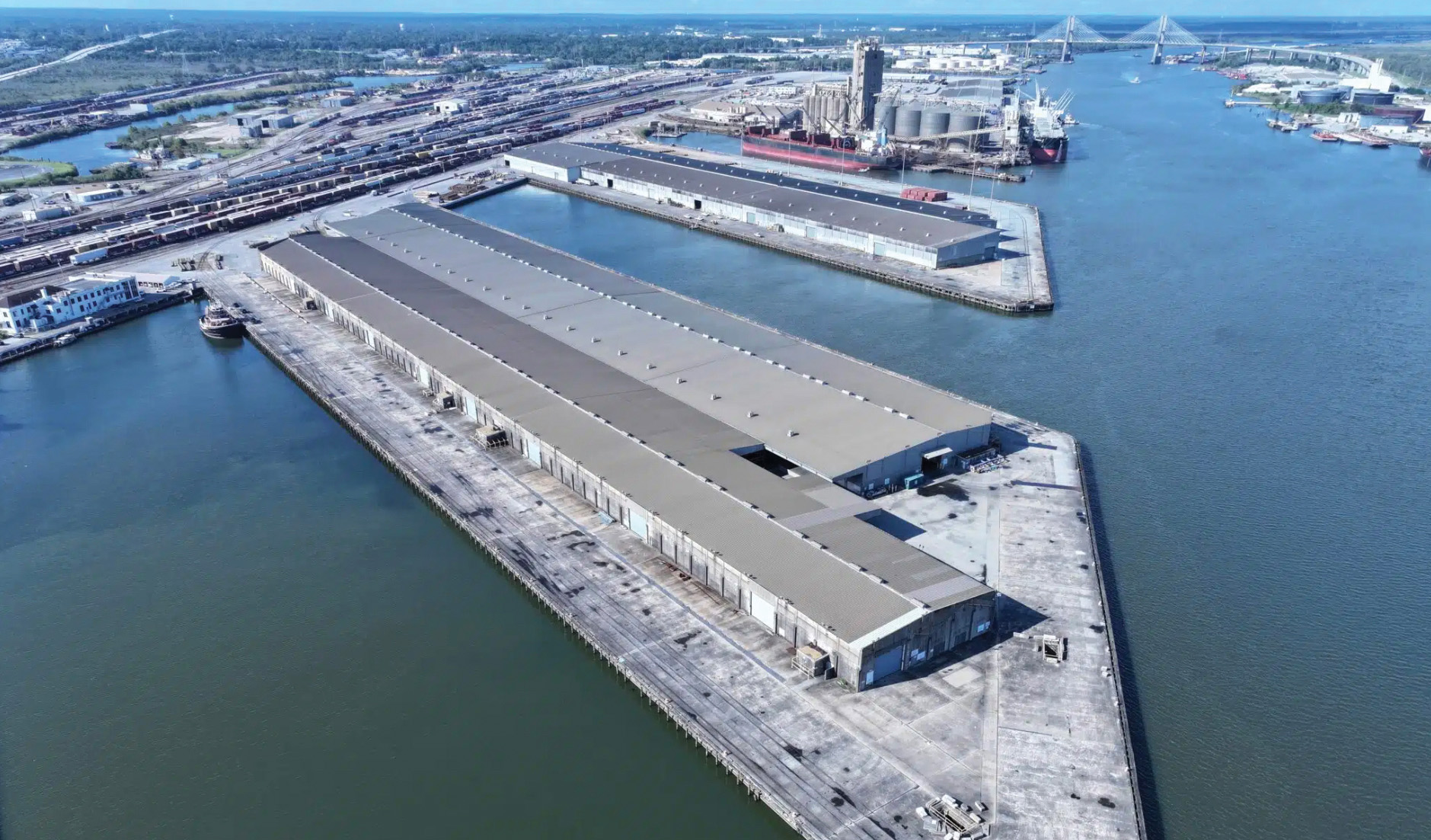
The Alabama Port Authority and Mobile Engineer District marked completion of the Mobile Harbor deepening project in October 2025, increasing the authorized channel depth from 45 to 50 feet. The port also began a $100 million reconstruction of Pier B South, which will provide 1,500 linear feet of modern dock structure for general cargo and breakbulk operations. In August 2026, Fitch Ratings upgraded the port authority’s docks facilities revenue bonds from BBB+ to A-, with a stable outlook.
The Port of Corpus Christi reported record cargo volumes following completion of its channel improvement project. Customers moved 55.8 million tons during the second quarter of 2026, while first-half volume reached a record 110.3 million tons. The port also signed an agreement with the Maritime Administration to explore small modular reactors, resilient port microgrids, shoreside power and emerging vessel propulsion systems.
Port Freeport, Texas, received two new Super Post-Panamax gantry cranes as the port continues improvements to its container terminal and harbor channel. The cranes are designed to improve cargo-handling efficiency, while the $295 million channel project is deepening the channel from 46 feet to as much as 56 feet in several areas. The improvements are intended to accommodate larger vessels, attract new business and strengthen the port’s role in regional and national supply chains.
The U.S. Army Corps of Engineers completed a three-year feasibility study examining improvements to the Port of Gulfport, Miss. The proposed project would deepen and widen several channels and basins, along with adding a sediment basin and making channel bend improvements. The effort is intended to improve access for deep-draft vessels and strengthen navigation, economic activity and supply-chain resilience along the Mississippi Gulf Coast.
Two offshore energy projects are advancing along the Gulf Coast after receiving deepwater port licenses from the U.S. Department of Transportation. Texas GulfLink would support crude oil exports from federal waters off the Texas coast, while Delfin FLNG 1 is planned as the nation’s first floating LNG export facility about 40.8 miles off Cameron Parish, La. The projects are intended to expand offshore infrastructure and increase U.S. energy export capacity.
Now that the second approval of a proposed $76 million Triumph Gulf Coast grant has been made, the Port of Pensacola, Fla., will begin constructing an advanced shipbuilding plant. Aside from constructing a 400,000-square-foot facility for modules and ship components, as well as surface ships measuring up to 400 feet in length, Birdon America Inc. is planning to establish its corporate headquarters in the Southeast region.
The Central Louisiana Regional Port received a $722,400 federal BUILD grant to develop a 20-year multimodal master plan. The plan will examine future transportation, industrial expansion, property development, military logistics and environmental resiliency needs as the port continues to grow. The effort also comes as DIS-TRAN Packaged Substations prepares to expand its operations at the port with a new manufacturing facility, warehouses and hardstand.
The first phase of the St. Bernard Transportation Corridor is moving forward with $10 million in federal funding. The planned elevated roadway would connect the future Louisiana International Terminal in Violet, La., with the I-510 spur and Interstate 10, providing a new freight connection to the terminal. The corridor is intended to improve freight mobility, reduce local traffic and provide an additional hurricane evacuation route for St. Bernard Parish.
West Calcasieu Port has acquired another 172 acres of land along the Gulf Intracoastal Waterway, bringing its total acreage to almost 400 acres of land. The move will ensure that there is more room for barge fleeting and receiving dredge spoils at the facility. This will help it meet the demands of increased marine traffic because of industrialization in southwest Louisiana.
The Central Louisiana Regional Port received $722,400 through the 2026 BUILD grant program to develop a 20-year multimodal master plan. The plan will examine future barge, rail and truck transportation needs, industrial expansion, property development and other infrastructure priorities. Port officials expect the effort to help guide long-term growth as the facility attracts new industries and expands existing operations.
Lower Mississippi
The Corps of Engineers announced August 17 that it has granted a federal permit authorizing construction of the Louisiana International Terminal (LIT), clearing the way for the nation’s only new greenfield container port currently under development. The project is located on the Lower Mississippi River with direct access to the Gulf. It is backed by a public-private partnership among Port NOLA, Terminal Investment Limited (TiL), the port terminal operating arm of MSC, and Ports America.
The Port of Rosedale (Miss.) continued pursuing expansion of its agriculture-centered facilities in Mississippi. Its efforts include expansion of its slackwater harbor and public terminal.
T. Parker Host acquired Impala Terminals Burnside (Impala Burnside), Burnside, La., and renamed the site Ascension Bulk Terminal. Along with the acquisition, Host announced plans to invest $6 million in facility and equipment upgrades. The acquisition also included Impala Fleeting Burnside.
The Port of South Louisiana completed the Globalplex Dock Access Bridge at its Globalplex Intermodal Terminal, providing a second connection between the terminal’s main facility and the primary dock on the Mississippi River. The new dock bridge is designed to improve efficiency and mitigate operational risk.
In the Port of Memphis, a $19.6 million U.S. Department of Transportation Port Infrastructure Development Grant, announced in April, is supporting redevelopment of a dormant grain facility into a cement terminal. Features include a pneumatic barge unloading system, storage and truck transfer capabilities.
Subleases were approved in January 2026 for Watco Transloading with portions of the public dock to Granite Construction and T&S Southern and a lease for SCF Fleeting along McKellar Lake, supporting industrial activity on Presidents Island and creating jobs and investment.
In February, the EDGE Board approved expanding the Memphis and Shelby County Port Commission’s jurisdictional area to include more unincorporated Shelby County areas, plus a sublease in Pidgeon Industrial Park.
Ongoing projects include Cardinal Energy Storage, a 40-acre site in Pidgeon Industrial Park; CN/CSX intermodal expansion at the Intermodal Gateway Memphis facility; site improvements for a former 41-acre Navy property, Select Tennessee Certified Sites; and xAI/CTC developments, including completion of an xAI supercomputer facility.
The Greenbelt Landing expansion project at the north end of Mud Island broke ground around March as a $6 million project half funded by the federal government and half from the city of Memphis. The expansion adds docking for passenger riverboats along with boat ramp repairs, mooring anchors, accessible parking and lighting.
The Paul R. Lowry Road expansion/extension to improve access to Pidgeon Industrial Park advanced preliminary design and environmental studies earlier but was paused in September 2026 amid community concerns; city leaders are reassessing options, including whether to proceed.
Osceola, Ark. Is expanding its harbor to handle surging steel and agricultural traffic. Plans call for extendimg the federal navigation channel from roughly 6,600 to about 9,600 feet and adding a second turning basin.
Great Lakes
Great Lakes and inland port organizations launched a study examining cargo movements between the two waterway systems. The initiative is intended to identify opportunities to strengthen freight flows between Great Lakes ports and inland waterways. The study also focuses on improving connections among ports, carriers and other freight stakeholders.
Featured photo caption: An aerial view of the Port of Mobile’s Pier B South. (Photo courtesy of the Alabama Port Authority)