

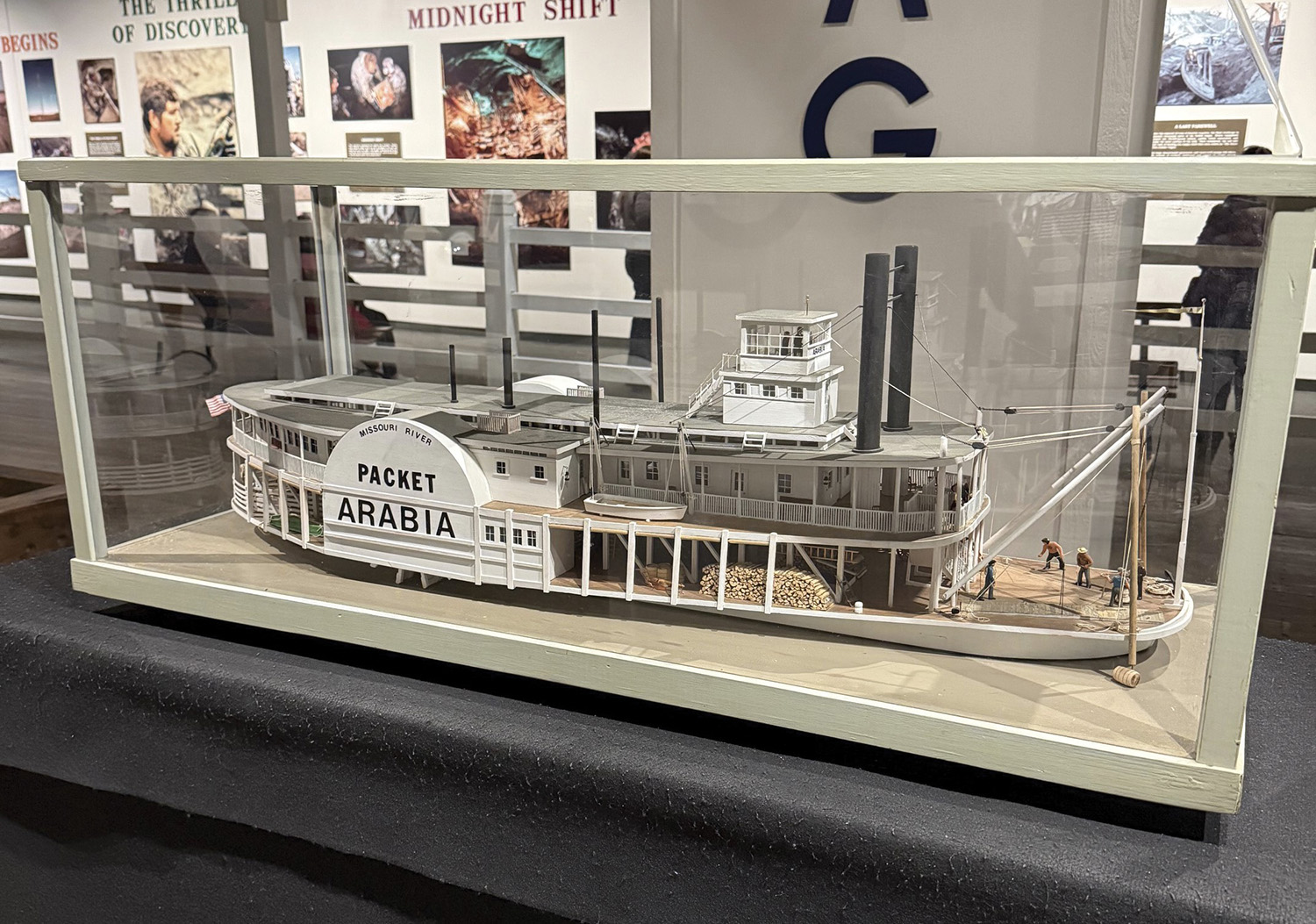
Arabia Steamboat Museum Slated To Close
David Hawley, his late brother, Greg, and their father had always been “treasure hunters,” somewhat. Growing up in Independence, Mo., they often scoured the banks of the nearby Missouri River for whatever interesting thing might have washed up on the shore, and they even accompanied their father on adventures exploring abandoned gold mines as far away as Colorado.
The idea of locating and excavating a steamboat that had disappeared beneath the waters of the Missouri had never crossed their minds. Working in the family refrigeration business, David made a service call one day and heard stories from a man about some wild things, such as UFOs, and one thing that really sparked his interest: the many steamboats that lay sunken along the Missouri River, some said to have gone down with valuable cargo aboard.
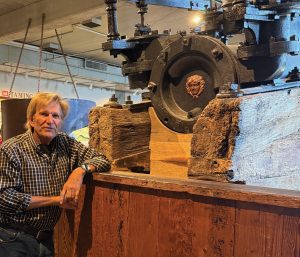
The Hawley family recruited some friends and began researching lost steamboats on the Missouri River. Some estimates put the number of vessels lost on the river in the mid-19th century as high as 400. The research gave the partners the information needed to whittle that number down to just a few that gave promise of a return on investment for their efforts.
The short list that they came up with included the Mollie Dozier, E.A. Ogden, Twilight, Mars, William Baird, Arabia, Princess, George Washington, Radnor and one boat that was documented as having sunk near Boonville, Mo., in 1819. The nameless boat had been reputed in news accounts to have more than $200,000 in silver coin aboard as well as a “large quantity of Kentucky whiskey.” This was selected as the first to search for.
The group secured permission to search from landowners, and after months of walking miles through fields and marsh with magnetometers, much had been found beneath the surface, including old Corps of Engineers training structures of wood piling wrapped in steel cable, farm machinery and street signs, but no steamboat. They then began searching for the George Washington and the Radnor, sunk by snags in 1826 and 1846, respectively, in the same general areas. More months of searching again turned up nothing.
The Mars was the next target. The boat had sunk with a full cargo of “general merchandise” in 1865; however, it was found that a petroleum pipeline had been laid through the search area, making a probing search too risky. They searched for the Princess near Napoleon, Mo., where it had gone down with supplies for Fort Benton in 1868, but again to no avail.
The Mollie Dozier was lost near Chamois, Mo., with miners and an estimated $1 million in gold on board. The boat was located in a swampy area called Mollie Dozier Chute, but prior to doing core sampling, it was found through ongoing research that the miners and their gold had left the steamer after a prior sinking and were not aboard when the boat went under near Chamois. The steamer William Baird was found but unfortunately lay partially under a Corps levee.
The Twilight had struck a snag and sank near Missouri City in 1865, loaded with Army supplies and general freight. The boat was located fairly easily, but borings turned up nothing other than wood from the hull and no sign of cargo. Ultimately, after three years of research, searching, drilling and digging, they were left with one steamboat on the short list, one that had historically been referred to as “the Great White Arabia.”
The Arabia was built at Brownsville, Pa., in 1853 by the yard owned by John Snyder Pringle. It was of sidewheel construction with a wood hull measuring 171 by 31 feet (54 feet wide overall) and 5.5 feet depth of hold, capable of handling some 220 tons of cargo. The engines were 18 inches in diameter with a 6-foot stroke and were powered by a battery of three boilers.
It was first owned by Adam Jacobs of Brownsville, with Capt. John Woodburn as master. It ran on the Ohio and Upper Mississippi rivers, with the maiden trip to St. Louis. The western frontier was being settled, and those far from real civilization needed supplies. The original settlers had journeyed west by foot, wagon or horseback. By the 1850s, the most efficient means of travel and delivery of supplies by the ton to the area was by steamboat on the Missouri River.
According to “Treasures of the Steamboat Arabia” by David Hawley, the boat was sold in February 1855 to Capt. John S. Shaw of St. Charles, Mo., for $20,000. Shaw intended the Arabia for the lucrative Missouri River trade and wasted little time in chartering it to the government to deliver men and supplies from Fort Leavenworth, Kan., to points on the upper Missouri, reaching as far as the mouth of the Yellowstone.
After this, the Arabia entered a regular run from St. Louis to Sioux City, Iowa, and all points between. In the spring of 1856, the Arabia again changed hands, sort of. Shaw retained a 25 percent interest, selling the remainder to Capt. J. William Terrill and George W. Boyd. It continued to run the Missouri and suffered several mishaps, one of which involved grounding near the mouth of the Gasconade River, where the tiller arm to the rudder broke and was replaced by a tree branch.
In late August 1856, the Arabia once again loaded cargo and passengers for another routine trip up the Missouri River. It made a landing at Westport Landing in what is now Kansas City, Mo., and continued upbound. Less than an hour later, when nearing the village of Parkville, the wooden hull of the vessel was ripped open by a snag lying just below the surface of the muddy stream.
The Arabia sank rapidly, leaving some of the superstructure visible. All aboard were saved, apart from one unfortunate mule that had been tied to sawmill equipment. The cargo was lost when the boat sank. Soon the visible portions of the wooden cabins and the towering smokestacks were washed away.
Some early salvage attempts were made on the sunken Arabia, with little success. Over the following decades, the meandering Missouri shifted course, and the remains of the wreck were no longer under the river but covered by sediment and soil. The area became a field where crops such as corn were grown. Due to the stories abounding regarding the treasures aboard, including many barrels of valuable “Kentucky whiskey,” attempts to reach the Arabia were made by some, but with no success.
The Hawley family and partners, now officially known as River Salvage Inc., approached property owner Norman Sortor, whose family had first purchased the land in the early 1860s, about searching for and excavating the Arabia. Skeptical due to the known unsuccessful previous attempts, he tried to discourage them but eventually made an agreement with them.
The area where the boat was buried was quickly located with a proton magnetometer and the rough shape marked out. Sample borings brought up wood and pieces of a delicate red glass goblet. The simple part was over. The excavation would require multiple types of heavy equipment.
An extensive pumping system was designed to remove groundwater that was prevalent not far below the surface. Twenty wells were drilled to a depth of 65 feet. This water would be channeled to the river by way of a ditch, and large portable diesel generators were set up to run the pumps and lighting. A large crane, bulldozer and other equipment were brought in, some by land and bigger pieces by barge.
On November 13, 1988, the project began, and on November 26, at a depth of 27 feet, after 132 years, a glimpse of the Arabia appeared in the form of the port sidewheel. Completely excavated, it was found to be 28 feet in diameter with 7.5-foot buckets. The excavation would eventually reach 45 feet in depth and 300 feet in length, unearthing hundreds of thousands of individual artifacts.
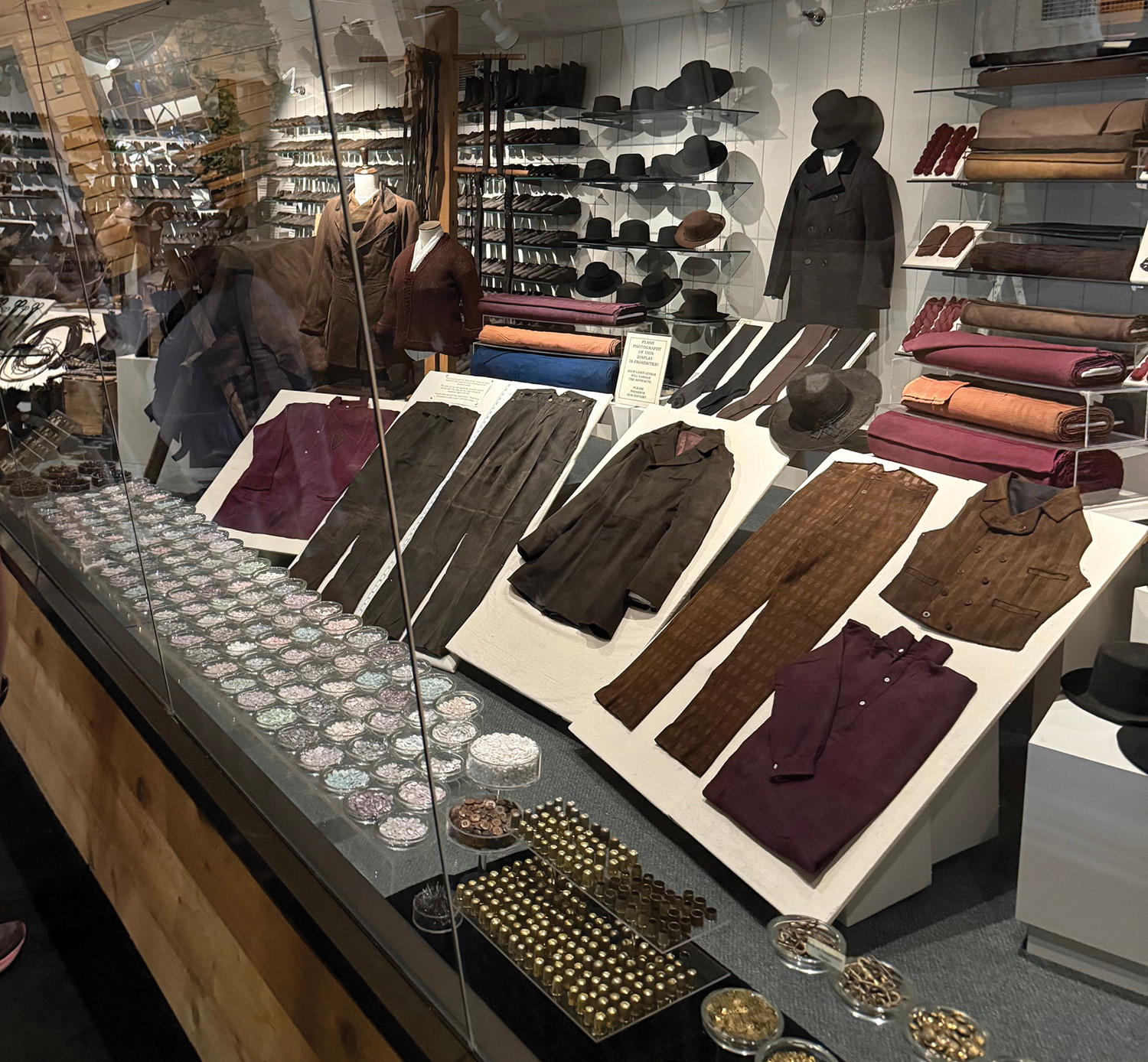
The port engine, boilers, pitmans and wheel shafts were recovered along with assorted pieces of machinery. The starboard engine was missing, presumably salvaged soon after the sinking. The hull was broken and twisted, but it was decided to save the intact stern section that still contained the makeshift tiller arm installed following the grounding near the Gasconade in 1856. In early February 1989, after everything possible had been salvaged, the site was filled back in and covered over.
This herculean project was accomplished over the winter months. Mud and sand had to be washed away from the treasures with water hoses in subfreezing, body-numbing temperatures. The dedicated individuals kept at the exhausting task because the work had to be completed before the spring planting season. This was all accomplished by a group of common individuals, rather than a wealthy foundation hiring a crew of workers to perform the work.
The partners had entered excitedly into the excavation with the hopes of finding treasure to sell for a huge profit. As the hats, shoes, clothing, bottles of food and medicine, tools, machinery, crockery, dishes, glasses and more were discovered, they felt that the whole of the discovery should remain intact, despite the enormous cost encountered to uncover it.
As news of the Arabia treasures spread, the city of Kansas City, Mo., approached River Salvage Inc. about establishing a museum there. A 30,000-square-foot space in a building in the City Market area, virtually in sight of where the Arabia made its last landing before the sinking, was offered. On November 13, 1991, exactly three years after the Arabia excavation began, the Arabia Steamboat Museum opened to the public.
This museum and display of what is considered the largest single collection of pre-Civil War artifacts is extremely well laid out. The boilers, port engine, reconstructed port sidewheel and even the snag that caused the sinking are arranged so that one can almost get the feel of standing on the Arabia. The individual artifacts are arranged and displayed in groupings.
Nearly 40 years after the find, hundreds of pieces are still undergoing the ritual of preservation. Clothing must be kept frozen until meticulously cleaned and restitched. Preservationists can be viewed at work within the museum as they actively perform these tedious but very interesting tasks.
Unfortunately, this magnificent museum is scheduled to close permanently on November 13. The city originally granted a 35-year lease for the facility and has declined to renew, instead planning a parking garage for the site.
During a recent visit with David Hawley at the museum, he expressed hopes that a new location for the collection can be found. He desires to see it continue as it is, even at another location. Other towns, such as St. Charles, St. Joseph and Leavenworth, have expressed some interest in the museum.
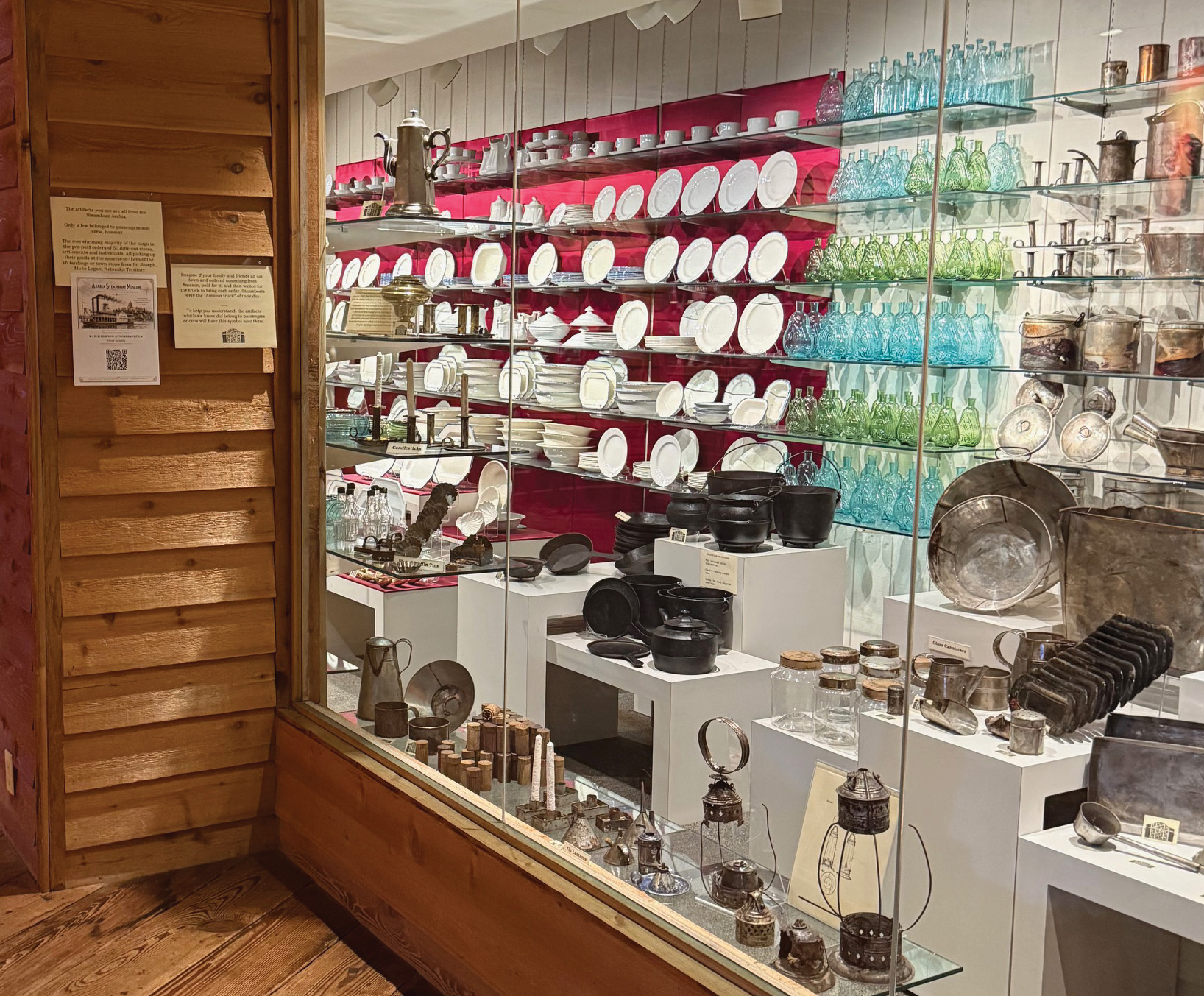
The Arabia Steamboat Museum continues to be a very popular venue, with more than 75,000 visitors per year. During this writer’s time there, it was crowded with people. Hawley is an excellent curator, walking among the visitors and answering questions. One young schoolboy had very pertinent questions about the dangers to wooden steam vessels on the rivers of the 1850s, as well as about the benefits to the economy of the time. It would be such a shame to lose this valuable educational collection.
Asked what will happen, Hawley answered that as of now, “I think we’re going to close,” though he has asked the city for at least a short extension of the lease. He also said that he would like to say, “Thank you to every man, woman and child that have come through those doors.” He is optimistic about finding a new spot, even if the collection has to be placed in storage for a time.
Featured photo caption: Scale model by Ken Gausman depicting how the Str. Arabia looked.