A Christmas Present For The Boss
Picking that perfect Christmas present for the boss is always a challenge.
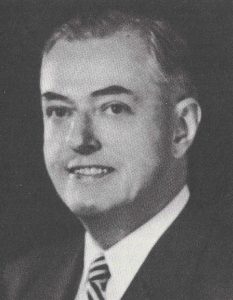
In 1946, the indisputable “boss” at Ashland Oil & Refining Company was Paul Garrett Blazer. Swiss Oil Company hired Blazer in the early 1920s.
Swiss was involved in oil gathering, which involved drilling oil wells and collecting the product in eastern Kentucky and the surrounding areas. The company decided to expand into refining and hired Blazer either to find an existing refinery to buy or build a new one.
Ultimately, he selected a small refinery on the banks of the Big Sandy River near Catlettsburg, Ky., and arranged the purchase for Swiss. It began operation under the new ownership in 1924 as Ashland Refining Company with Paul G. Blazer managing it. The company grew exponentially and in a very few years swallowed the parent company, Swiss Oil, to become Ashland Oil & Refining Company (AO&R). Blazer initially selected the Catlettsburg refinery because of the river location, and he proceeded to build a fleet of towboats and barges to serve the needs of the company. He was fond of referring to the inland river system as “the poor man’s pipeline.”
A small sternwheel boat named Colonel was part of the refinery purchase, and two other similar vessels named Scout and Ruth-Ann were acquired later. In 1936, the new St. Louis Shipbuilding & Steel Company built a 360 hp. twin screw towboat for AO&R. In 1940, Calumet Shipyard in Chicago built a large 1,130 hp. boat named Jim Martin, and in 1942, Calumet delivered the “Big Three” to AO&R: the 1,600 hp. Ashland, Paul Blazer and Tri-State. In 1943, AO&R purchased two small towboats, the mvs. Margaret Dawson and Henry C. Ogram, from Missouri River interests to enhance the AO&R fleet for wartime duty. (See The Waterways Journal, October 24, 2025.)
In November 1946, the first successful radar set on the rivers was installed on the Tri-State at the Dravo Shipyard at Neville Island, Pa. Captains T. Kent Booth and Henry Dixon made that first trip out of Pittsburgh utilizing the device, which was manufactured by Sperry. It was so successful that open houses were held at Louisville, Ky., Cincinnati, Ohio, and Huntington, W.Va., to show it off. The Tri-State saved so much running time in the first month of radar operation that Mr. Blazer authorized sets for all the larger AO&R boats.
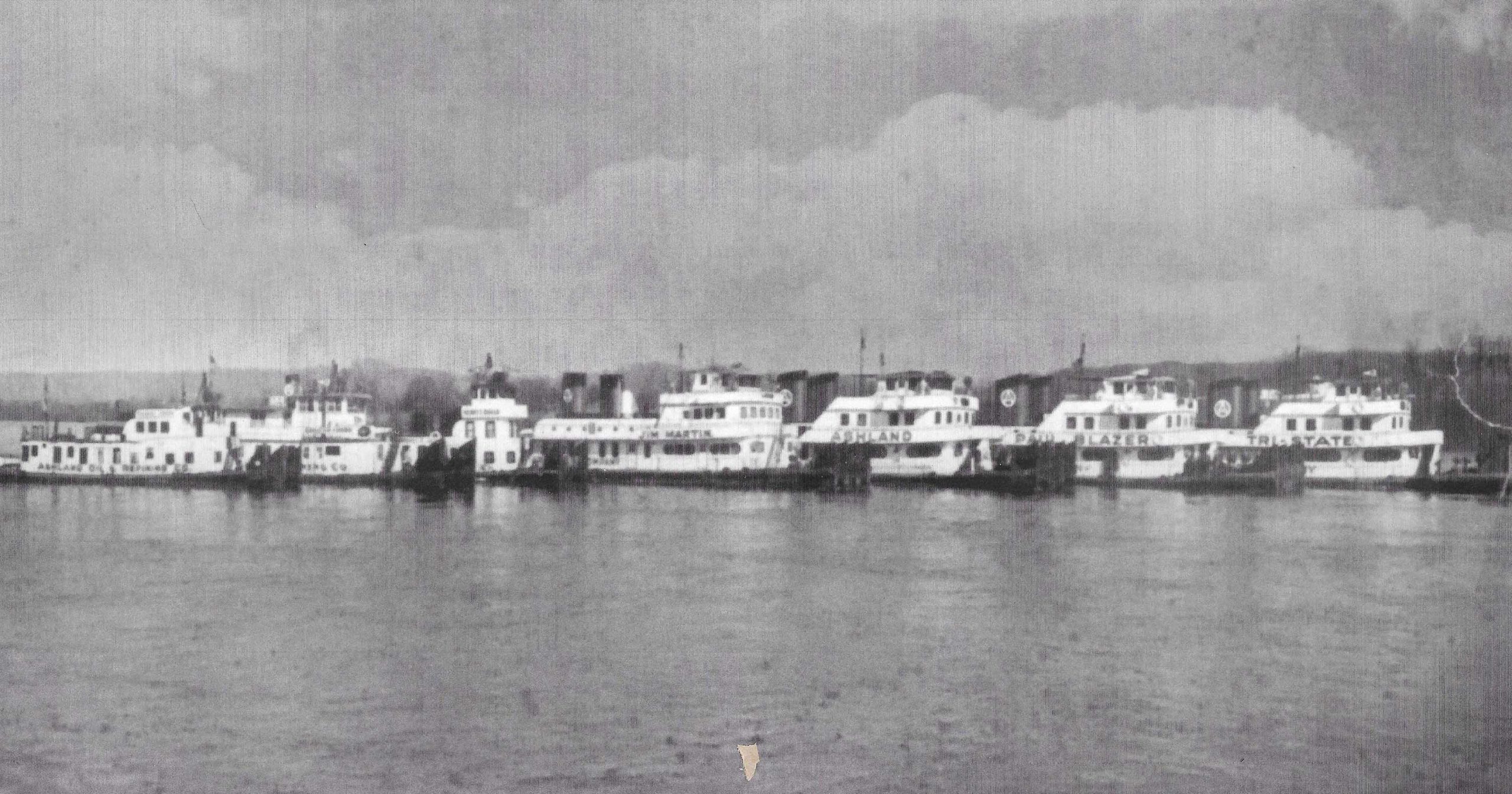
At some point after this, but before the sets were installed on the other boats in the fleet, someone in the marine department of AO&R realized that on one particular day every boat in the company’s fleet was in the Catlettsburg harbor area. A call was made to local photographer Frank Elam, and the boats were gathered together to try for a group photo. According to the late Robert L. Gray, some were in for engine repair and were not operational, and the river was up somewhat, which created another obstacle to getting a decent photo of the entire fleet.
The boats were taken up above the mouth of the Big Sandy River, and those that were running tried to get all the others arranged in some sense of order. Gray said it took most of the day, with various boats pushed in place, then floating downstream too far before the picture could be taken. The effect of trying to move the whole fleet up at once was something like trying to push a rope or chain. Elam, the photographer, took many shots that day, but most were inferior for one reason or another. Finally, he felt he had at least one good pose of the entire AO&R fleet.
It can’t be said with certainty that this was all done with the thought of a Christmas present in mind, but the season was at hand by the time Elam produced a large print, which the marine department managers presented to Paul Blazer. Gray said Blazer studied the photo for a time, then said, “Well, that’s nice boys, but let’s not ever have this happen again.”
————
Featured photo caption: The Ashland Oil & Refining Company fleet in late 1946. (From the author’s collection)