
PND Delivers Projects That Connect People to America’s Waterways
By Aaron Unterreiner, PND Engineers, Inc.
Special to The Waterways Journal
On a fishing boat in Bristol Bay off the West Coast of Alaska in the late 1970s, a pile buck reached for an available block of butcher paper and roughly sketched out a new Columbia Ward Fisheries dock at the cannery in Ekuk, Alaska. He hand-delivered it to a friend in Anchorage, Alaska. By late 1979, PND Engineers, Inc. (PND) co-founder Dennis Nottingham advanced his friend’s sketch into a complete design for a 17,000-square-foot pile-supported dock. Nottingham and Roy Peratrovich, Jr. incorporated Peratrovich & Nottingham, Inc., then went to work on their fast-tracked design-build cannery dock ― the first project in PND’s history.
PND has provided design engineering services that connect people to waterways for industry, recreation and mobility for 47 years. Nearly five decades since the company’s first project, PND now is a dynamic multidisciplinary consulting firm with nearly 150 employees across nine offices. PND is headquartered in Anchorage, with additional office locations in Juneau and Palmer, Alaska, as well as Seattle, Federal Way and Kennewick, Wash.; Portland, Ore.; Houston; and Vancouver, B.C., Canada.
“While PND originated in Alaska and expanded into the Pacific Northwest, it was industry connections that brought us into the Midwest and Gulf Coast waterways,” said PND Senior Engineer Carl McNabb, who operates out of PND’s Seattle office. “These mainly were nationwide steel suppliers and regional contractors who recommended PND’s unique engineering services to other port locations through the network.
“Working as a professional service provider on inland waterways offers unique insight into a variety of industries across the national economy ― steel manufacturing, agricultural production, commodities transfers, oil and gas supply, and so on,” McNabb added.
PND has developed riverfront projects for both private and public groups nationwide, providing myriad opportunities for work and play that contribute to regional economic growth. PND is well-practiced at providing engineering solutions across the Columbia and Snake River systems through Idaho, Oregon and Washington, engaging with a wide range of industries such as fisheries, shipping, tourism, hydropower, timber and agriculture.
“Our work connects with many of the defining features of the Pacific Northwest,” PND Vice President and Principal Engineer Rian Johnson said.
Sample Projects
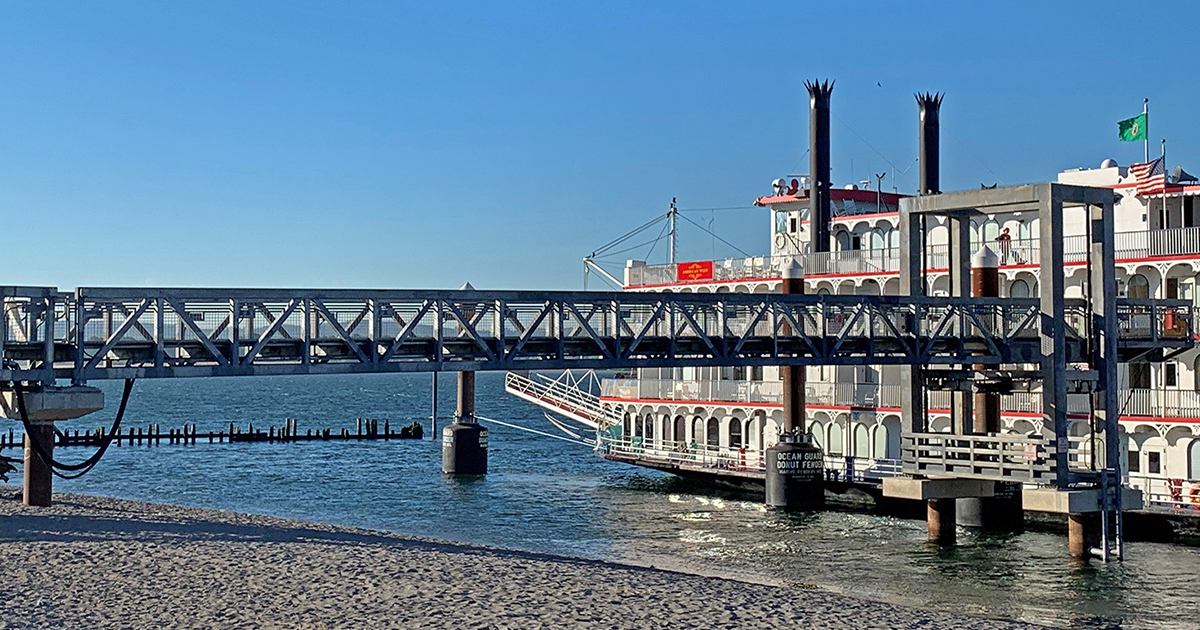
PND recently designed a small cruise ship dock at the Port of Kalama in Kalama, Wash., which has become a new model for river cruise berths on the Columbia and Snake rivers. The dock accommodates berthing a 328-foot-long sternwheeler cruise vessel with capacity for unloading and loading approximately 180 passengers. The project provides safe, secure berthing and ADA-compliant shore access for a variety of river cruise vessels that call at the port. PND specifically designed the cruise ship berth to be physically and visually unobtrusive, recognizing the redeveloped area as the central community gathering space for Kalama. The project’s light footprint helped preserve the views of the Columbia River and provide unobstructed beach access from the Port of Kalama’s new waterfront park.
The Port of Astoria Pier 2 West Rehabilitation project on the Columbia River in Astoria, Ore., is another project example from the Pacific Northwest. The rehabilitation will support seafood-processing operations, a major economic driver for the region. The project will replace the existing timber pier with a new PND-proprietary, trademarked OPEN CELL SHEET PILE (OCSP) bulkhead. The OCSP bulkhead will follow the pier line and encapsulate the timber piles, stabilizing the existing timber bulkhead that supports the adjacent fish-processing warehouse. PND designed the pier to resist seismic events and liquefaction, potential hazards in the Pacific Northwest. The pier rehabilitation, designed for a 75-year life, will upgrade the facility’s stormwater collection system and fish-processing water system, meeting Oregon’s water quality requirements.
In the Midwest and Mid-Atlantic, PND recently designed the Port KC Parson Port Terminal barge dock on the Missouri River in Kansas City, Mo., and the Nucor Steel West Virginia South Port on the Ohio River in Apple Grove, W.Va., respectively.
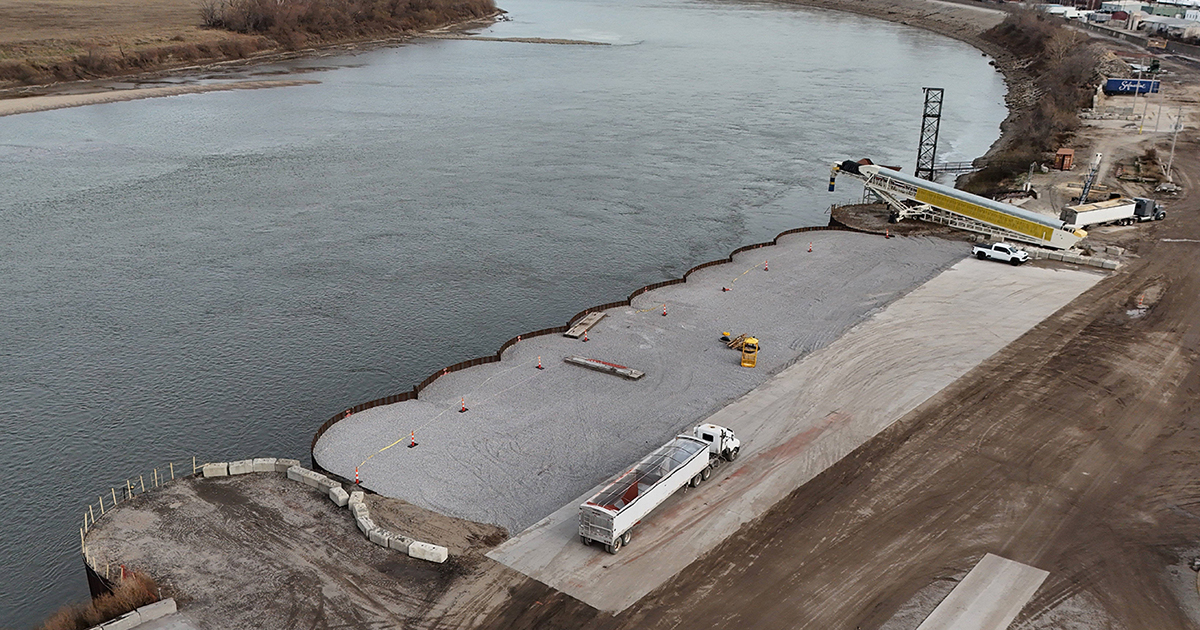
Port KC is situated in downtown Kansas City on the Missouri River, nearly 400 miles upriver from St. Louis, supplementing existing east-west transportation corridors in parallel with Union Pacific, CPKC, and BNSF railroads. PND designed a new 300-foot-long OCSP bulkhead to replace a dilapidated timber rail trestle to revitalize river commerce by handling agricultural products such as grain and soybean meal, scrap steel, mill scale, steel coils, aggregates, and heavy breakbulk cargo. PND’s OCSP solution was half the cost of the project’s original design using soil anchors. PND’s design delivered both substantial cost savings and heavy-load capacity to Port KC.
“Seeing infrastructure rebuilt reaffirms the usefulness of shipping bulk material on the river,” said McNabb, PND’s project manager on the Port KC project.
PND and Nucor Steel have nearly completed a new OCSP barge facility on the Ohio River for receiving bulk material at a new steel plate mill in Apple Grove, using Nucor’s own steel product shipped by barge from its facility in Blytheville, Ark. The dock features a high and low dock, each 15 feet apart in elevation, for unloading during seasonal variation in river stages. The dock was designed for a uniform live load of 1,000 pounds per square foot, or a 450-ton Manitowoc 16000 crane. The surface will soon be finished with an 18-inch-thick concrete pavement. PND and Nucor Steel completed a similar project two years prior on the Ohio River in Brandenburg, Ky.
“There’s a real energy that comes from developing infrastructure improvements on waterways and seeing the social and economic benefits to the communities,” Johnson said. “Waterfront engineering is a unique and challenging field. We like to listen to our clients’ challenges, then roll up our sleeves and come up with cost-effective solutions to those challenges. That part of the work hasn’t changed since PND’s founding.”
Featured image caption: An aerial view of the Port KC Parson Port Terminal High Dock on the Missouri River in Kansas City, Mo. The project features PND Engineers’ trademarked Open Cell Sheet Pile (OCSP) bulkhead. (Photo courtesy of PND Engineers)