
America’s River Story Is One Of Partnership
The story of America is the story of its rivers and waterways and the commerce they enable. It’s also a story of partnership between private enterprise and government support for the infrastructure that allows that enterprise to flourish.
As the United States prepares to celebrate its 250th birthday, it is fitting to look back at how the country’s maritime history has enabled the country to flourish.
The Louisiana Purchase mattered because of the Mississippi River, the new country’s transportation backbone. Capital and development followed rivers and waterways, then as now.
The state of New York financed the Erie Canal through bond issues and gave steamboat pioneer Robert Fulton and his partner exclusive 30-year rights to steamboat traffic in the state. The Erie Canal — which connected the Hudson River to the Great Lakes, forming an all-water route from the Atlantic to the Midwest — slashed transportation costs, flooded New York City with wealth and accelerated America’s shift from an agrarian to a commercial nation.
After the Civil War, the Transcontinental Railroad supplemented, but never replaced, river transport — not even in 1887, when The Waterways Journal was founded, and some doubted that barge transportation could survive fierce rail competition.
The Great Lakes and connecting rivers became the nation’s industrial heartland. Iron ore from Minnesota moved down Lake Superior to steel mills in Gary and Pittsburgh. Coal from Appalachia floated down the Ohio River. Rivers powered factories, moved freight and transformed the United States into the world’s leading industrial power.
Railroads boomed as well, often at barge traffic’s expense. However, during World War I, they proved hopelessly inadequate to meet America’s urgent wartime logistics needs. They were temporarily nationalized, to the relief and support of most rail executives. The federal takeover transferred debt and organizational and labor problems to the government, which invested more than a billion dollars (about $20 billion today) in modern rolling stock, switching yards and locomotive engines.
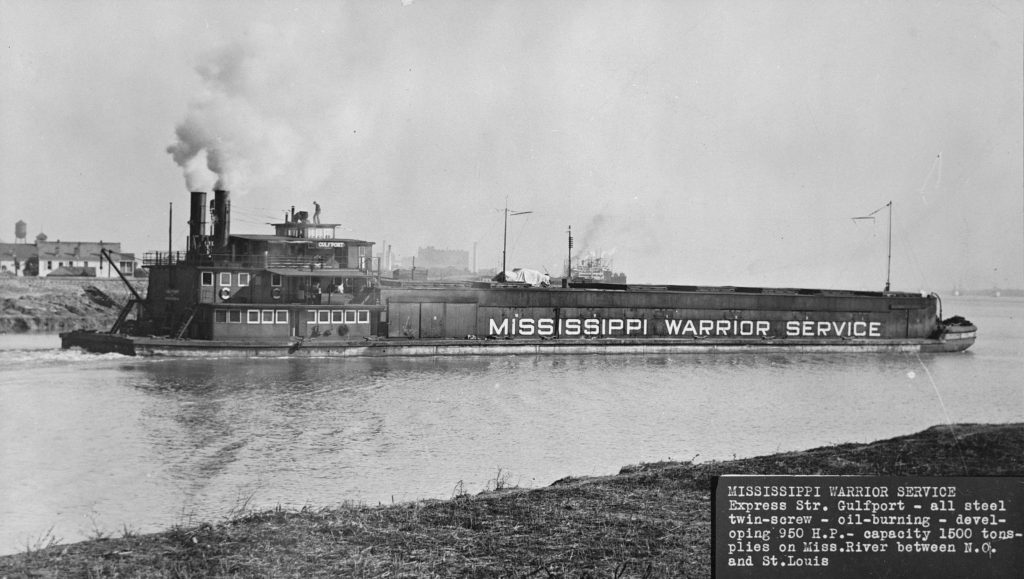
Part of the rail reorganization was the federal government’s creation of the Inland and Coastwise Waterways Service in 1918, later renamed Federal Barge Line. This allowed railroads to consign slow, heavy bulk cargoes to cheaper, more efficient barges, while concentrating on higher-priority military freight.
Despite the benefits and investments they had received from nationalization and public investment, the railroads fought a bitter war against the FBL after the war, calling it a “socialistic” assault on private enterprise. But the war had driven home the lesson that efficient freight transportation and healthy modal freight competition was a matter of national security and the common good, not private benefit alone.
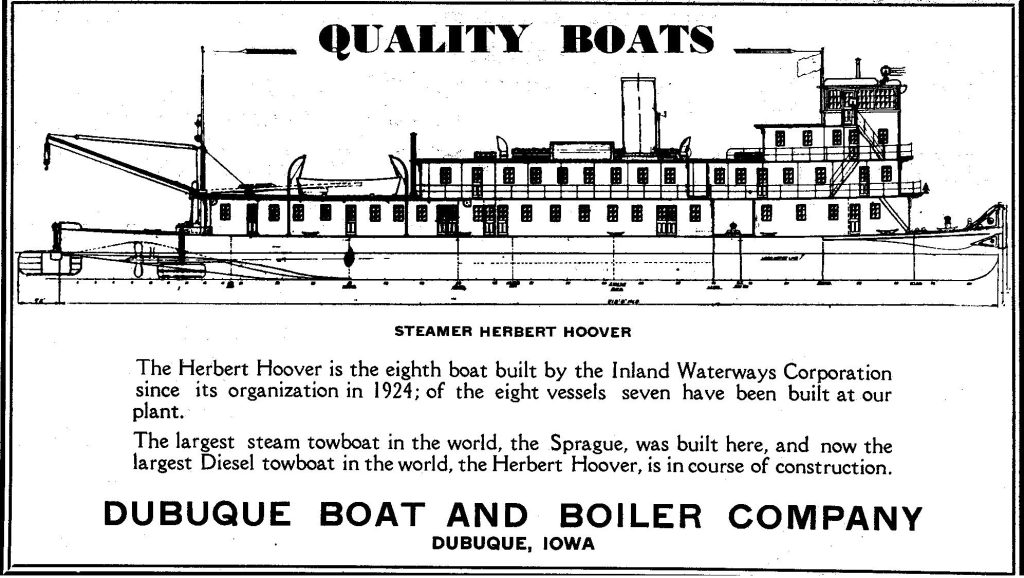
Because the war had devastated already shaky river carriers, the federal government used FBL to absorb the costs and risks of testing new techniques and equipment. From the 1920s through 1950s, FBL — and its parent, the federally owned Inland Waterways Corporation (IWC) — became America’s innovation laboratory for inland towing technology. FBL introduced modern diesel engines and developed more efficient integrated tows that reduced drag. Its breakthroughs shifted the towing industry away from the steamboat era and into a modern fleet.
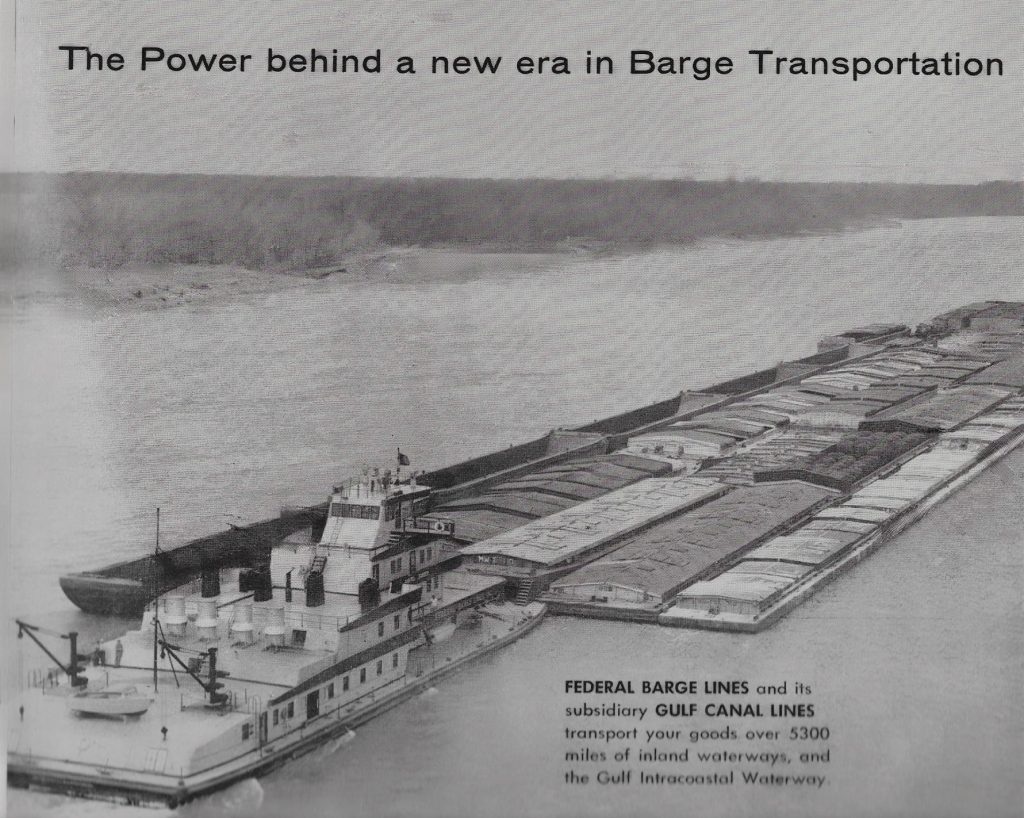
The 9-foot channelization of the Mississippi River and the massive lock and dam projects that began during the 1930s — and that we continue to maintain today — unlocked our rivers’ export potential, making America’s Gulf Coast the world’s agriculture export capital.
The rivers and waterways have enabled every American triumph and tragedy: the canoes of explorers, the flatboats of early traders, Mark Twain’s steamboats, the gunboats of civil strife, the diesel revolution after World War I, the “brown-water navy” craft that helped win World War II and on to today’s modern towboats and barges serving the postwar export boom.
America’s free markets — supported by its rivers and waterways — continue to be the world’s envy. America remains the best place in the world for anyone with an idea to develop and market it.
But markets alone didn’t build the Erie Canal, dredge the channels or build the locks and dams that have enabled American farmers and exporters to feed, fuel and clothe the world. America’s waterways story is of a continually adjusting but constant partnership between private enterprise and government support. The balance of collaboration between government and private enterprise on the rivers has shifted this way and that but has never been absent.
Today, America’s barge operators and the companies that support them continue to serve as a vital component of America’s prosperity and security. Their officers continue to serve on an alphabet soup of advisory committees and groups like the Coast Guard–AWO Safety Partnership, a non-regulatory forum between the U.S. Coast Guard and The American Waterways Operators (AWO), the primary trade association for the tugboat, towboat and barge industry; the River Industry Action Committee (RIAC) and Waterways Action Plans (WAP), joint operational groups comprising the barge industry, Coast Guard, Army Corps of Engineers and the National Weather Service; the Inland Waterways Users Board (IWUB), which advises the Corps on lock and dam investments on behalf of the barge industry, whose fees make up the Inland Waterways Trust Fund; the National Maritime Interagency Advisory Group (NMIAG); and a host of others.
Without this industry support, it would be virtually impossible for federal agencies to regulate our rivers and waterways. Without the framework of government investments, support and regulations, it would be impossible for private industry to operate safely, economically and profitably on them.
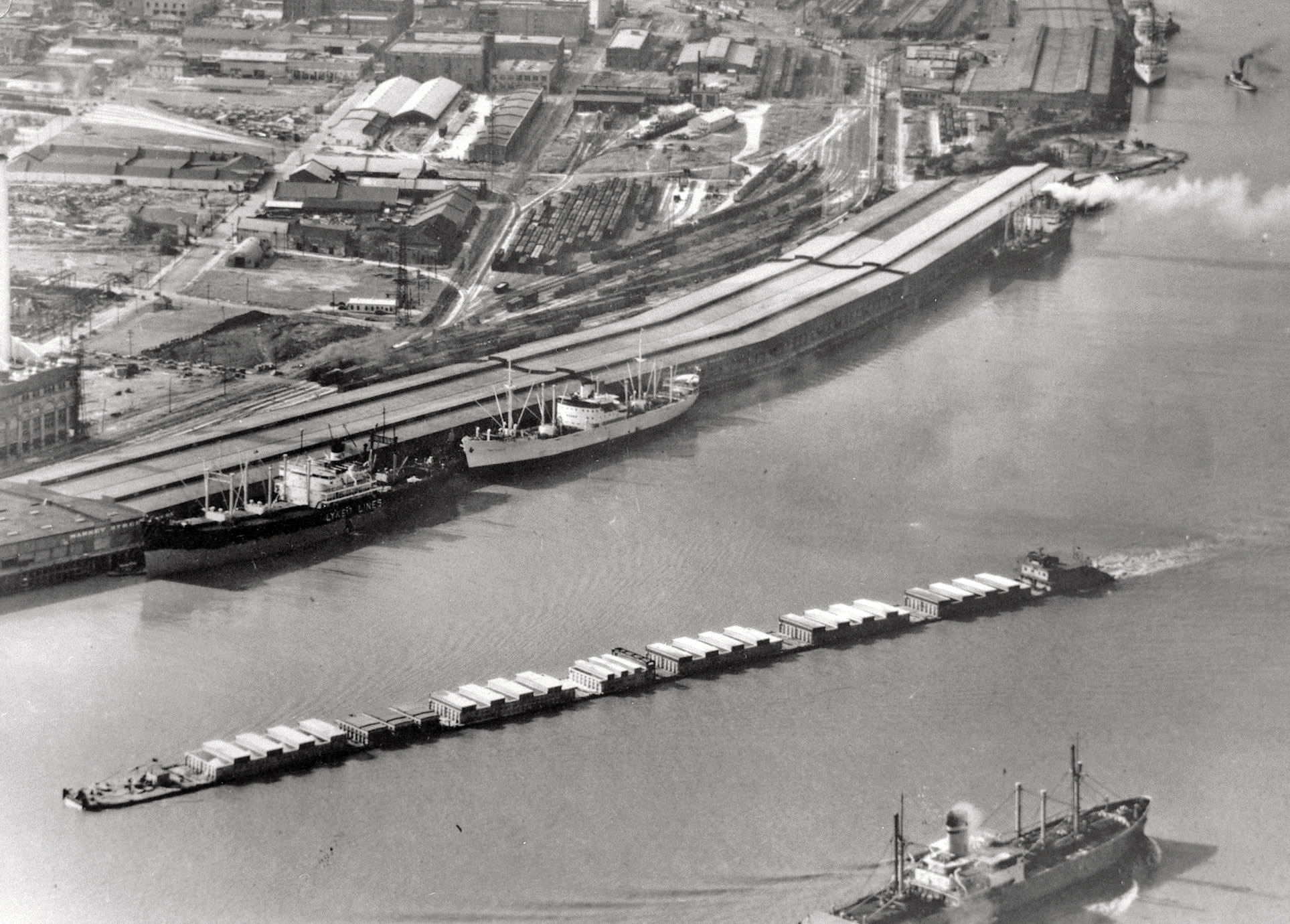
Featured photo caption: The 3200hp HARRY TRUMAN with integrated 12,000 ton tow departing New Orleans upbound on March 8, 1949.