
Missouri River Regional Roundup: AGRIServices Plans New Dock, Warehouse
While its history stretches back nearly 50 years, AGRIServices of Brunswick is focused firmly on the future.
The company, headquartered in Brunswick, Mo., Missouri River Mile 256, began as a wholesale fertilizer warehouse known as Brunswick River Terminal in 1977. It changed names in 1998, when the terminal formed a joint venture with MFA Inc., formerly known as the Missouri Farmers Association.
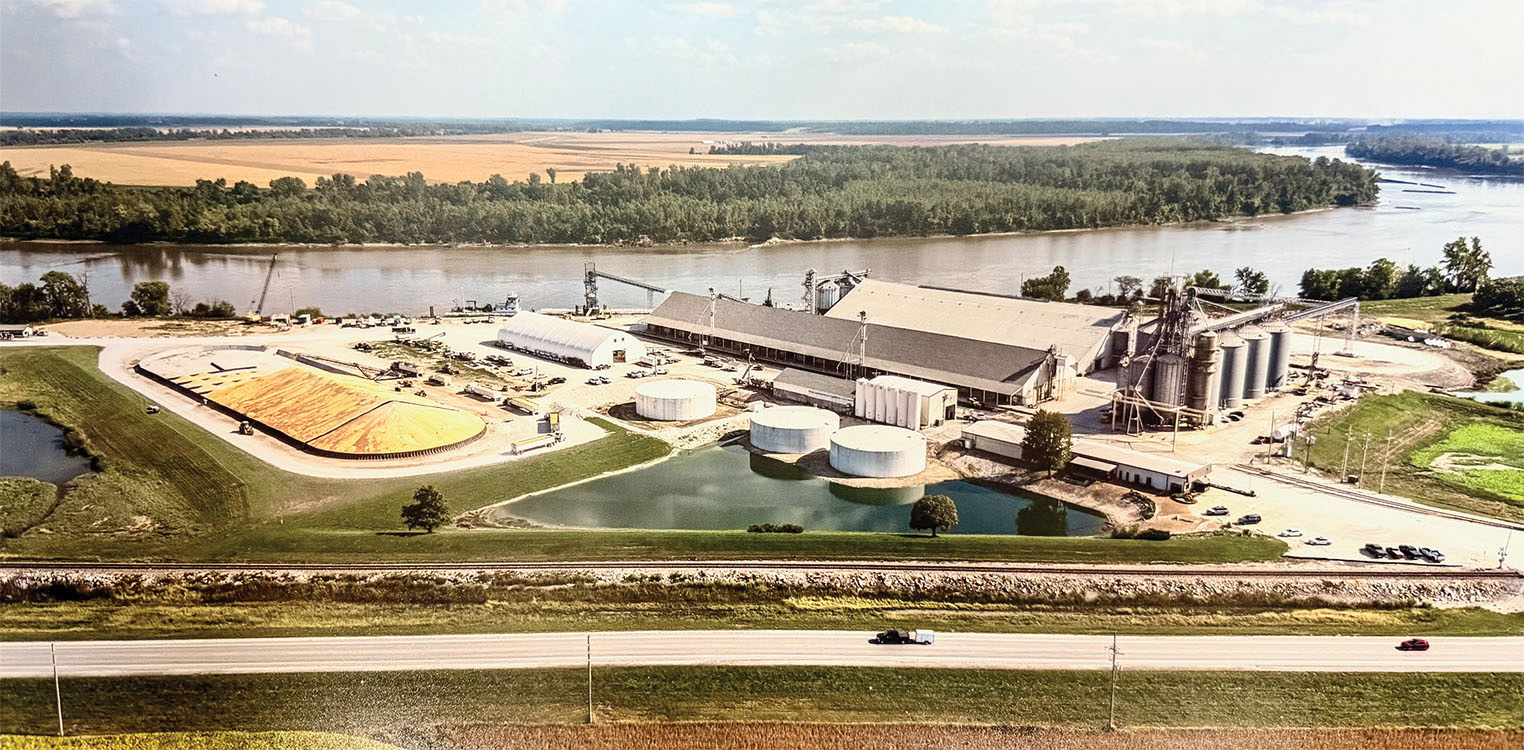
Over the years, the company has grown to become one of the biggest full-service agricultural retailers, wholesale fertilizer distributors, feed suppliers and multimodal transportation providers on the Missouri River. It operates the largest port on the Missouri River in terms of tonnage moved, acreage and river frontage and is the largest importer and exporter of products on the Missouri River, according to the company.
A 2022 federal Port Infrastructure Development Program (PIDP) grant of nearly $8.8 million is helping to continue that growth.
It has taken close to four years to get through the permitting process related to the grant, but dirt work now has been completed for AGRIServices’ new 4,000-foot rail spur with loading pit, and the rail and ties have arrived on site, General Manager Kevin Holcer said.
Once that work is completed, a 200-foot-long sheet pile barge dock and 13 new mooring dolphins will increase efficiency, paired with a new Sennebogen 855 excavator with a 4 1/2-yard-wide bucket that was delivered earlier this month, he said. The dock project is getting ready to go out for bid with construction expected in 2027.
When complete, the new dock and rail spur will make it possible to unload multiple barges at a time, even if they have different types of products on them.
While the company mainly has dealt in grains and fertilizer in the past, Holcer said that could be changing as opportunities arise.
“We want to diversify so we can do some heavy-lift projects off the dock, or we can do breakbulk or even containers if the opportunity comes up,” he said.
Currently, AGRIServices can unload two barges and stage two more. The new rail line will service the new dock and mooring cells, making it possible to unload more barges and also have more positioned for service, especially important during the busy spring planting and fall harvest seasons.
The final phase of the project will add a new fertilizer warehouse, taking the pressure off a 49-year-old building. The new warehouse will be linked to the new dock and the new rail spur via conveyors, effectively adding capacity and ensuring infrastructure redundancy, making any unexpected repairs much easier to deal with. The rail spur will not only service the new warehouse but could make it possible to load or unload containers from rail.
The project positions the company to take advantage of opportunities that may arise in the future, a point made clearer when AGRIServices representatives traveled with other members of Inland Rivers, Ports and Terminals (IRPT) to a European freight conference in the Netherlands over the summer.
“We wanted to see how they were doing things,” Holcer said. ”Are there things we could be doing differently? We saw a lot of containers and breakbulk. We thought there were a lot of things we could learn from them.”
He added, “We’re looking for those kinds of opportunities. As people are wanting to bring product into the center part of the United States, how can we be a part of that for them?”
Already, Holcer said, AGRIServices is loading barges of dried distillers grains (DDGs) for a nearby nearby ethanol plant, which trucks containers of them to Kansas City to load on rail.
“We see containers go by here on the rail every day,” he said. “There are other people on the river who are looking to move products by containers, the Walmarts of the world, the Costcos, the Sam’s Clubs, also a lot of agriculture products.”
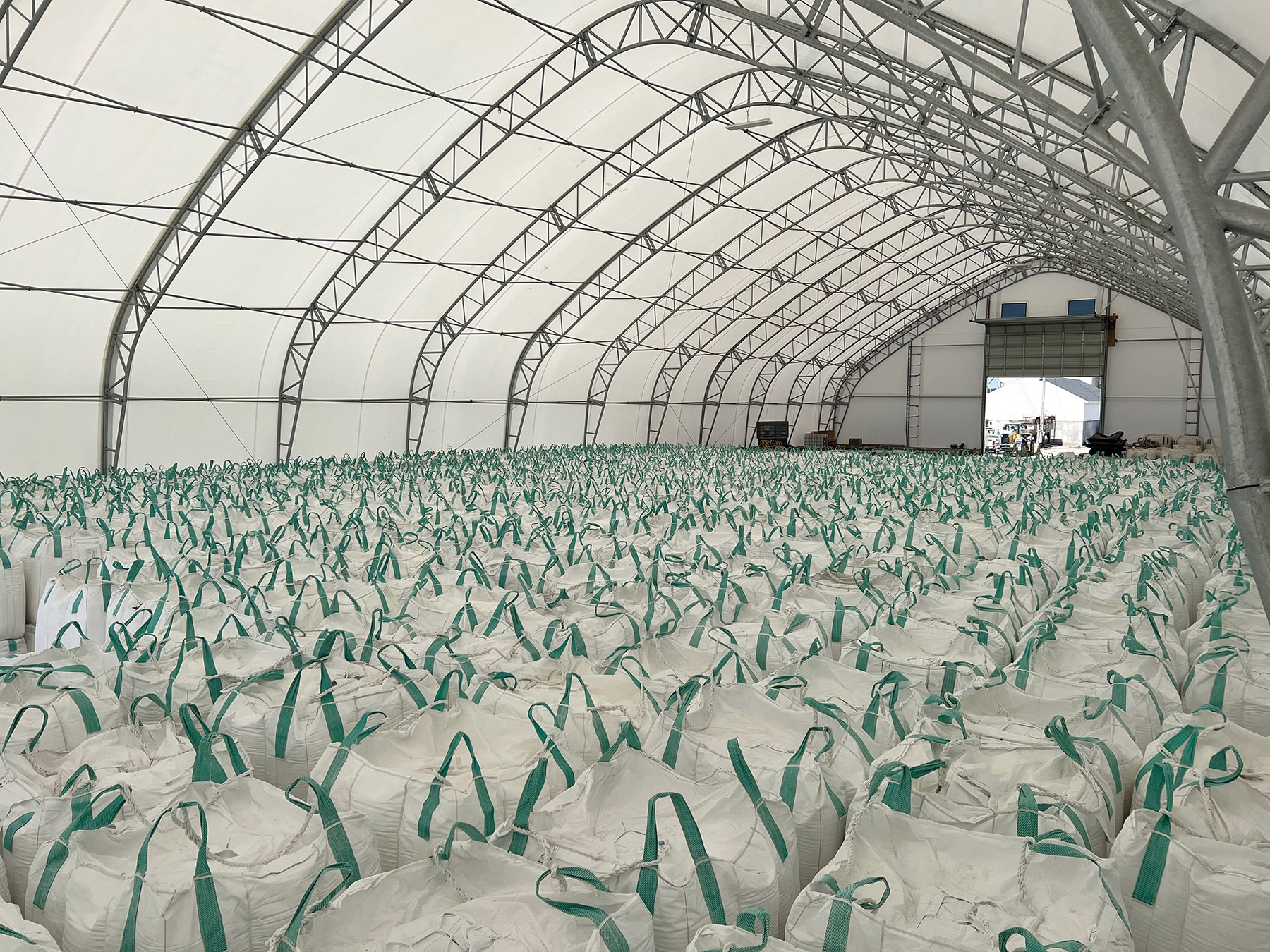
The new excavator also makes heavy-lift projects possible and could add to some limited opportunities the port has had previously to move breakbulk products in supersacks.
“We’ve used this river for 50 years, and we feel like it’s underutilized,” Holcer said. “Highways are busy. The rail struggles sometimes, getting the service you want. We just feel like there’s so much more opportunity for the river.”
Additionally, with 240 acres along the river, “We’ve got room to grow,” he said. “If someone is looking to build a warehouse or to stage containers, we’re looking at what the opportunities might be.”
Featured photo caption: A total of 240 acres of river frontage with two rail spurs, a grain cell, two docks, a container yard and segregated storage are designed to position AGRIServices of Brunswick for growth. (Photos courtesy of AGRIServices of Brunswick)