
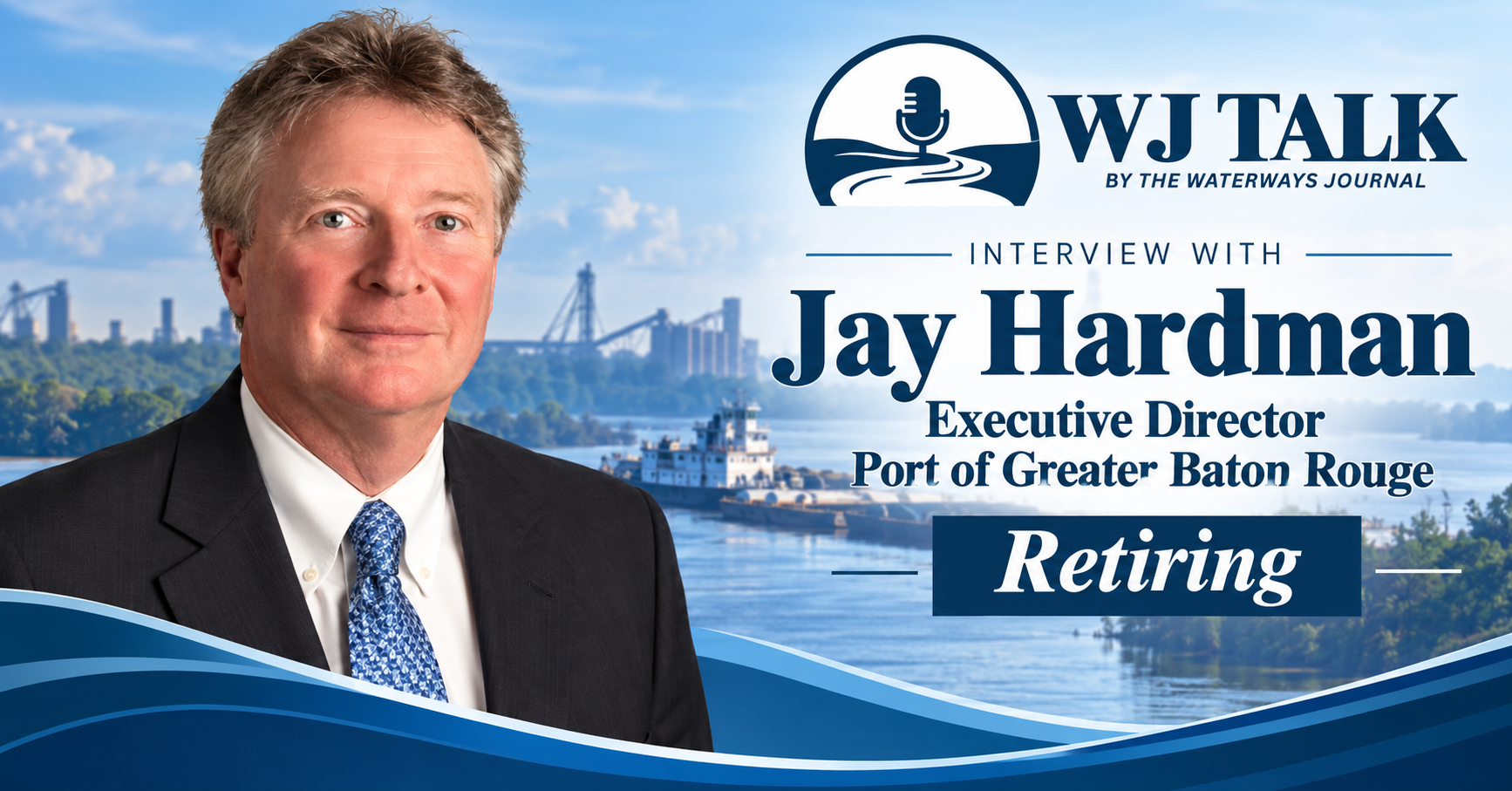
WJ Talk: Hardman Reflects On Port Growth Ahead Of Retirement
Jay Hardman, executive director of the Port of Baton Rouge, joined WJ Talk to discuss cargo diversification, infrastructure investments and his upcoming retirement. Hardman joined the port’s staff in 2000 and became executive director in 2005. His final day as the port’s leader will be December 1.
Editor’s Note: The following interview has been edited for length and clarity.
WJ: How did you first get involved with the Port of Baton Rouge?
Hardman: I came to the port in 1995 doing consulting engineering work, mainly on the environmental side, and joined the staff in 2000. I came on as the engineer and later moved into management. I became executive director in 2005.
WJ: What are some of the biggest changes you have seen during your time at the port?
Hardman: One of the biggest was the change in security after 9/11. Before that, access to the docks was much more open. We also saw the cargo mix shift away from general and breakbulk cargo toward liquid bulk and dry bulk. At the same time, the port rebuilt roads, water systems and other infrastructure and brought in strong private-sector tenants.
WJ: How important is petroleum-related cargo today?
Hardman: It remains very important. Genesis Energy is moving about 20 million barrels a year of petroleum-based products, and we are rehabilitating another deep-draft berth with CenterPoint and World Point Terminals for liquid bulk transfers.
WJ: What will deepening the Mississippi River mean for Baton Rouge?
Hardman: The port currently has a maintained 45-foot draft and can handle post-Panamax vessels. The Corps is working on the project from the Gulf upriver. Once the remaining work is complete, the goal is a maintained 50-foot draft from the Gulf to Baton Rouge. More draft can allow ships to carry more cargo, which creates efficiencies for shippers and exporters.
WJ: How has the grain business changed?
Hardman: The transition of the grain elevator was a major change. After Cargill’s lease ended, Louis Dreyfus Commodities came on board and invested more than $300 million, while the port invested around $20 million in related infrastructure. Grain and oilseed movement grew from roughly 700,000 to 750,000 tons to about 5 million to 6 million tons for export. That has been significant for both port tonnage and regional farmers.
WJ: Where does container-on-barge service stand?
Hardman: We continue to work on it. The region produces a lot of containerized export cargo, including plastic resins, lubricants and specialty chemicals. The goal is to move more of those boxes by water instead of trucking them to larger coastal ports. The economics have been difficult at times, but we have new activity and are hopeful that service can restart late this year or early next year.
WJ: Why has container-on-barge service been difficult to sustain?
Hardman: There are a lot of moving pieces. Shippers and carriers need dependable routes and enough cargo moving in both directions. When one piece is missing, it can affect the whole service. We have continued investing in equipment and partnerships because we still see long-term potential.
WJ: How important has the wood pellet business become?
Hardman: It has been a major growth area. Drax built an export facility, and the business has grown to close to 2 million tons. It has also helped increase rail traffic to around 20,000 cars a year. The cargo has brought additional ship traffic and influenced how we use and improve our berths.
WJ: What infrastructure work is underway?
Hardman: We have a major berth rehabilitation project in the $23 million to $25 million range, along with rail rehabilitation, water system work and improvements to our oldest dock structure. A port is a little like an old house: if you are not working on something, it can get ahead of you.
WJ: How diversified is the port’s cargo mix?
Hardman: That diversification has been one of our strengths. When one cargo is down, something else is often up. We have grain, oil, agricultural products, timber, containers and other cargoes, and many tenants can use truck, rail, barge and ship transportation.
WJ: What opportunities do you see ahead?
Hardman: We are looking at continued benefits from river deepening and berth rehabilitation. We are also working on a potential project involving more than 1 million tons of crushed soybean meal for export, and there is renewed enthusiasm around container-on-barge.
WJ: What will retirement look like for you?
Hardman: It will be a full retirement, but after being here this long, I am not simply going to disappear. I want the port to continue to succeed, and I will be watching from afar and helping where I can.
WJ: How do you feel about the leadership transition?
Hardman: Greg is taking over at a good time. He has enthusiasm, good ideas and good people coming on board to support him. We have not always agreed on everything, which is healthy, but I think the port is positioned for continued success.
WJ: When is your final day?
Hardman: December 1 is the transition date and my last day as the port’s leader, with Greg taking over at that point.