
Corps To Transition To National Dredging Strategy
The U.S. Army Corps of Engineers announced plans for a new centralized center to oversee dredging and an interim team to establish it October 16.
The center will be called the Enterprise Dredging Delivery Center (EDDC), and the Corps said it will change how it delivers its mission of keeping the nation’s ports, harbors and inland waterways open and navigable.
Its interim Dredging Evolution for Enterprise Production (DEEP) team will oversee the establishment of the center. Annually, the Corps executes about 190 dredging contract actions across the country. While these contracts support missions in local Corps of Engineers districts, many also compete for the same limited industry resources and involve similar technical requirements, acquisition processes and administrative oversight, according to the Corps.
“Managing each dredging requirement principally as an individual acquisition can result in duplicative work, conflicting schedules and missed opportunities to obtain greater value for the nation,” the Corps said in its news release.
The center and the DEEP team will together manage dredging instead as an integrated national program while also preserving local knowledge and relationships important to ensuring project delivery, according to the Corps. The effort also assists in advancing the Assistant Secretary of the Army for Civil Works’ Building Infrastructure, Not Paperwork initiative, which challenges the Corps to reduce administrative burden, improve delivery and focus its resources on infrastructure outcomes.
“For decades, we have approached dredging as a collection of individual projects — one district develops a contract, one gets awarded and one dredge gets mobilized,” said Maj. Gen. Jason E. Kelly, while serving as the Corps’ deputy commanding general for civil and emergency operations. “While that model built today’s system, it is insufficient for the challenges we face tomorrow. The American taxpayer is not paying us to award contracts; they are paying us to maintain navigation channels. The measure of success is not how many contracts we award; it is how many cubic yards we move. It is whether America’s navigation system is ready when the nation needs it.”
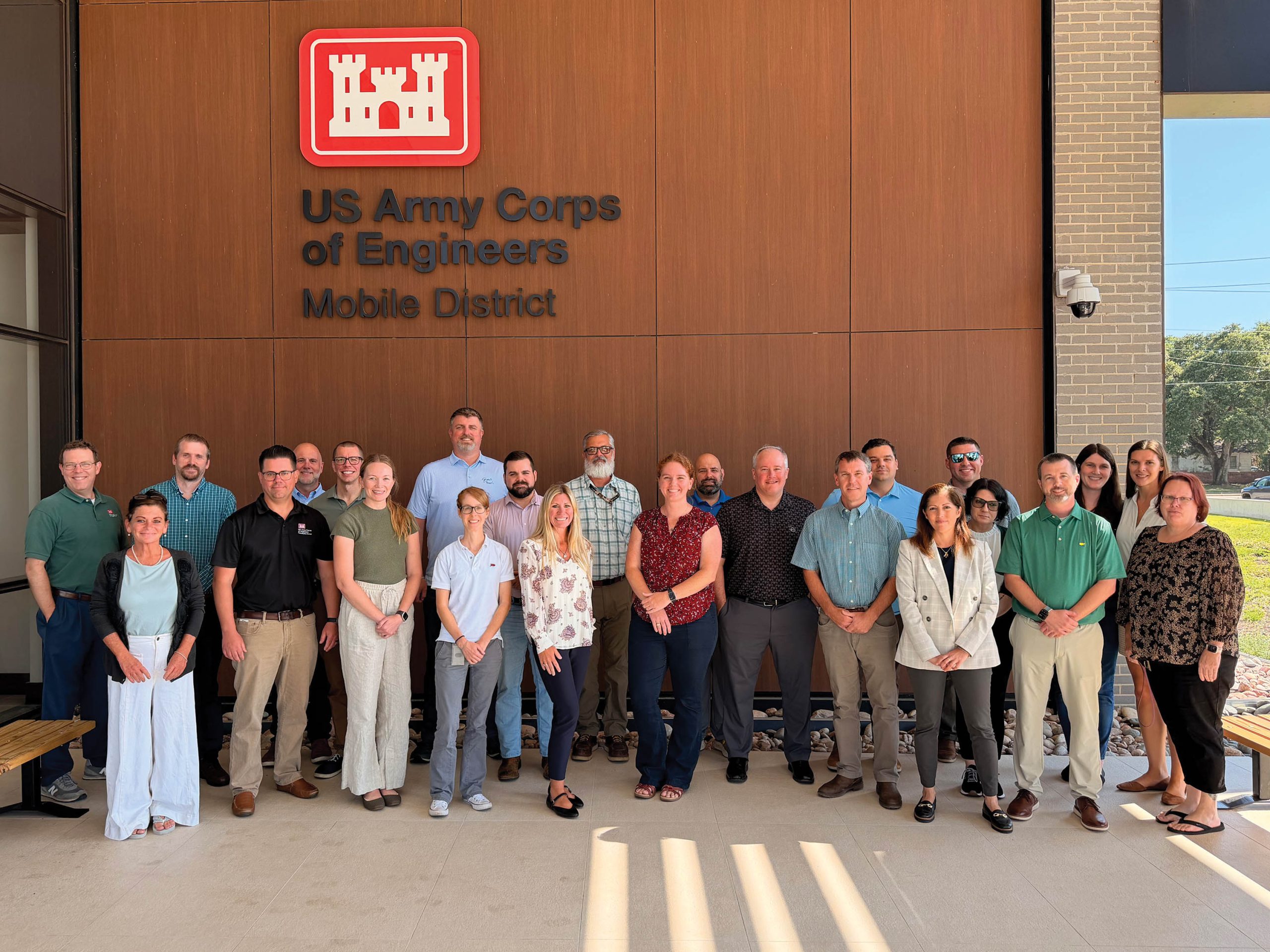
Ahead of the EDDC’s full establishment, the interim team is beginning national execution of the dredging program. DEEP team members gathered in August in Mobile, Ala., for an initial kickoff.
The Corps said the enterprise system will provide the dredging industry with greater visibility into future requirements, which can improve workload predictability and help companies plan vessel schedules, crews and capital investments. Better coordination across projects will reduce avoidable scheduling conflicts and allow industry dredging capacity to be used more effectively.
For the Corps, the approach is expected to allow earlier and more coordinated acquisition planning, reduce administrative duplication, increase consistency, better align requirements with available dredging capacity, increase competition and consolidated buying power, improve schedule reliability and allow more flexible acquisition strategies tailored to project and market conditions.
The Corps of Engineers Headquarters navigation team provided additional details in response to written questions from The Waterways Journal.
The team indicated that the establishment of the center is being implemented in phases and is informed by mission analysis, direct requirements, lessons learned and continued engagement with industry, ports and other stakeholders.
Initial concepts include packaging compatible projects into regional or multiple-project acquisitions; establishing flexible contracting tools for recurring, smaller dredging requirements; creating acquisition pathways tailored to project type, size and market conditions; expanding performance-based approaches, where appropriate; developing standardized plans and specifications, acquisition packages and business procedures; and providing dedicated technical and acquisition capacity through a centralized team that works closely with districts throughout development.
“Districts will remain essential to defining mission requirements, providing local and technical knowledge, coordinating with sponsors and stakeholders and supporting execution,” according to the navigation team. “The EDDC is intended to augment — not replace — those district capabilities and relationships.”
The project timeline calls for beginning to award several contracts through the EDDC in Fiscal Year 2027, according to the Corps.
“USACE will continue seeking feedback from districts, divisions, industry, ports and stakeholders as implementation plans mature,” the Corps said. “That feedback will help identify market capabilities, avoid unintended impacts and establish contracting approaches that are practical, competitive and responsive to navigation and coastal mission needs. Specific timelines for individual capabilities or acquisition approaches should be communicated as implementation decisions are finalized.”
The navigation team said the enterprise method is the best solution moving forward because its objective is “a more predictable, efficient and responsive dredging program that strengthens the nation’s navigation infrastructure and delivers greater value for taxpayer resources.”
Additionally, the navigation team said that industry engagement is central to the effort, especially as it evaluates acquisition concepts and develops implementation plans.
“That input is important to understanding market capacity, avoiding unintended consequences and ensuring future contracting approaches remain practical, competitive and responsive to mission needs,” the team said.
The intent goes beyond centralizing contracting and is also meant to provide greater visibility into upcoming requirements, helping to improve workload predictability and to use acquisition approaches that reflect project type, size and market conditions.
“Better visibility should help companies plan schedules, crews, equipment and investments more effectively,” according to the Corps. “USACE also recognizes the need to maintain competitive opportunities and to apply flexible tools, particularly for recurring smaller requirements.”
As for public ports and harbors, the navigation team stressed that local mission needs and stakeholder relationships remain essential.
“Districts will continue to identify requirements, bring local and technical knowledge to project development, coordinate with sponsors and stakeholders and support execution,” the Corps said.
Ports and harbors will also have an important role in providing feedback as the Corps develops and refines it approach, the Corps said. The navigation team added that the Corps also plans on offering a virtual session solely to engage with ports and stakeholders in the coming weeks.
Featured photo caption: Members of the U.S. Army Corps of Engineers’ Dredging Evolution for Enterprise Production (DEEP) team from across the organization met August 11-13 in Mobile, Ala., for an initial kickoff meeting. The team is overseeing the establishment of the Corps’ new centralized dredging program to be called the Enterprise Dredging Delivery Center (EDDC). (Photo courtesy of U.S. Army Corps of Engineers Headquarters)