
Infrastructure, Dredging Focus Of Early WJ Talk Podcasts
The Waterways Journal has launched a monthly podcast interview series called WJ Talk. The conversations feature Frank McCormack, editor of The Waterways Journal, and other WJ contributors in conversation with maritime industry leaders, innovators and decision-makers. From timely insights and expert discussions to sponsor-supported deep dives, WJ Talk continues The Waterways Journal’s commitment to deliver original content that informs, educates and connects the commercial marine community.
Podcasts already published include one-on-one conversations with economist Ken Erickson of Polaris Analytics & Consulting and Capt. David Smith, longtime wheelman and writer of The Waterways Journal’s Old Boat Column.
The two most recent installments of WJ Talk focus on dredging and infrastructure. A January 6 podcast with Big River Coalition LLC President Sean Duffy and Eriksen looked at a new economic impact study Polaris Analytics & Consulting did on the Mississippi River Ship Channel, the deep-draft channel that stretch from the Port of Greater Baton Rouge, La., to the mouth of the river below Venice, La. That stretch of the river from Baton Rouge to the Gulf serves five deep-water ports, the ports of Greater Baton Rouge, South Louisiana, New Orleans, St. Bernard and Plaquemines, which is marketed as the Louisiana Gateway Port. The economic impact study, funded by the Louisiana Department of Transportation and Development and conducted by Polaris with assistance from Big River Coalition, found that the Mississippi River Ship Channel supports an average of $226.5 billion in annual trade value through the New Orleans Customs District. That amounts to $620.4 million per day and represents roughly 20 percent of all waterborne cargo volumes in the United States.
“This study quantifies the immense value of the Mississippi River Ship Channel to our nation’s economy and underscores the urgent need for sustained infrastructure investment,” said Sean Duffy, executive director of the Big River Coalition. “Disruptions not only drive up freight costs and weaken farmer basis but also plant ‘seeds of doubt’ among global buyers, risking long-term cargo diversions and lost U.S. export sales.
“We must prioritize maintenance and deepening to ensure reliable navigation for generations to come,” Duffy concluded.
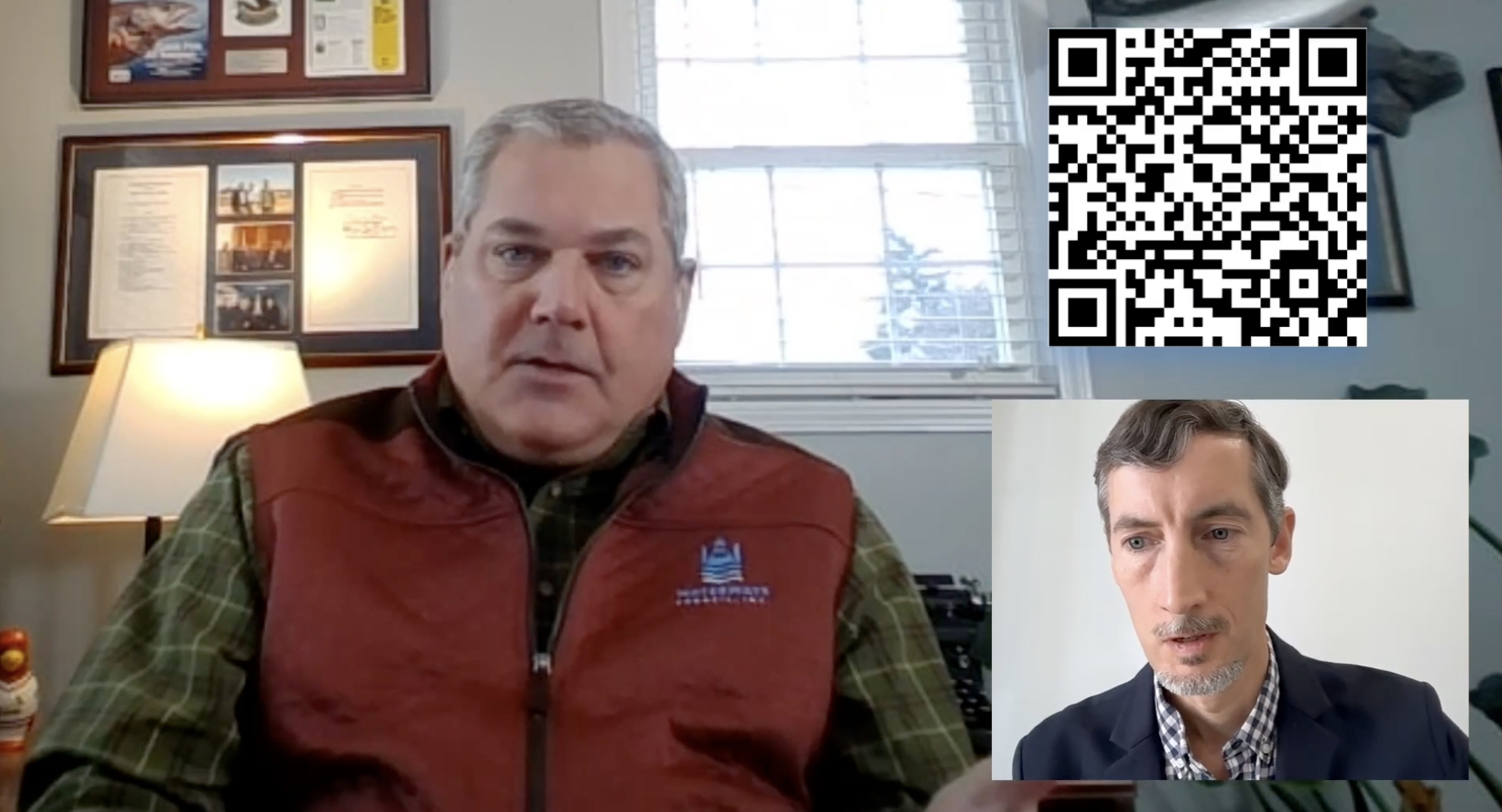
The most recent installment of WJ Talk is a one-one-one conversation with Paul Rohde, vice president-Midwest area for Waterways Council Inc. (WCI), during which Rohde discusses the importance of advocating for waterways infrastructure funding in Washington D.C. and some challenges facing locks and dams on the system.
“It’s a relatively small industry, and it certainly isn’t well known by any stretch, so it’s important that everyone is a voice to Congress,” Rohde said of the commercial maritime industry along the nation’s rivers and canals. “We’ve tried to make that as easy as possible. We have a digital advocacy platform. You can reach out to your House representative and your senators 24/7/365, just like the boats run. Send an email, you can tweet them on X, you can send them a voicemail or even a video message that goes to legislators’ offices. … We provide that platform. It’s available on our website.”
Rohde then shared a QR code that goes directly to WCI’s advocacy page.
Rohde went on to discuss the importance of the Inland Waterways Users Board, which is still waiting to be reconstituted, and the Corps of Engineers’ Capital Investment Strategy, which serves as a priority list for funding from the Inland Waterways Trust Fund. The conversation also touched on a report from HDR that offered strategies for how the Corps and Congress could more effectively and efficiently deliver major rehabilitation and new construction projects.
The podcast series is available online at www.waterwaysjournal.net/wj-talk.