
State Of The Industry: Industry Leaders Give Their Takes
Each year at this time, The Waterways Journal asks selected leaders in the inland waterways navigation industry for their take on the opportunities and challenges of the coming year.
Predicting the future is always risky. It’s perhaps especially risky after the past year, which was full of surprises and unexpected twists and turns.
As this issue goes to press, the country and the world are still awaiting a Supreme Court decision on the legality of President Donald Trump’s tariffs, with enormous stakes. Many are also awaiting a decision by Panama’s high court on the fate of a U.S.-supported $23 billion deal to have the U.S. investment group BlackRock’s port subsidiary Global Investment Partners (GIP) operate two ports at either end of the Panama Canal in place of Hong Kong-based CK Hutchison, which is facing scrutiny in Panama’s courts for past deals.
In other Supreme Court news, the court is also considering a long-standing series of lawsuits against Chevron and other oil majors dating from 2013 over alleged conduct during World War II. Those actions, the lawsuits claim, may have affected coastal erosion, with billions of dollars at stake. Some observers believe uncertainty surrounding the lawsuit has already dampened oil and gas investment in Louisiana and could affect it further.
The U.S. raid that seized Venezuelan President Nicholas Maduro has upended global geopolitics and the international oil trade. The unrest in Iran has the potential to further affect energy markets.
On a more positive note, the bipartisan push to revive American shipbuilding and the American merchant marine—as embodied in Trump’s April 9, 2025, executive order titled “Restoring America’s Maritime Dominance”—and the still-pending SHIPS For America Act will continue impacting the shipbuilding industry in the year to come.
A new Water Resources Development Act (WRDA) is scheduled for 2026. The House Transportation and Infrastructure Committee and the Senate Environment and Public Works Committee have already begun the process of developing the legislation.
At this writing, the Inland Waterways Users Board—the main “eyes and ears” of the inland navigation industry on the Corps’ budget and project development process—has not been reconstituted since the Trump administration placed it on “suspension and review” in March 2025. The latest round of nominations closed earlier this month for a term set to begin May 29.
In the face of all these pending uncertainties, we thank the leaders of the navigation industry for sharing their thoughts and hopes for the coming year.

Jennifer Carpenter, President and CEO of American Waterways Operators, President of America’s Maritime Partnership
Jennifer Carpenter has been a maritime leader for her entire career, heading the American Waterways Operators since 2020 and American’s Maritime Partnership since January 2024.
The Waterways Journal: What do you see as the greatest challenge facing AWO members in the year ahead?
Jennifer Carpenter: American maritime experienced a year of heightened, focused attention in Washington, D.C., in 2025, with widespread recognition in the Trump administration and on both sides of the aisle in Congress that a strong American maritime industry is not only an economic necessity, but also vital to national security.
We aim to ensure that this reinvigorated national focus on American maritime endures beyond the “maritime moment” of the past year and is not limited to what happens in D.C., but also translates into tangible actions that strengthen our industry for generations to come—by promoting policies that enhance safety, efficiency and innovation; by taking our advocacy to state capitals across the country; and by continuously improving as the safest and most efficient mode of freight transportation in America.
WJ: How optimistic are you about waterborne transportation?
JC: I am as optimistic as I have ever been about the future of the tugboat, towboat and barge industry! First, we are primed to keep elevating our collective performance—we continue to be the safest and most efficient mode of freight transportation in America, with room to increase capacity on our waterways, and we are constantly innovating across the industry to enhance mariner safety, fuel efficiency, vessel design and more.
Second, at a time of intense political polarization, one of the few things that policymakers on both sides of the aisle agree on is the need for a strong American maritime industry with the Jones Act as its foundation. So as long as we remain vigilant, adaptable and proactive, we are well-positioned to navigate the political environment of 2026. On top of all this, we have a fantastic story to tell about our industry’s importance to the country and the rewarding careers we offer, and we’re excited to share that story in creative and impactful ways in the coming year.
The Jones Act is the foundation of every dollar AWO members invest in American-built vessels and every job they provide to American men and women, so continuously renewing and expanding the strong bipartisan support for this vital law and decisively defeating any attempts to weaken it is always our top priority. Building on that must-have foundation, members also want to see a regulatory regime that is practical and risk-based: policies that promote safety, efficiency and innovation without bogging them down with unproductive costs and red tape. To that end, we’ll continue to work with the Coast Guard to improve the efficiency of their vessel inspection, mariner credentialing and other processes that impact members. We’ll also press for regulatory streamlining that eliminates unnecessary burdens while maintaining high standards of safety. Implementation of the Vessel Incidental Discharge Act and risk-based implementation of the Coast Guard’s cybersecurity regulations are high on that list.
Our members are also keenly aware of the impact that state policymaking can have on waterways commerce, so we’ll continue to oppose harmful state policies and advocate for beneficial ones, including approaches to mandatory paid leave that reflect the reality of vessel operations and practical approaches to environmental concerns.
WJ: What messages does the industry need to highlight this year in keeping its story in public awareness?
JC: Our industry is vitally important to America’s economy, supply chain and homeland/national security. Supporting the industry, and the Jones Act as its foundation, is just common sense, particularly in these times of economic uncertainty and geopolitical volatility.
Waterways transport runs on people, and our industry offers rewarding careers with competitive pay and family-friendly benefits to people from all walks of life, including new high school graduates and transitioning military veterans. Working on the waterways provides upward career mobility and unique opportunities to see the country and have real impact on American communities, without overly lengthy separation from family or the need for college debt.
America will celebrate the 250th anniversary of our nation’s founding in 2026, and waterways transport has played a critical role in building and sustaining the United States since its beginning. For 250 years, we have seized the opportunities provided by our domestic waterways to safely and efficiently move America’s commerce, fueling our transformation from newly independent nation to global superpower. And just as we have over the past 250 years, our industry will continue to be a pillar of national prosperity and security that propels America’s future—we are just getting started!
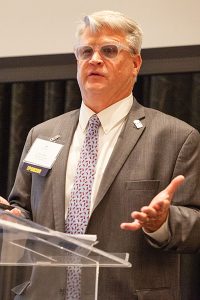
Sean Duffy, President and CEO, Big River Coalition
Sean Duffy is well known to industry leaders in the Lower Mississippi River and beyond. He has led Big River Coalition since 2011. Duffy became its president and CEO in January 2026, following BRC’s transition and reorganization to an independent LLC.
The Waterways Journal: What are Big River Coalition’s priorities in the coming year?
Sean Duffy: Those priorities are to make the transition from a non-profit under an umbrella to an LLC, under my direction but with the full support of my long-standing board. Many of our priorities were adopted by Gov. Jeff Landry’s Navigation and Safety Task Force. We are pushing for WRDA 2026 to make it clear the Corps of Engineers has the authority to dredge in deep-draft anchorages. We remain confused as to how Section 106 of WRDA 2020 did not do that very thing.
WJ: Was the cancellation of the Mid-Barataria Sediment Diversion (MDSD) project (officially canceled on July 17, 2025) a net win or loss for the Lower Mississippi River region, or mixed?
SD: The diversion projects all represent challenges to commerce on the Big River. Interestingly, there is never any mention of the only sediment diversion we have, the West Bay Sediment Diversion, because it has not achieved 10 percent of the promised acreage. It is also important to note that what some call “land” does not meet my definition of land or a normal definition of land.
The one strategy that can really make a difference, if coastal restoration is the goal, is the beneficial use of dredged material. The Big River Coalition started a stakeholder group that paved the way for the use of cutterhead dredges in the area of Southwest Pass. The beneficial use of dredged material creates land that you can walk on independent of the river stage.
Since this adjustment to the Corps disposal methods, an area the size of Washington, D.C., has been restored at 15,000 acres plus since 2009. It is the largest wetlands restoration project in the world. What some call “land” is subaquatic vegetation at best. With the challenges of relative sea-level rise, I have never believed diversions were a real coastal restoration tool. The MBSD was touted to create less than 15,000 acres in 50 years, and we have done that in 15 years with real land.
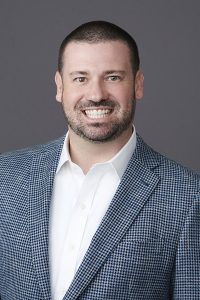
Tracy Zea, CEO, Waterways Council Inc.
Since July 8, 2020, Tracy Zea has led Waterways Council Inc., the national advocate for waterways infrastructure funding. Prior to joining WCI, Zea served on the staff of the House Committee on Transportation and Infrastructure (T&I). During his time there, he assisted in legislation related to the Environmental Protection Agency, Tennessee Valley Authority, the Army Corps of Engineers-civil works and played an integral part in the enactment of the Water Resources Reform and Development Act (WRRDA) of 2014.
The Waterways Journal: The next WRDA is due this year. What are WCI’s main priorities for this bill?
Tracy Zea: Waterways Council Inc.’s request for WRDA 2026 is that the dam features of the inland waterways system’s Major Rehabilitation projects be excluded from cost-sharing with the Inland Waterways Trust Fund (IWTF).
Despite a myriad of non-navigation beneficiaries of inland waterways system dams, only commercial navigation users contribute to funding of infrastructure major rehabilitation through a 29-cent-per-gallon fuel tax deposited into the Inland Waterways Trust Fund (IWTF).
Non-navigation beneficiaries of the inland waterways system dams include flood control, municipal, industrial and agricultural water supply, hydropower generation, recreation, fish and wildlife habitat, among many others.
Clarifying dam features in major rehabilitation aligns with the federal responsibility to maintain infrastructure that supports national interests in public safety, commerce and security. Federal Dam Safety projects are funded through general revenues because dam failures can have catastrophic, nationwide consequences, including loss of life, property damage and environmental harm. Similarly, major rehabilitation of inland waterway dams is a federal responsibility because these dams create an inherent public safety risk even in the absence of navigation.
WJ: Do you see any signs that the Corps is improving its project delivery timelines on locks and dams? Are lock and dam repairs outpacing failures and unscheduled closures, barely keeping pace, or falling behind (despite increased support in recent years)?
TZ: Unfortunately, the suspension of the Inland Waterways Users Board (IWUB) in early 2025 has limited our ability to assess whether the Corps is improving project delivery timelines on lock and dam construction projects. Typically, the IWUB convenes at least three times a year, providing the Corps the opportunity to brief industry on progress. Because of this suspension, the board did not meet at all in 2025, with the last briefing held over a year ago in December 2024. Our hope is that the Corps will prioritize reconstituting the board in 2026.
The board’s suspension did not pause WCI’s continuing efforts to identify solutions and opportunities to improve the Corps’ execution of inland lock and dam projects, however. On January 14, WCI released a study that it commissioned by HDR Inc. to examine why costs for U.S. inland waterway capital projects (locks and dams) continue to escalate, timelines for completion continue to slip and economic benefits to the nation from their completion are consistently delayed.
Key recommendations of the HDR study include:
• Treat the inland navigation waterways as a system, versus a series of individual projects. Managing the system holistically ensures consistency with the Capital Investment Strategy (CIS), the ability to effectively apply lessons learned across projects and an awareness of how challenges at one project can, and very often do, impact other projects within the portfolio.
• Take a systemic approach with programmatic funding.
• Create a centralized program management office at Corps Headquarters for the inland waterways construction.
• Improve cost estimating and value engineering.
• Use standard designs for locks and dams, where possible.
• Expand site investigation efforts.
• Use 3D modeling and conduct constructability reviews.
• Centralize competencies and deepen the Corps’ knowledge base.
The study’s findings reveal that most of the recommendations that can reasonably be implemented by the Corps require support and approval from the Office of Management and Budget (OMB). It also spotlights the consequences of OMB’s interpretation of Executive Order 12322 (EO) and how it limits access to effective solutions such as continuing contracts and alternative delivery methods that provide considerable opportunity to improve execution and reduce risks. Other key recommendations, such as following the CIS and taking a systemic approach with programmatic funding, also require buy-in participation from OMB.
WJ: Do enough members of Congress “get it”?
TZ: WCI, and the inland waterways industry overall, has enjoyed a great level of bipartisan support from Congress over the years, which is why we have seen increases in fiscal year funding, as well as for operations and maintenance, for the last 12 years. In fact, overall construction funding for the Corps’ Civil Works mission has risen 64 percent over the last 10 fiscal years (FY17 $6.04 billion to $9.88 billion in FY26). And inland waterways construction received 68 percent of the $583.8 million in Community Project Funding (earmarks) provided to the construction account. Three of the top five earmarks funded across the entire federal government in FY24 were for inland construction projects, with a fourth ranking 16th.
So WCI will continue to help educate current members of Congress and those new to our committees of jurisdiction about the great importance of the inland waterways and its infrastructure to the nation and the world. Your readers can assist by sending an email to their senators and House representatives.

Anshu Singh, Executive Director, Illinois River Cities and Towns Initiative
The Illinois River Cities and Towns Initiative is a brand-new coalition of ports along the Illinois River that are working together on the model of existing groups like the Mississippi River Cities and Towns Initiative and the Great Lakes and St. Lawrence Cities Initiative.
The Waterways Journal: What balance of opportunities and challenges do you see in 2026? What factors give you optimism?
Anshu Singh: As we look toward 2026, I see a compelling balance of opportunity and challenge for inland waterways and river communities. On the opportunity side, there is growing recognition at the local, state and federal levels that inland ports and river systems are not just transportation assets, but powerful engines for rural economic development, supply-chain resilience and environmental sustainability. That shift in perspective is long overdue and deeply encouraging.
At the same time, the challenges are real—aging infrastructure, funding constraints, and workforce shortages all continue to shape the operating environment. What gives me optimism, however, is the level of collaboration now emerging across sectors. Mayors, port districts, industry partners and federal agencies are working together in ways that were far less common even a few years ago.
Increasingly, initiatives related to energy, aquatic ecosystems, decarbonization, communications and multi-modal transportation infrastructure investment are being planned and discussed together rather than in silos. That integrated, collaborative approach is essential to building resilient river systems and positioning regional inland ports for long-term success.
Programmatically, IRCTI is prioritizing three core areas. First, we are advancing coordinated port and freight planning along the Illinois River, including efforts related to modernizing our infrastructure, developing green marine highways, enhancing multimodal connectivity and building supply-chain resilience. Second, we are launching the IRCTI Sustainable Infrastructure Development Fund to help communities address the “first-mile” financing gap that often prevents promising projects from moving forward. Third, we are expanding partnerships with industry, utilities, educational institutions and regional employers to bring private investment and workforce opportunities to riverfront communities.
The greatest challenge in the year ahead for the IRCTI is to deliver measurable results to match the momentum and expectations surrounding the organization. IRCTI was formed as a mayor-led coalition to give riverfront communities a unified voice, and interest in the initiative has grown rapidly—both from public agencies and private partners.
In 2026, many of IRCTI’s priority areas—transportation infrastructure, ecosystem restoration and clean energy—depend heavily on state and federal funding cycles that are often slow and unpredictable. This can make it difficult to maintain momentum at the local level. Securing sustainable, flexible funding to support coordination, early-stage project development and long-term capacity is therefore one of our most pressing challenges.
The strong commitment from our mayors, ports and partners gives us confidence that IRCTI can continue to grow in influence while delivering tangible results for our river system.
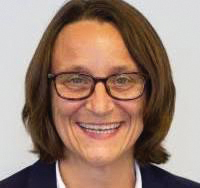
Susan Olson, Ph.D., Founder, Action Intel
Olson’s company, Action Intel, is one of the spearheads of the AI revolution on the inland waterways. Action Intel’s BargeAI software aggregates actionable intelligence in one place for barge operators.
The Waterways Journal: Where do you see AI on the rivers going?
Susan Olson: I was using machine learning (ML) before it was cool—ML has been at a developed stage for decades. Generative AI (GenAI), though, has brought recent and remarkable paradigm shifts at an extraordinary pace. And GenAI has made machine learning completely accessible.
At Action Intel, we use machine learning and AI extensively in code development, research and development and directly in the BargeAI and TowTracker software.
In one example, coding, the backbone of automation, has become semi-autonomous using AI agents. We now deploy agents to review code tickets, write the code for those tickets and push code to a repository for review ahead of production deployment. Developers now spend a larger proportion of time creating a solution framework and then instructing agents and reviewing the agent code to be production-ready. Talk to a developer who was coding five years ago, and they will tell you this was a flicker of imagination. The pace of change and productivity has been exceptional.
Another example is how GenAI has become sharper and sharper at generating answers to our questions. Last year, I needed to build tools and pipelines to get AI to consistently include context from my own documents. Now GenAI tools include that functionality through direct APIs. Answers to questions have become more consistent and accurate with advanced models that are tuned to how we are using AI tools.
Finally, when I built out our barge freight predictions that we launched last week, generative AI allowed me to complete research and development cycles much faster. Three years ago, if I wanted to test a solution or resiliency measure, I would need to spend two to three hours coding the test. Claude Code can do that in five minutes. Last year, I would say code tools got me 80 percent of the way there. Today, it’s more like 95 percent. Research and development for analytics has gained massive speed. GenAI doesn’t do the creating—it helps me iterate my creative solutions faster.
Every example applies to the maritime space. Testing of logistics and optimization solutions will become easier and less costly. Creating software automation will be faster. And we’ll get better help digesting context for decision-making support.
It’s so hard to skate where the puck is going because human innovation is rapid, nonlinear and highly unpredictable. As the users of AI, we’re rapidly discovering new and better ways to use the tools. The makers evolve the tools and models to meet those needs.
It’s exceptional to be a small part of the evolution, and I’m ever-excited to discover what’s next.
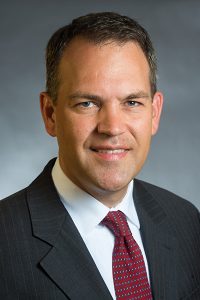
Mike Steenhoek, Executive Director, Soy Transportation Coalition
Mike Steenhoek has led the Soy Transportation Coalition since its founding in 2007 and is a respected transportation leader who has keynoted an Inland Marine Expo as well as spoken before many transportation and ag groups.
The Waterways Journal: We have been expecting a Supreme Court ruling on Trump’s tariffs, but as of this date (January 14), it hasn’t happened yet. Any thoughts?
Mike Steenhoek: Everyone’s speculating about the upcoming Supreme Court tariff ruling, but the broad consensus is that Trump’s tariff powers will be restricted in some way. In trial conversations, it seems like the Supreme Court was skeptical about the non-emergency tariff authorities. Trump has several authorities under which he can announce tariffs, but most require an emergency.
The ability to enact tariffs for non-trade purposes that do not address emergencies could be limited. That could change the dynamics of trade negotiations, if Trump’s tariff “club” is cut down in size. Some tariff powers could remain but be restricted and more focused.
The problem of China is not going away, and that’s of concern to the soybean industry. Diversification of overseas soybeans markets was “turbo-charged” in the first trade war (during Trump’s first term), but China consumes far more soybeans than the rest of the market. The 25 tons of soybeans that China has agreed to buy for each of the next three years is certainly achievable. But China is really good at playing the long game.
We shouldn’t forget that selling food to other countries is a great way to project positive U.S. influence! I hope we don’t lose sight of that.
WJ: Any thoughts about the pending rail merger?
MS: We have a lot of shippers that support it, because the fewer “hand-offs” for freight, the better—and cheaper. But we also have shippers that want to see as much competition as possible and look at a duopoly with nervousness. The $85 that Union Pacific is offering for each share of Norfolk Southern stock is not a charitable contribution. The UP believes they will recover those costs.
We want the review process to proceed as stipulated in statute and not be politicized. When the last merger went through, we had seven Class 1 railroads, and the two smallest were Canadian Pacific and Kansas City Southern, the ones applying to merge. The argument they made (successfully) is that their merger turned them from “light-heavyweight” boxers to one heavyweight boxer that could better complete against the other five. But now the UP wants to become a “super-heavyweight” boxer—how does that enhance competition? That’s the question that will have to be wrestled with.
The other question is whether the alleged benefits of this proposed merger can’t be achieved by other means—like enhanced collaboration among the existing railroad networks rather than an actual merger.