
Southern Devall Celebrates Workforce Milestone
Maritime transportation company Southern Devall announced February 25 that women comprise nearly 70 percent of the company’s crewing coordination team. The company called the achievement “a critical milestone in an operational function in an industry where women remain widely underrepresented.”
The announcement came ahead of International Women’s Day on March 8.
According to the IMO–WISTA Women in Maritime Survey 2024, women make up just 16 percent of the global private-sector maritime workforce, illustrating the limited representation seen in operational and scheduling roles across the towing and marine transportation industry.
Jennifer Carpenter, president and CEO of the American Waterways Operators, the trade association of the American tugboat, towboat and barge industry, emphasized the broader workforce imperative.
“The tugboat, towboat and barge industry is vital to our nation’s economy, security and supply chain,” she said. “The strength of our essential industry, today and for the future, depends on attracting and cultivating people from across the entire American workforce with the skills, talent and drive to keep commerce moving safely on our waterways. Ensuring that women across America can see and seize the opportunity to have impactful and rewarding careers in this industry is vital to our future success.”
Mikey Devall, executive vice president of operations for Southern Devall, praised the achievement.
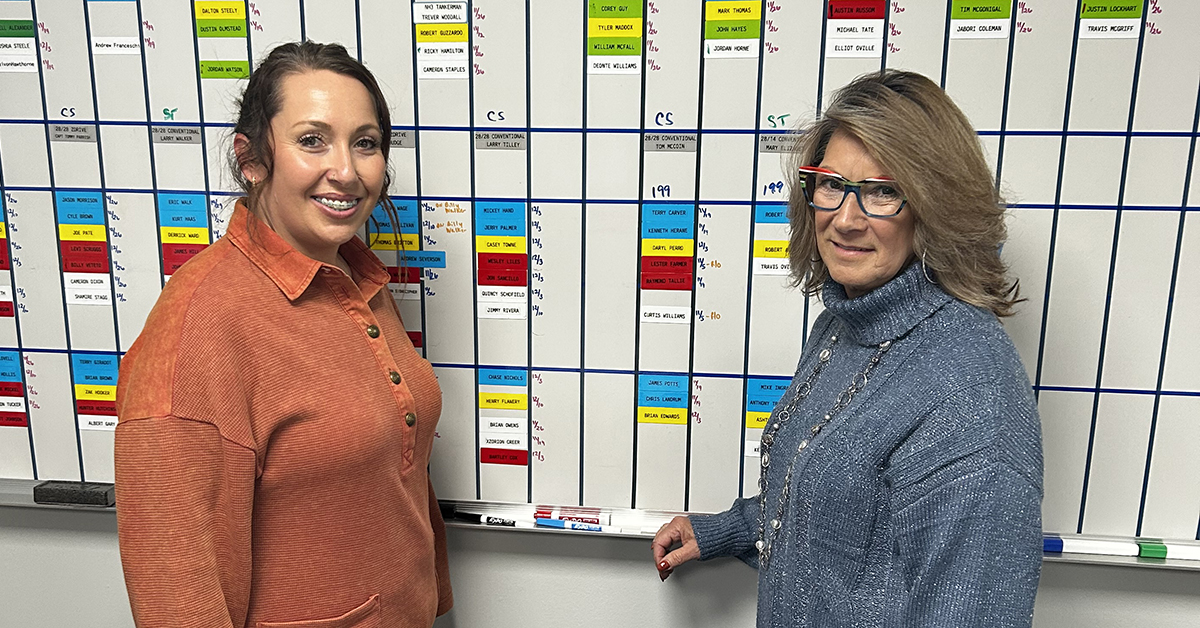
“At Southern Devall, capability and trust matter more than tradition,” he said. “Paula Fortier and Leslie Spicer stand out because of their ownership of their roles and the way they manage multiple moving parts to keep our boats safely crewed. They know that when they make the right decision based on the situation, the company will stand behind them.”
Industry leaders said diverse teams bring tangible operational benefits.
“I’ve found that feminine leadership often brings a calming presence — not just to clients, but to managers and teams as well,” said Kasey Eckstein, president of Eckstein Trade & Transport (ET&T) and founder of Women in Maritime Operations (WIMOs). “Sometimes difficult news can be delivered more thoughtfully and received more productively. Balance matters. Women and men bring different strengths, and organizations are stronger when employees have a broader range of tools in their toolbox.”
Built On Experience, Trust And Growth
Fortier, a 38-year Southern Devall veteran, began her career with the company as a receptionist and transitioned into her current crewing coordination role in 2023 after decades of operational involvement.
“I didn’t envision myself as a crewing coordinator,” she said. “This role evolved over more than three decades with the company. I’m proud to have earned trust in a position where safety, reliability and coordination matter every day.”
Spicer’s path into crewing coordination followed a different route. She entered the role without prior maritime experience and grew into the position through adaptability, strong communication and operational problem-solving.
“What drew me in was realizing how much impact this position has,” Spicer said. “Supporting crews, keeping vessels staffed and compliant, and solving problems in real time — that responsibility is something I take a lot of pride in.”
Together, Fortier and Spicer support both river and coastal operations, balancing regulatory compliance, crew well-being and real-time operational demands — often under intense pressure. Craig Stelly joined Southern Devall’s crewing team in late 2024, bringing 12 years of logistics experience from another industry. While new to the maritime side, his enthusiasm, adaptability and dedication quickly made him a strong contributor to the team, according to Southern Devall.
Over the past year and a half, Southern Devall’s crewing department navigated significant operational challenges, but emerged stronger, the company said.
“This department has been through a lot of highs and lows,” Devall said. “Not only did they weather the storm, but they also turned it into something to be proud of. The success we are seeing today is hard-fought and well-earned.”
Company leaders attributed that success to experience, adaptability and a people-first approach that prioritizes communication with mariners.
“Having someone shoreside who listens and provides real solutions makes all the difference,” said Anthony “Big Ant” David, senior port captain at Southern Devall. “Paula and Leslie care deeply about the mariners they support, and that builds trust across the fleet.”
Changing The Industry Narrative
Industry leaders acknowledged that increasing visibility and strengthening the talent pipeline are key opportunities to broaden representation in maritime operations.
“At We Work the Waterways, we work with high school students every day, encouraging them to explore maritime careers and see themselves in this industry early,” said Errin Howard, executive director of We Work the Waterways. “For young women especially, seeing women thrive in operational roles reinforces that there is a real, welcoming career path to grow and succeed in maritime.”
Maritime operations need people who can think clearly under pressure and keep complex systems running,” Fortier added. “Those skills are not gendered. If you are organized, curious and willing to learn, you belong here.”
Spicer echoed that sentiment, emphasizing the importance of representation. “Being part of a crewing team that’s majority female shows real progress — not just in words, but in action,” she said. “It proves that women are not just entering maritime; we are trusted to lead in it.”
Southern Devall leaders said the milestone reflects a broader commitment to operational excellence — not a symbolic target.
“This demonstrates that we hire, train and promote based on what it takes to run a safe, efficient operation,” Devall Diesel general manager David Devall said. “Gender doesn’t determine capability — commitment does.”