
Vessel Repair Touts Busy Present, Future Outlook
Spread across 70 acres in Port Arthur, Texas, with 3,100 feet of waterfront on the Sabine-Neches Canal and the Gulf Intracoastal Waterway, Vessel Repair is a diversified shipyard built to thrive with market trends or demands and, largely, regardless of weather conditions.
That’s deliberate, said Kurt Moerbe, vice president of Vessel Repair. It’s taken a lot of planning, creativity and execution by Moerbe and his father, Ron, president of the company.
On the barge construction side, Vessel Repair is in the early stages of a multi-barge order for a petrochemical manufacturer and supplier in the region.
“In December, we were awarded a 25-barge build package for Westlake Chemical for caustic soda barges,” Moerbe said. “We’ve officially started that. We’ve cut plate and are building modules. The first barge is a complete hull. The second barge just started fabrication. Steel is arriving for the third barge. The plan is to put these barges out about one a month until that contract is completed.”
And while the shipyard will be busy with the Westlake Chemical barge contract for the next couple of years, Moerbe said he also sees a positive trend long-term.
“With barge building, we’re looking toward the end of the decade to be an even busier period,” he said. “Based off a lot of this equipment phasing out, there will need to be a replacement period at the end of the decade, and we’re trying to position the yard for that.”
Over the past year, Vessel Repair has added a new bay, equipped with a pair of 10-ton overhead cranes, increasing the yard from two to three erection bays for module fabrication. The cranes can cover about 680 linear feet and are 30 feet wide.
And that’s not the only recent addition with repair and new construction in mind, Moerbe said.
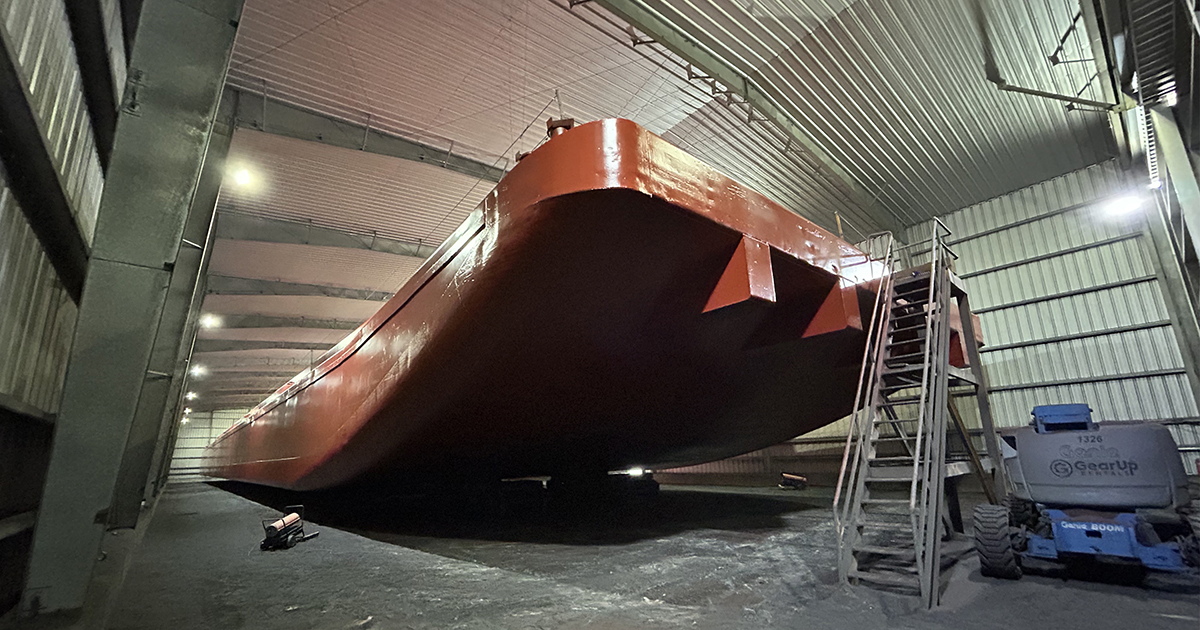
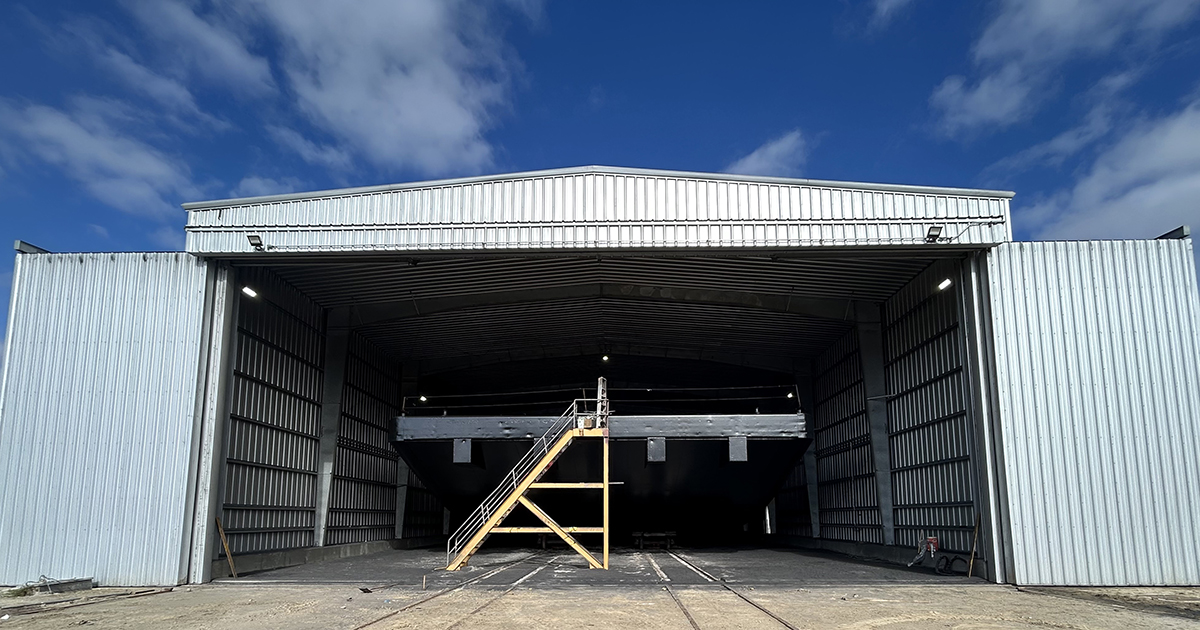
“We also expect repair to pick up in 2027 and 2028,” Moerbe said. “One of the ways we’ve prepared for that time period is by installing a 325-foot by 80-foot building for blasting and painting 30,000-barrel barges.”
That new building is in addition to Vessel Repair’s existing 230-foot blast and paint building, which can handle 10,000-barrel barges.
“With that, we’re able to take our production rate on blasting and painting from almost an average of three weeks to this first barge, which looks like it’ll finish in 11 or 12 days.”
Moerbe said bringing that work inside makes sense from a customer demand standpoint, given that most repair jobs these days have a paint component.
“The emphasis on paint in the last decade is a lot more than it used to be,” Moerbe said. “One, for extending the life, and two, there are sire inspections and the eye appeal of this equipment is influenced more than ever.”
Blasting and painting inside also has a big labor efficiency advantage.
“By completely enclosing the barge, we’re able to go from using four to six blasters to now using eight blasters,” Moerbe said. “And because morning dew, rain showers and other weather conditions don’t affect it, we’re able to blast around the clock. We’ve added 24-hour operations with eight blasters, so that part is a real big selling point for the building.
Limiting overspray by taking weather out of the equation also benefits customers, Moerbe said.
“Since we’re completely inside, the wastage of paint is significantly less,” he said. “Coatings have gone up, just like everything else with inflation, but now we’re not worried about wind loss. On windy days, it doesn’t affect the outcome.”
Electric air compressor are hardwired into the grid, meaning there’s no diesel usage and reduced noise.
Vessel Repair customers also will have noticed over the past two or three years the addition of Vessel Cleaning, a separate entity on-site focuses on vessel and barge cleaning.
“That was a leap of faith for us, but it’s been highly successful since it’s been in operations, so we’re continuing to invest in it,” Moerbe said.
Recent investments include swapping from diesel-driven pressure washers to electric units. The company is also installing a 22-ton tower crane with a 262-foot boom to allow Vessel Cleaning to service vessels without moving and resetting equipment.
Moving into the barge cleaning side of the business, Moerbe said, was customer driven, with an eye toward efficiency.
“We want to be a turnkey facility for our client base, so [adding barge cleaning] kept being echoed to us from customer to customer, ‘It would make it a lot easier on downtime for us and shifting fees if we could just do everything at a one-stop shop,’” Moerbe said. “The opportunity presented itself to break into that market. There was a need in our area—there was only one other gas freeing facility in our area at the time—so we took a leap of faith on it.”
Moerbe said, in order to best serve customers, it takes listening to customers’ needs.
“They do a really good job of forecasting from year to year what outages they’ll have,” Moerbe said. “Their outages are driven by large build cycles, so when you look back historically at five years, 10 years, you can see as a country when we built the majority of barges from year to year.”
Moerbe said 2027 and 2028 will see a big overlap between vessels coming due for major maintenance cycles.
“Most of the industry is anticipating a lot of outage, which means the shipyard should be very busy from 2027 through 2029,” he said.
The ability to handle that surge of repair and construction work, though, doesn’t happen overnight. It takes years in planning and preparation.
“Once you’re in the thick of it, you’re too late,” Moerbe said. “You’ve got to get out in front of it.”
All the while, Vessel Repair continues to build its Pacesetter class towboat, based on the shipyard’s own patented design. In January, Blessey Marine Services christened the latest towboat from Vessel Repair, the mv. Capt. Daniel Armstrong. Moerbe said Vessel Repair will continue building that line of towboats, even on spec.
“Through conservative growth over the years, we’ve been able to position ourselves to be able to continue production, with or without a contract for that vessel,” he said.
Does Moerbe have anything else in mind for the shipyard? Of course, he said.
“You always have to have something in mind so you don’t box yourself in,” Moerbe said. “We’re always looking at the facility with open minds and thinking ‘What if?’ We have an open CAD file on our facility where we draw in what we think the next step is or the next plan for the facility.”
Moerbe said the key is to focus on long-term plans and not short-term whims.
“We try to do everything we can with foresight, keeping in mind that we don’t ever want to box this facility into a corner.”
Featured image caption: A Hines Furlong Line barge was the first barge to go through Vessel Repair’s new 325-foot by 80-foot blast and paint building. (Photo courtesy of Vessel Repair)