

Old Boat Column: The Prototype To A Stylish Towboat Series
In the November 10, 2025, issue of The Waterways Journal, this column touched on the history of Hillman Barge & Construction Company. In 1903, Pittsburgh Steel established a repair facility and machine shop on the left bank of the Monongahela River near Brownsville, Pa. In 1918, this property was purchased by John H. Hillman to repair floating stock of his Hillman Transportation Company. According to a Historic American Engineering Record paper, in the mid-1930s, Hillman decided to move toward new vessel construction at Brownsville. Hillman Barge and Construction was the result, and it was set up under the direction of Capt. John L. Howder and Frank Silliman.
The Hillman yard initially built only barges, and modules for these were prefabricated at Hunter Steel Company, Neville Island, Pa., then shipped to the Hillman yard by barge in tow of Hillman Transportation towboats. By 1945, a greater availability of steel, new welding methods and the acquisition of new fabricating equipment allowed the full construction process of vessels to take place at the Hillman shipyard.
After World War II, John Hillman wanted to build towboats. These were to be not just run-of-the-mill towboats, but something that looked completely different from those turned out by other shipyards. He convinced marine engineer/architect Elmer Easter to leave Dravo Corporation and come to Hillman to design and build these unique towboats. The vessels that Easter would design had sheer and camber built into the hull and decks, curved plating on the cabin bulkheads and S-shaped contours to the roof. The engines were placed mid-ship.
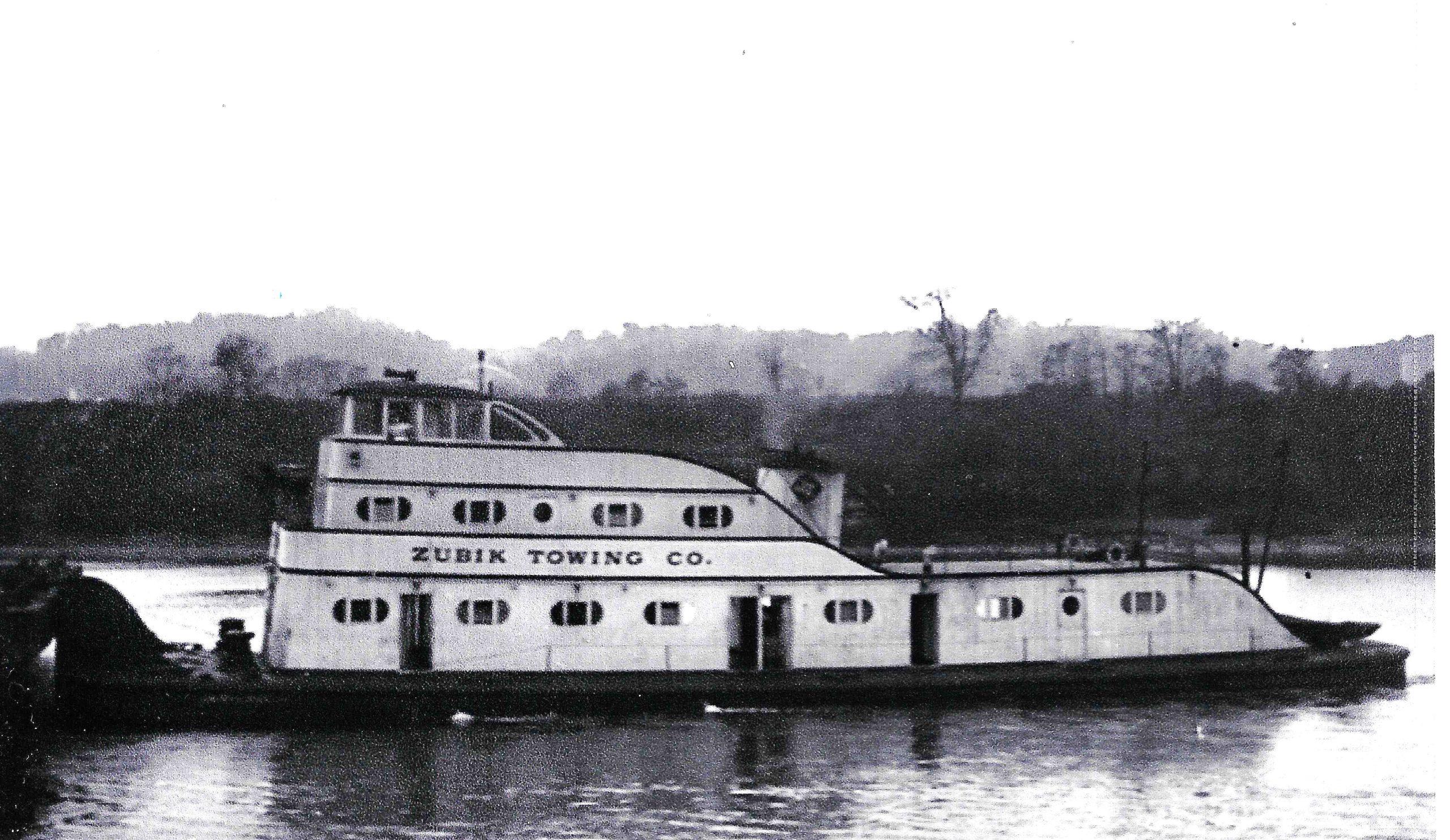
The August 11, 1945, issue of the WJ had a lead story that a “new streamlined towboat” was nearing completion at Hillman. It was being built for Charles Zubik’s Zubik Towing Company of Pittsburgh. The article indicated that the boat was to be named James Z “in honor of one of Charles Zubik’s fighting sons.” The new boat had an “all welded hull” that was 120 by 28 feet and “her outer appearance is best described as entirely streamlined, her corners all being rounded and her lines all flowing gracefully aft.”
According to a history of Hillman by historian Kathy Hopkins, this boat was the first of Easter’s new design for Hillman. The unique features of this towboat initially added to the labor and material cost of the vessel. The test designs of the curves and contours in the hull of the vessel required blacksmiths to perform the cutting and fabrication techniques required. Due to this, the boat took nearly a year to complete.
Hillman only utilized the blacksmiths in this vessel and had the designs copied into wooden patterns that could be used as templates by the shipyard cutters and welders in fabricating future boats. This and some new semi-automated equipment purchased for the yard served to speed the construction process in subsequent craft produced at Hillman.
The Pittsburgh news column in the September 8, 1945, issue of the WJ detailed work at the Hillman facility, saying, “New sides and rakes are being constructed on a fleet of 10 barges for the Zubik Towing Company. The streamlined 700 hp. towboat for this concern is scheduled for launching early this month.”
The boat was christened James Zubik, rather than “James Z” as had been reported earlier. According to the 1946 edition of the Inland River Record, the boat was powered by a pair of National Superior diesel engines totaling 700 hp. It also noted that these engines had originally been in service on the tanker-towboat Minneapolis Husky (WJ June 2, 2025), that had been extensively rebuilt and repowered at Hillman at the same time the Zubik was under construction.
The James Zubik gained much attention when it came out. The curvaceous lines, reminiscent of the Sohioan and Henry S. Sturgis produced by St. Louis Ship two years before, were a fresh look at a time when sternwheel steam towboats were still the norm in the Pittsburgh pools. In 1952, the boat was repowered with a pair of Cat D379 engines that brought the horsepower up to 1,000. It was later assigned the radio call sign WL 2709. Following the death of Charles Zubik, Sr. in 1966, the Zubik fleet was disbanded and sold.
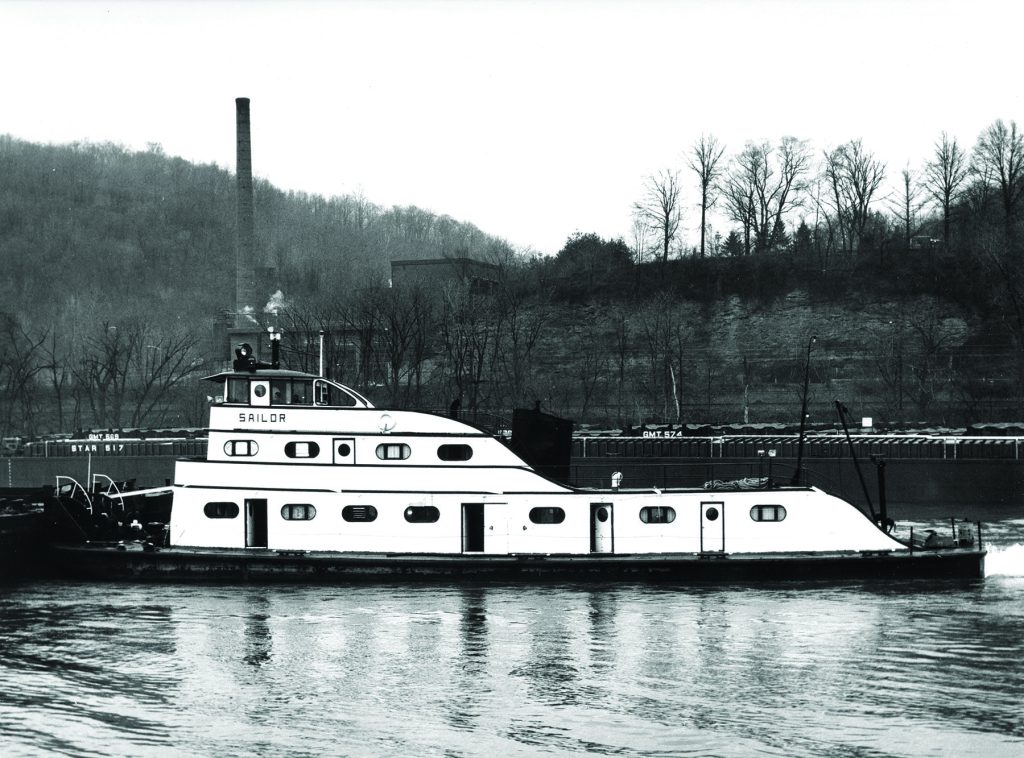
In 1972, the James Zubik was sold to Crain & Pushak Towing Company, Glenwillard, Pa., and renamed Sailor, bringing the name of the J&L steam sternwheel towboat back to the rivers. This diesel Sailor then operated in the same general areas that the steamer had and became a familiar sight in the Pittsburgh area. In 1974, it was sold to West Penn Power Company, Greensburg, Pa., and in 1977 was sold to Interstate Marine Services, Martins Ferry, Ohio, and renamed Alstate.
Later in 1977, it was again sold to Golden Triangle River Contracting & Towing Company, McKees Rocks, Pa. The Alstate was last listed in the 1987 IRR and was in the
Off The Record section of the 1988 book as having been retired.
This vessel was the experiment that led to the very beautiful class of Hillman boats exemplified by the last surviving example on the rivers today, the Charleston (WJ November 7, 2025) of Amherst Madison, Charleston, W.Va.
Featured photo caption: The James Zubik while fairly new. Note no radar scanner on pilothouse. (Photo from Capt. Bill Judd collection)