
Capt. Mark Charles, Riverview Tug Service
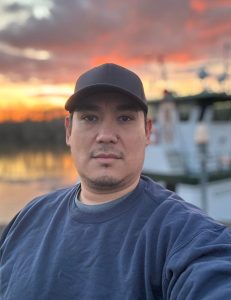
When Capt. Mark Charles first noticed towboats with barges in tow past South Point, Ohio, he had no idea the river would become his career. Fresh out of the service, he had relocated to the area to reconnect with family when the steady movement of barges on the Ohio River caught his attention.
“I’d never seen anything like it,” he said. “All these big boats with barges on the river. I asked around at my church, and someone who worked at Marathon Petroleum told me about the industry and how to apply with different companies.”
That initial curiosity led to a deck job and eventually to the wheelhouse. When Charles first hired on with Ingram Barge, becoming a captain was not part of a long-term plan. Like many new deckhands, his focus was simply on learning the work.
“I didn’t really know how realistic it was to become a captain,” he said. “Everybody kept telling me to just focus on learning the deck stuff first, so that’s what I did for a couple of years.”
As he gained experience and stepped into a lead man role, his perspective began to shift.
“I enjoyed it quite a bit, but, in this industry, if you want to make more money, you’ve got to move up to the wheelhouse or the engineroom,” he said. “That’s when I realized it was something I wanted to do.”
Along the way, Charles credits several mentors with shaping his career and approach to the river. His first and most foundational mentor was Capt. Vern Hoenes with Ingram, who taught him aboard the mv. Philip Pfeffer.
“He was the first captain who really took the time to teach me,” Charles said. “A lot of what I still do today goes back to how Capt. Hoenes showed me the right way to work and think on the river.”
Mickey Burkhart aboard the mv. E. Bronson Ingram was another formative influence early on.
“He had an amazing amount of knowledge on deck,” Charles said. “I learned a lot from him.”
Other mentors helped refine his skills in specific areas. Anson Bowe taught him patience and the importance of understanding how to handle a light boat. Richard Greer sharpened his barge-handling skills, and Steve Pitts, during his time with ARTCO, made a lasting impression both in the engineroom and the wheelhouse.
“I wouldn’t be where I’m at without those guys,” he said. “The river could use a lot more people like Steve.”
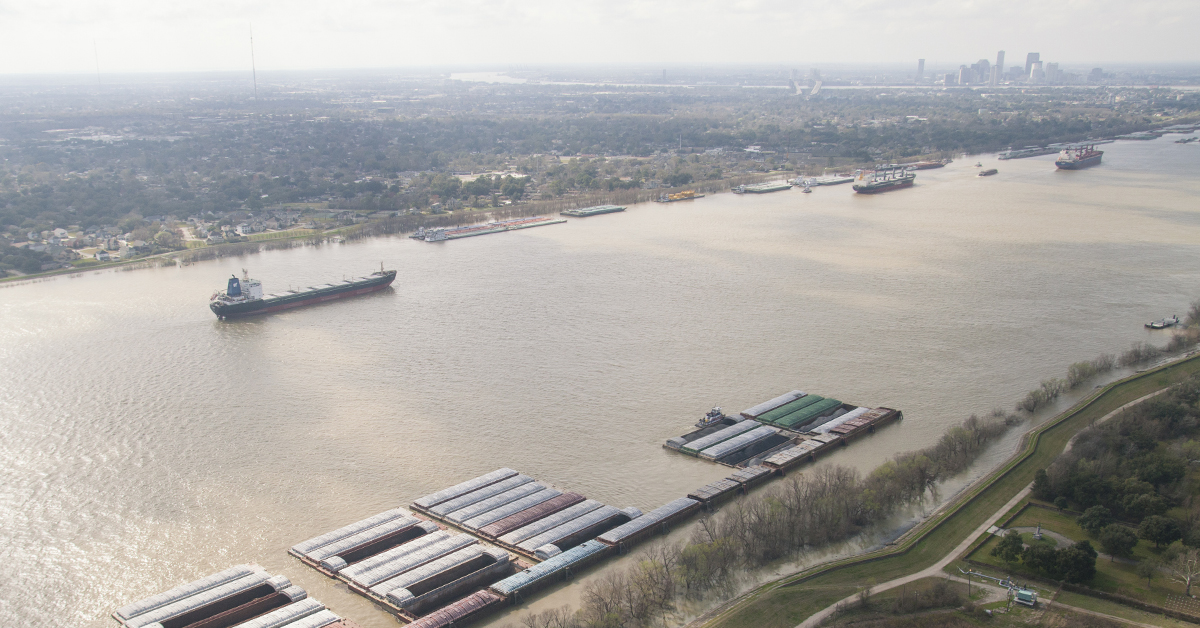
Today, Charles runs for Riverview Tug Service, where he works across multiple waterways, including the Upper Mississippi, Illinois River, Cumberland and Tennessee rivers, the Lower Mississippi and the Gulf Intracoastal Waterway. He now works within Riverview’s Gulf Division, bringing a broad range of experience to each assignment.
Beyond the work itself, he says Riverview stands out for how it treats its crews.
“The pay is competitive, and the company takes care of its people,” he said. “That’s a big reason people stay. Very few people leave Riverview.”
Another benefit crews notice immediately is the food.
“The food is really good,” he said. “We get fed well, and that matters when you’re out there for weeks at a time.”
Just as important, Charles said, is the time off between hitches.
“You get real time to reset,” he said. “That’s huge in this line of work.”
Over the years, Charles has seen noticeable changes across the industry. One of the most significant, he said, is a decline in training and hiring standards driven by workforce shortages.
“The standard for deck crews has dropped significantly in many aspects,” he said. “You also see more office personnel with degrees but no river experience.”
He has noticed similar trends in pilot development.
“I think companies are turning guys loose sooner because they need pilots,” he said. “You can hear it on the radio. Younger pilots tend to play it safer, sometimes avoiding bends where older guys would use the water to make speed.”
Still, some things haven’t changed.
“Don’t mess with the cook,” he said with a laugh. “And there still aren’t many licensed engineers on the river.”
As a leader, Charles favors trust and observation over micromanagement.
“I like to give people free rein of their duties if they can be trusted,” he said. “I use a kind of Socratic method to figure out who my critical thinkers are and who I need to watch more closely.”
Training younger mariners remains one of his priorities. Whenever possible, he works directly alongside deck crews, teaching fundamentals the same way his first captain taught him.
“He would come down on deck and work lines with us,” Charles said. “He’d explain step by step what made one lead better than another. I try to do the same thing whenever I have time.”
Away from the boat, Charles keeps life simple. He stays connected with his parents and two children through FaceTime and WhatsApp and spends his time off traveling, eating out and catching up on shows he missed while working.
“I like to do nothing for several days,” he said. “That’s how I recharge.”
Among the many challenges he’s faced, one experience stands out. In May 2021, while serving as a crew member aboard the mv. Crimson Glory, he assisted in responding to a fire on the mv. Mary Lynn, near St. Louis.
“It really showed me how well-trained towboat crews are compared to local fire departments,” he said. “I still see that boat laid up in the Harvey Canal and can’t wait to see it running again one day.”
From his first days watching barges pass in Ohio to running complex waterways for Riverview Tug Service, Charles’ career reflects a steady commitment to learning, mentorship and doing the job the right way—one line, one lesson and one mile at a time.