
Port Of Corpus Christi To Explore Nuclear Technology
U.S. Secretary of Transportation Sean P. Duffy was joined on August 19 by Maritime Administrator Stephen M. Carmel, U.S. Representative Michael Cloud (R-Texas) and leaders from Texas’ Port of Corpus Christi to kick off a new partnership focused on small modular reactor technology for maritime applications. By testing the latest innovations in SMRs, the department hopes to help revitalize U.S. shipbuilding, cut fuel costs and restore America’s maritime dominance.
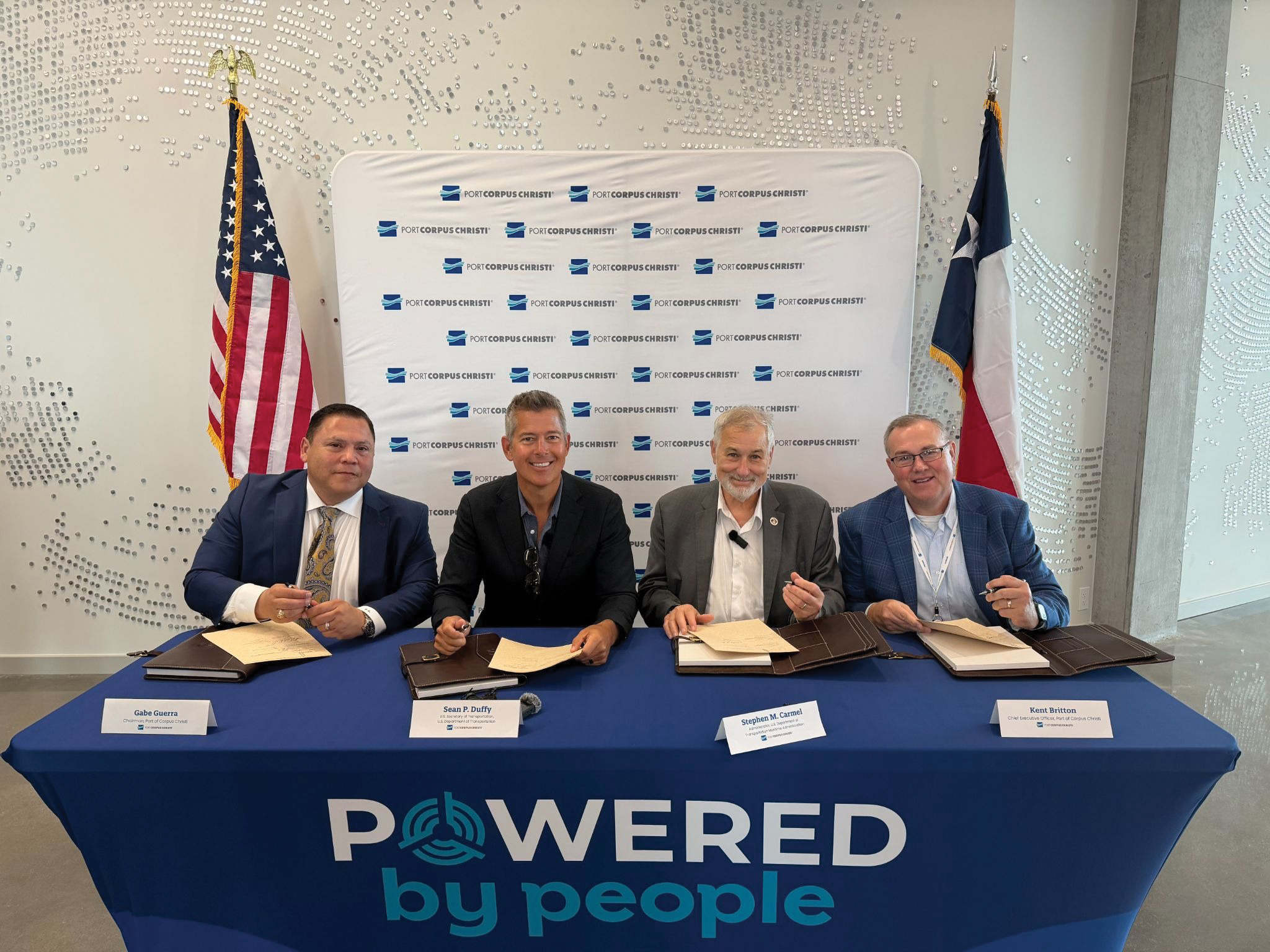
Duffy and Carmel were joined by Port of Corpus Christi CEO Kent Britton and Commission Chairman Gabe Guerra for the MOU signing. Through the Memorandum of Cooperation, MarAd and the Port of Corpus Christi agreed to work together to explore opportunities to advance maritime energy systems, including through the potential integration of SMR technologies, resilient port microgrids, shoreside power architecture, infrastructure capable of supporting emerging vessel propulsion concepts and related workforce development opportunities.
This is the second agreement the Department of Transportation has signed since Duffy launched the SMR initiative in May. As the United States’ largest port for petroleum exports and a national leader in liquefied natural gas shipments, the Port of Corpus Christi is a major gateway for American energy. The port has seen an 81 percent increase in LNG exports since 2022.
“Small modular reactors have the potential to reshape America’s maritime sector, lower shipping costs, and bolster our supply chains,” Duffy said. “I’m thrilled that the Port of Corpus Christi is embracing this exciting partnership with the Trump administration to ensure the United States leads the way in innovation. Maritime dominance starts with rebuilding America’s fleet with this state-of-the-art technology.”
“This agreement with the Port of Corpus Christi demonstrates that the leading energy port in the nation understands the significance of this technology,” Carmel said. “SMR integration has the potential to drive down costs and guarantee that our critical Gulf Coast maritime supply chains remain resilient against any contingency, from extreme weather to power grid disruptions, while training the next generation of high-skilled American mariners.”
“The Trump administration has long recognized the important role of the Port of Corpus Christi in reclaiming America’s energy dominance,” Cloud said. “Small modular reactor technology has the potential to power port operations, support the broader industrial complex and advance maritime propulsion capabilities in ways that will benefit the entire Gulf Coast and the nation. I appreciate Secretary Duffy’s work in ensuring America continues to lead in energy innovation.”
“With this agreement, the Port of Corpus Christi affirms its commitment to work with the administration to promote innovation in the U.S. maritime sector in support of our nation’s storied maritime industrial base and the communities around the world that depend upon it,” said Jeff Pollack, chief strategy and innovation officer for the port.
In June, the Trump administration signed an agreement to establish the nation’s first testing area for nuclear-powered vessels with the Port of Long Beach.
Featured photo caption: Secretary of Transportation Sean P. Duffy and MarAd Administrator Stephen Carmel were joined by Port of Corpus Christi CEO Kent Britton and Commission Chairman Gabe Guerra on August 19 for the signing of an agreement to explore small modular reactors, microgrids and advanced vessel propulsion systems. (Photo courtesy of the U.S. Department of Transportation)