

Virginia Family Paddles The Mississippi
Most people who don’t work in the maritime industry experience the Mississippi River from afar. Camping along its banks, hiking alongside the current or just driving over its expanse on a bridge is the most some can say about their experience. But for the Bettis family, interacting with the river meant jumping in with both feet – or in this case, 16.
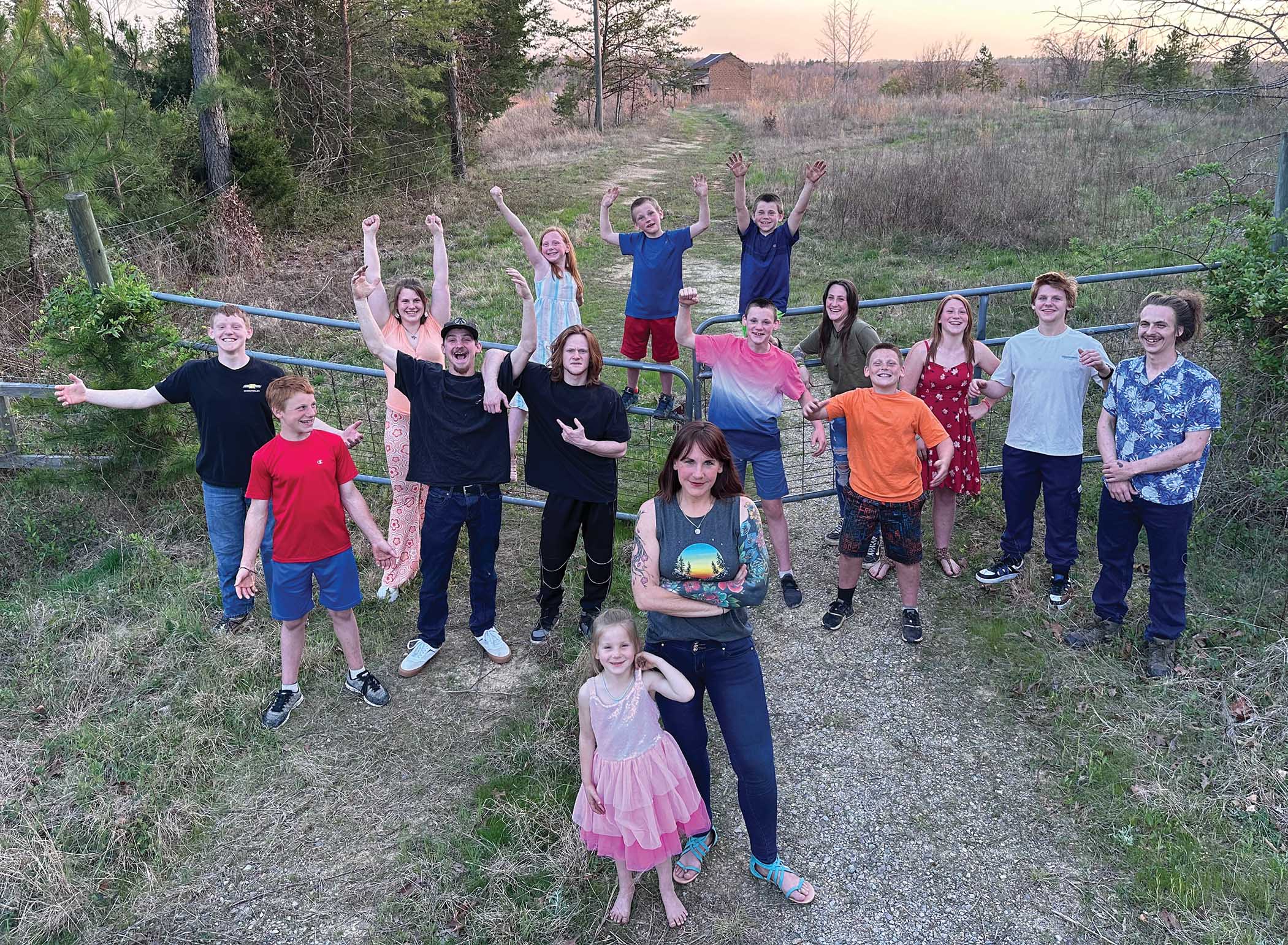
Nikki Bettis and her 15 children, collectively known as 32 Feet Up, are no strangers to adventure. The family hikes regularly, and Bettis ensures that nature is an integral part of her children’s lives. In 2023, the family made headlines when Bettis and all her kids walked the 2,200-mile Appalachian Trail (AT) to help heal after experiencing a painful divorce. This past August, Bettis and seven of her children embarked on their next big exploration: canoeing down the entire Mississippi River.
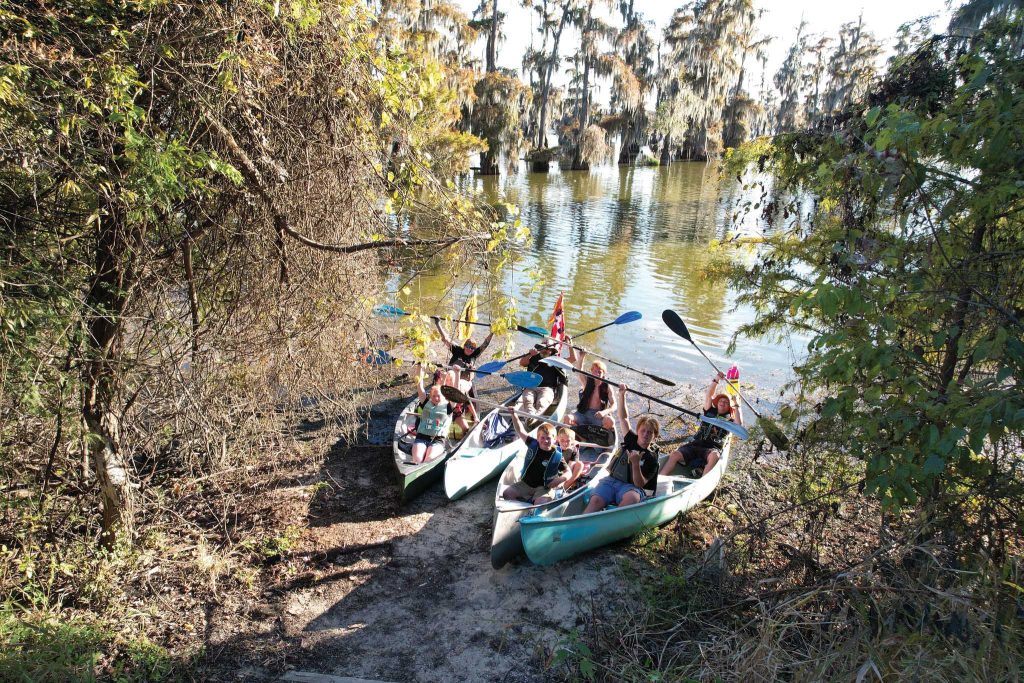
“Our focus for this trail was honestly to detox from society,” Bettis said. “The rate at which kids are on screens these days, even my own, I struggle with. It’s consistent stimulation to the point of being overstimulated. Even at home when they’re outside, the PlayStation is still there, and they’re never truly happy. But when you take all of that away and put them outside with things to do, and you go back to the basics of humanness as a whole, it allows them to dig deep within themselves, be alone in their mind, be without any kind of stimulation, so they’re constantly problem solving, but they’re doing it in a healthier environment than just boredom.”
During their 2023 adventure on the AT, 13 of Bettis’s 15 children joined her on the trail full time, while her eldest two joined the troupe when they could. For the Mississippi trip, the seven youngest kids took to the river: twins Graham and Gatlin (15), Gates (13), Lillye (12), Grisham (10), Galax (9), and Opye (7). The elder eight decided to stay home to continue working.
The river was a change for the group. While the family thrives outdoors, most of their time is spent hiking. But when it came to their next big trip after the AT, Bettis and her kids hoped for a change of pace. Bettis said she struggled being on the river at first but soon fell in love.
“I did not enjoy paddling in the beginning, and it took me a long time to fall in love with the river because I’m a hiker at heart,” Bettis said. “I don’t know when it happened, but you sort of begin to build a relationship with the water, and you begin to fall in love with where you are and what you’re doing. The sounds of barges passing at night, their lights flickering, those are things we didn’t really think about when we started. By the time we finished, I really missed the river. It’s one of those things where you lay in bed at night and wish you could go back.”
Bettis originally planned the trip to take four months, or 120 days. Even though they set out two weeks later than intended, they made it to the end of the river in just 96 days and made it home for Thanksgiving, just like they’d hoped.
“I planned for everything to take longer,” Bettis said. “The average thru-paddler takes about 90 days. Hiking the AT usually takes people six months, and it took us seven and a half. We also just enjoy it. We’re not in a hurry. We’re not in it to set records. I think in order to keep the morale of the kids up, you just enjoy it. You don’t become a slave to the miles.”
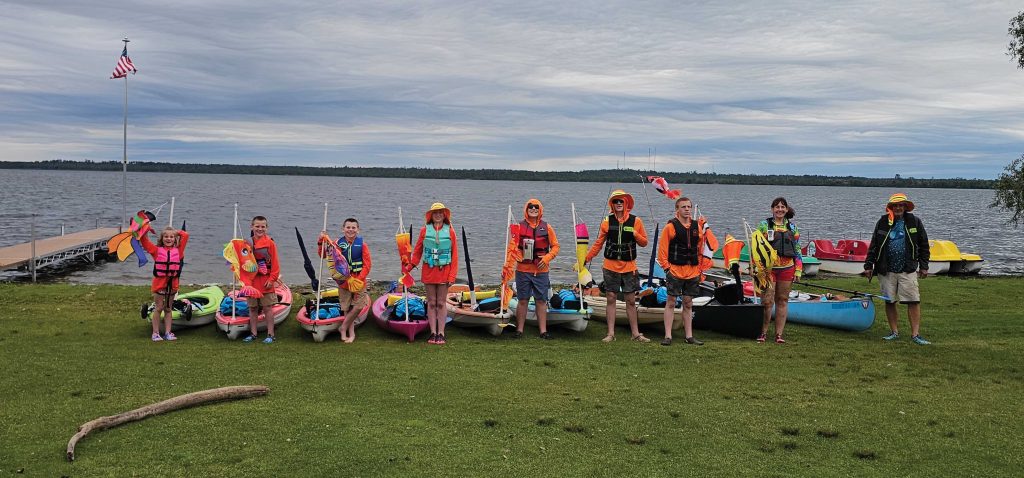
Paddling the entire 2,350 miles of the Mississippi River sounds dangerous, especially with children. Bettis was cautioned against wind, currents and weather, but the family stayed meticulously safe. They refrained from paddling in fog, in the dark or in winds higher than 20 mph. On days they weren’t on the river, the family focused on shoreside activities.
“We were very picky about the days we paddled,” Bettis said. “We weren’t out there to die. It’s important to stay flexible and to work with the situation you’re given, especially when kids are involved.”
While both big adventures were met with positivity from her children – at least by the end – the public eye was far more critical. The internet accused her of child abuse, and Bettis was routinely told that her family wouldn’t survive either trip. She recalled being told time and time again that their excursion on the Mississippi would get them killed by alligators, currents, weather, man-eating catfish, sharks and anything else in between.
“There’s crazy fear that surrounds those things,” Betis said. “And when you rebut and debunk some of those myths, they don’t believe you. I think that’s sad. I’ve learned that people really aren’t that original. I used to take [the comments] personally, but you realize that people just live very small lives. If you only knew what you’re capable of. People call us fearless, but it’s not that we’re fearless, it’s that we’re ready to go live. You could so fully live, and you’re not allowing yourself to.”
According to Bettis, none of the things she was cautioned about made the trip scary. The gators in the gulf swam next to them if they paid attention at all, and on hard weather days the family didn’t canoe. They resupplied or enjoyed shoreside discoveries, visiting museums and historical landmarks like the St. Louis Arch and Mississippi River Museum in Dubuque, Iowa.
The only time the family came upon true danger, Bettis said, wasn’t with nature, but during their encounters with speedboats. The family used tall wind flags to stay in sight and had VHF radios to let towboats know where they were. But that wasn’t the case with speedboats. She recalled a moment in Wisconsin when a boat nearly hit them. Even after acknowledging the family, the boat didn’t slow or change course and split their pod of four boats in half.
“I was so convinced we were going to get hit,” Bettis said. “We took every necessary precaution, but even being proactive doesn’t eliminate those kinds of dangers. Those boats were definitely the hardest to overcome because they were so unpredictable, like distracted drivers. It was so unexpected. It’s nothing you’ll hear on the internet. It’s the stuff you don’t hear you have to be mindful of.”
The trip was a learning experience in more ways than one. Bettis and her kids loved their time on the shore just as much as they did on the river. The homeschool family went to every museum, conservation center and tour they could and also learned about science and geography while physically on the water.
“Everything is a learning opportunity, or it can become one if you let it,” Bettis said. “The world is full of education. If they can hear it, smell it, see it, touch it, actually be immersed in it, they’re that much more likely to learn from it. In doing this with my kids, I’m able to learn with them. It’s like being given a second chance at life. I’m learning and absorbing with them, which makes it that much more fun because I’m a part of it, too. So, the whole thing is just a win for everyone.”
Bettis remarked that during their entire trip, she and her family didn’t have a single negative experience with a towboat captain. She recalled being anxious at first to alert vessels on the radio of their existence, but she soon learned there was nothing to fear. Captains who were able would honk their horns for the kids and loved having radio conversations with them as well.
“We didn’t speak with or communicate with one grumpy captain,” Bettis said. “They all had great attitudes. I was so afraid when I would get on the radio of interrupting their work or interfering on a work-minded channel. I didn’t want to speak up or say anything, but talking to the tows and tugs and captains and lock operators was one of the coolest things we did on the trail.”
There were hard days, of course. With a large group, it was easy for some children to be disappointed with the days’ agendas.
“When you have that many people in a group dynamic, everyone has their own agenda for the day. Some want to fish, some want to do more miles, some want to do less miles, some people want to take zeroes, those kinds of things. So [the challenge is] keeping everyone on the same page and finding that balance of keeping up morale and meeting everyone’s criteria and expectations for the trail while continuing to make progress. Once you find that balance, we could make progress and have a good time.”
Through their travels, Bettis encourages her children to become self-sufficient. They each know how to make their own meals and gather supplies. Each child has his or her own role within the group as well. Bettis said that without the eight older kids with them, the oldest of the seven on the trip had the opportunity to take charge and perform tasks usually passed off to their elder siblings, like meal prepping and fire starting.
“We sorely missed them, and the dynamics changed,” Bettis said. “But it was fun watching the younger seven come to life because they had let the older ones do [those roles] on the AT, and they weren’t there, so they were forced into those positions. They kind of fell into the roles they like, and each person has their own interests.”
Not only did the kids learn about the river and the world around them, but they learned about themselves, too. With a new trail and a new group dynamic, the Bettis kids flourished in ways they hadn’t before while experimenting with new roles within the group.
“One of my 15-year-olds loves to cook, and no one knew that. But he took up the responsibility of making family meals, and that’s something we’d never done because they’re each independent. It became like a family affair, and he involved the little ones. It’s fun to watch each of them figure out what they like to do and rise up to that task in the name of teamwork. I think it absolutely solidifies and helps integrate how important teamwork is. You can function individually, but you also have conflict resolution, things like that. As they figured it out with the new routine on the trail, they figure out the roles themselves.”
Above all, Bettis encourages parents to let their children experience the world, even if it’s a little scary.
“I think any time you do anything extreme with kids, people always say, ‘my kids don’t want to do those things,’” Bettis said. “Well, my kids don’t inherently want to do those things either. Kids just want to be lazy half the time, especially in the day and age of PlayStations and screens. For us, it’s like a detox. We still have PlayStations and screens and phones, but this balances it. There were definitely days that we all struggled. I want to encourage parents that kids, mine included, don’t just want to go do these things, but once you put them out there, they thrive.”
While the trip was long, and some days were hard, experiencing the Mississippi River was invaluable to Bettis’ children. Each trail the family accomplishes lets each child flourish in his or her own way.
“I love how much it broadens their world, because it’s so much more than the four walls of our house,” Bettis said. “The world is bigger and better than just the tiny hole you live in. [The kids] are involved in sports and things like that, but you can’t compare it to meeting people across the U.S. They have connections everywhere now, and the opportunities now that they’ve been exposed to as far as careers and what they could be. It’s just opened up their eyes to see a bigger world than most of us live in.”
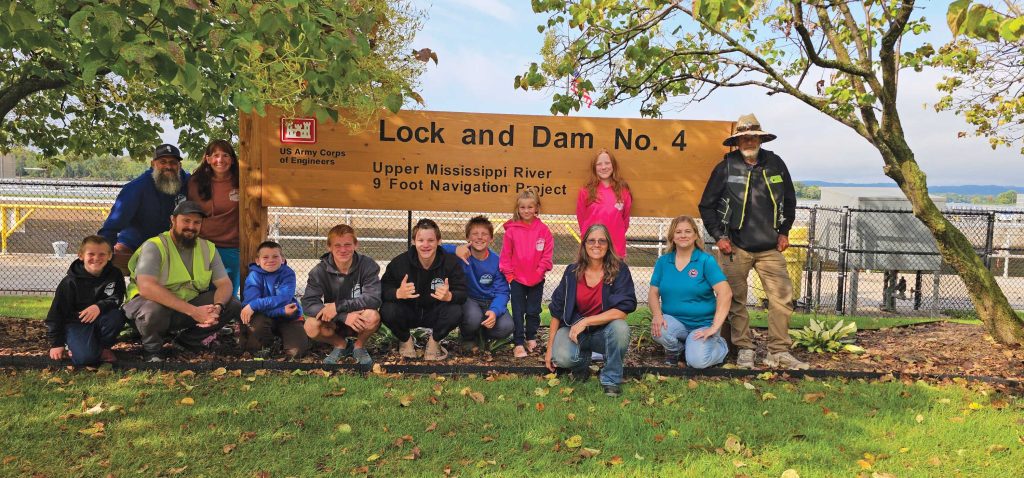
Several of Bettis’ children are interested in becoming lock operators when they get older from their conversations and lock tours they experienced. Bettis recalled that while waiting for Lock 17 to be available, she and her kids stood by the fence to watch a barge pass through. The lock operators saw them and ended up giving them a tour of the lock.
“I’m not sure those operators will ever know what kind of impression they made,” Bettis said. “They were some of the coolest guys we met on the entire trail. The kids are now talking about being lock operators. You can’t beat those kinds of experiences. It was so unexpected. To this day it’s one of their favorite memories.”
Now that the family is back home, Bettis has begun planning their next adventure. She hopes to paddle other rivers in the future, especially in Maine, but biking may be on the horizon for the family’s next big trek.
Footage of the family’s adventures can be found on the 32 Feet Up YouTube channel, as well as their website.
————
Featured photo caption: Nikki Bettis and her 15 children, collectively known as 32 Feet Up. (Photos courtesy of 32 Feet Up)